Type “Monika Leveski” into a search engine and something strange happens. Some articles correctly tell you this is a misspelling of Monica Lewinsky — the real public figure who became globally known in 1998. Other articles, using the exact same misspelled name, describe an entirely different woman. A multimedia artist. A business innovator. A content creator with a glowing personal brand and a vague net worth in the “low millions.” These are not typos of the same biography. They are two completely separate people sharing one name, and only one of them exists.
That distinction matters, and it is worth being precise about it from the start.
Quick Reference Table
| Factor | Detail |
|---|---|
| Search Term | Monika Leveski |
| Real Person Behind The Misspelling | Monica Samille Lewinsky |
| Lewinsky Born | July 23, 1973, San Francisco, California |
| Lewinsky’s Public Role | Activist, writer, producer, speaker — formerly a White House intern |
| Why The Name Is Searched | Misremembered spelling of “Lewinsky,” based on sound rather than exact letters |
| Second “Monika Leveski” | A fictional persona invented by content websites — artist, entrepreneur, “creator” |
| Verifiable Evidence For Second Persona | None found |
| Real TED Talk | “The Price of Shame,” 2015, delivered by Monica Lewinsky |
| Real Production Credits | Impeachment: American Crime Story (2021), The Twisted Tale of Amanda Knox (2025) |
| Real Education | Lewis & Clark College (BA, psychology, 1995); London School of Economics (MSc, social psychology) |
Two Different People, One Search Term
This is the central fact that needs stating plainly before anything else. “Monika Leveski” is not a real name attached to a real, documented human being with that exact identity. It is a commonly misspelled version of “Monica Lewinsky” — a name people remember by sound rather than spelling, especially decades after the original news cycle that made her famous.
Multiple credible sources confirm this directly. Several articles state outright that “Monika Leveski” is simply a search variant of Monica Lewinsky’s name, explaining that misspelled searches are common when people recall a public figure through speech or headlines rather than precise spelling.
But here is where it gets genuinely strange. A separate cluster of articles uses the exact same misspelled name to describe a completely different person — someone with no surname tie to Lewinsky at all, no scandal, no political history, and instead a vague background as an artist, entrepreneur, or “content creator.” These articles never mention Monica Lewinsky. They never mention the Clinton scandal. They read as though “Monika Leveski” is simply someone’s name — a working professional with a career, family values, and an Instagram-style personal brand.
One persona is real and extensively documented by credible institutions. The other persona has no verifiable trace anywhere outside a handful of similarly-structured blog articles.
The Real Story: Who Monica Lewinsky Actually Is
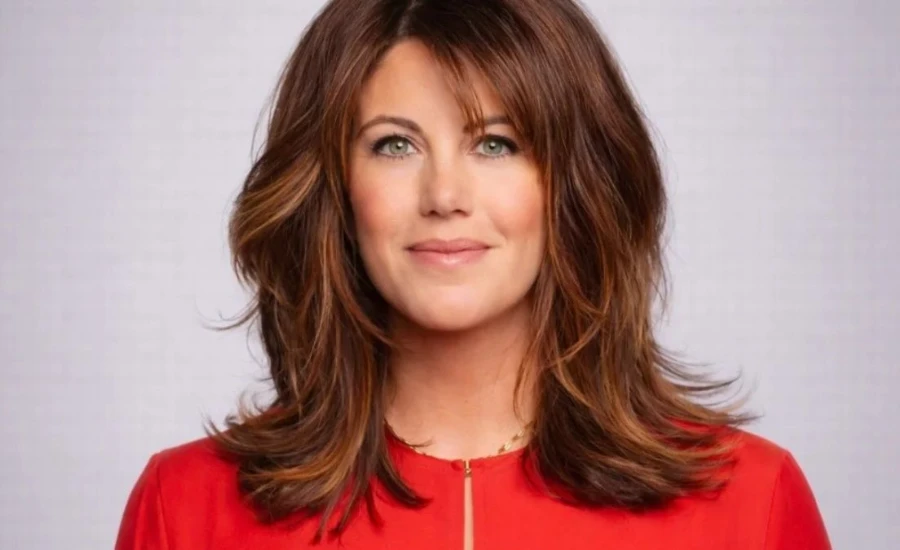
Monica Samille Lewinsky was born on July 23, 1973, in San Francisco, California. Her father, Bernard Lewinsky, worked as an oncologist. Her mother, who wrote under the name Marcia Lewis, was an author. She grew up in Southern California, attending several schools in the Los Angeles area before graduating from Bel Air Prep in 1991.
She attended Santa Monica College before transferring to Lewis & Clark College in Portland, Oregon, where she earned a bachelor’s degree in psychology in 1995. That same year, she moved to Washington, D.C., and began a White House internship in the Office of Legislative Affairs.
During that internship, she had a relationship with President Bill Clinton. The relationship became public in January 1998 during the Paula Jones lawsuit and the investigation led by independent counsel Kenneth Starr. Clinton later acknowledged the relationship had been improper. The House of Representatives impeached him on December 19, 1998, on charges of perjury and obstruction of justice connected to testimony given during the investigation. The Senate acquitted him on both articles in February 1999.
What followed for Lewinsky was years of intense, often brutal public scrutiny — name recognition built entirely around scandal and ridicule rather than anything she had chosen or controlled. She has spoken publicly about the toll that took.
What She Actually Did With the Following Decades
This is the part that most casual coverage compresses into a single sentence, and it deserves more room than that.
After stepping away from public life for an extended period, Lewinsky returned to education, earning a master’s degree in social psychology from the London School of Economics and Political Science. Her thesis reportedly examined pretrial publicity and what is known as the third-person effect — a concept concerning how people believe media influences others more than it influences themselves. That topic connects directly and deliberately to the years of media coverage she had personally experienced.
In 2015, she delivered a TED Talk titled “The Price of Shame,” addressing public humiliation and online harassment directly, drawing on her own experience as one of the earliest people to face what would now be recognized as a viral public shaming event — except hers happened before social media existed in its current form, which made the experience even more disorienting and inescapable at the time.
Her career since then has moved deliberately into producing and storytelling rather than simply being a subject other people tell stories about. She served as a producer on Impeachment: American Crime Story, the 2021 FX series dramatizing the events of the Clinton-Lewinsky scandal — giving her, for the first time, direct creative input into how that story was told on screen, after decades of journalists, comedians, and filmmakers telling it without her involvement.
She was also executive producer of the HBO documentary 15 Minutes of Shame, which examined public shaming broadly in the social media era — again connecting her personal history to a wider, more useful cultural conversation rather than treating her past as the entire story.
More recently, she served as executive producer on Hulu’s The Twisted Tale of Amanda Knox, an eight-part series that premiered in August 2025, working through her production company, Alt Ending Productions, alongside Amanda Knox herself. The pairing is notable — both women became globally recognized media subjects in their twenties under intensely difficult circumstances, and both later sought direct involvement in how their stories would be retold.
She also hosts a podcast, structured around interviews exploring how people rebuild identity, confidence, and purpose after public loss or pressure — a format that turns her own lived experience into an editorial approach rather than a personal confession repeated indefinitely.
The Fabricated “Monika Leveski”: What Is Actually Going On
Now to the second, entirely separate problem. A cluster of articles exists describing “Monika Leveski” as someone else completely — language that should raise immediate skepticism in any careful reader.
These articles describe a woman who is alternately an artist working in “mixed media” combining textiles and digital elements, an entrepreneur with an unspecified but successful career, and a “content creator” with a devoted online following and an estimated net worth in the “hundreds of thousands to low millions.” None of these descriptions overlap with each other in any specific, checkable way. None of them name a single verifiable project, company, gallery show, exhibition, published work, or specific collaboration that can be independently confirmed. None of them provide a surname, hometown, employer, or other identifying detail that would allow a reader to verify the person exists.
The language itself is a warning sign. Phrases like “she developed early on the kind of creative mindset that would later define her career,” “her professional influence grew significantly as she began sharing insights that resonated with a wider audience,” and “her visibility increased as her work attracted awards and commendations” describe nothing specific. They could be inserted into a biography of literally any person in any field with zero changes. This is generic biographical filler language, designed to occupy space and satisfy search engine content requirements rather than to convey real information about a real individual.
One article goes so far as to describe a specific project — something called the “EcoSphere House” — attributed to this fictional “Monika Leveski” as evidence of her commitment to sustainable design. No public record of any such project, building, or installation under that name exists in any verifiable source.
Why This Happened
The mechanism here is consistent with a pattern seen across many fabricated or confused identity articles online, but this case is particularly clear because the trigger is identifiable: a real, famous person’s name, misspelled in a specific and common way, generates real search traffic from people who misremember the spelling.
Content websites identify that search volume. Some respond accurately — correctly identifying the misspelling and writing about the real Monica Lewinsky, often padding her real biography with generic motivational language (“her story is a powerful reminder that our lowest moments do not have to define us”) but keeping the underlying facts accurate.
Other content websites appear to have either misunderstood the search term entirely or deliberately constructed a separate, generic “successful professional woman” biography using the same name, without verifying who the name actually belongs to. This second category produces biographical content with no specific, checkable facts — the digital equivalent of a placeholder image used because nobody bothered to find the real one.
The effect is a confusing search landscape where a real, identifiable, well-documented person and a fabricated, faceless content-farm invention share the exact same misspelled name, and a casual reader has no easy way to tell which article they have landed on without already knowing the real story going in.
What This Reveals About Search and Misspellings
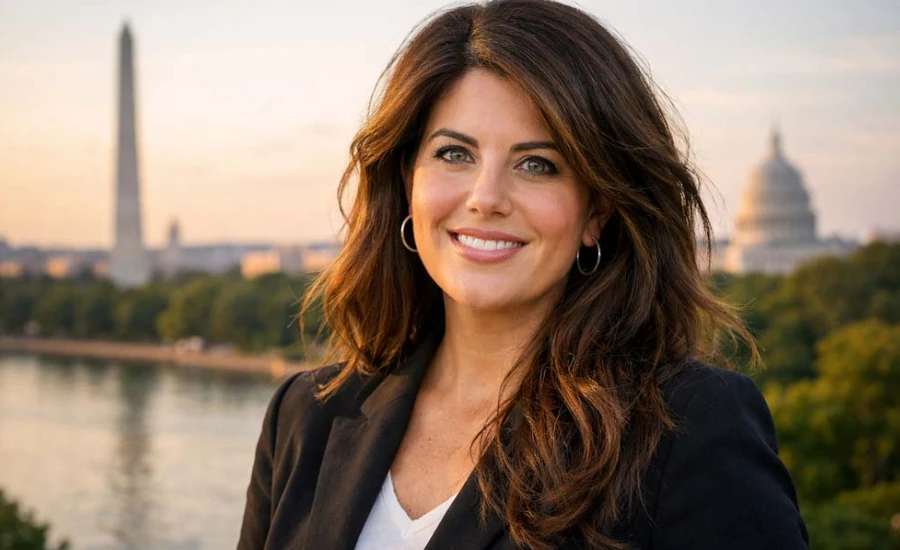
This case is a useful, concrete example of a broader problem. When a name is commonly misspelled by real searchers — which happens constantly with names that are heard far more often than they are read — that misspelling becomes its own piece of search real estate. Whoever writes the most convincing-sounding content for that misspelling captures the traffic, regardless of whether the content bears any relationship to the actual person being searched for.
This is not unique to Monica Lewinsky. It is a structural feature of how search-driven content production works when volume matters more than verification. The fabricated “Monika Leveski” persona is not a uniquely malicious invention — it is most likely the product of automated or semi-automated content generation that treated an unfamiliar name as an opportunity to write a generic “inspiring professional” biography, without anyone checking whether such a person exists.
The harm here is mild compared to more serious misinformation, but it is still real. Anyone searching for the actual Monica Lewinsky’s recent work, her TED Talk, or her production credits may land on an article describing a fictional artist instead, learning nothing true and walking away with a false impression that a real, documented public figure does not actually exist under this search term.
You may also like Shani Levni
FAQ
1. Who is Monika Leveski?
There is no real, verified person who exists under this exact name. “Monika Leveski” is most commonly a misspelling of Monica Lewinsky, the real public figure who became globally known during the 1998 Clinton-Lewinsky scandal. Separately, a fabricated, unverifiable persona using the same misspelled name has also been used in some online content with no connection to Lewinsky.
2. Is Monika Leveski the same as Monica Lewinsky?
In most credible sources, yes — “Monika Leveski” is identified directly as a misspelling of Monica Lewinsky’s name. However, some unrelated content describes a different, fictional “Monika Leveski” with no connection to Lewinsky and no independent verification.
3. Why do people misspell Monica Lewinsky’s name this way? Misspelled searches are common for names people remember primarily through speech, news broadcasts, or pop culture references rather than written text. The misspelling reflects how the name sounds rather than how it is properly spelled.
4. What is Monica Lewinsky known for today?
She is an activist, writer, podcast host, and television producer. She is best known for her 2015 TED Talk on public shaming, her production work on Impeachment: American Crime Story and the HBO documentary 15 Minutes of Shame, and her more recent executive producer role on Hulu’s The Twisted Tale of Amanda Knox.
5. Did Monica Lewinsky go to college?
Yes. She earned a bachelor’s degree in psychology from Lewis & Clark College in 1995, and later a master’s degree in social psychology from the London School of Economics and Political Science.
6. What was the Clinton-Lewinsky scandal?
It involved a relationship between President Bill Clinton and Monica Lewinsky during her time as a White House intern in the mid-1990s. It became public in January 1998 amid a federal investigation and led to Clinton’s impeachment by the House of Representatives in December 1998 on charges of perjury and obstruction of justice. The Senate acquitted him in February 1999.
7. What is the second “Monika Leveski” persona that some articles describe?
A separate, apparently fabricated biography describing a woman as an artist, entrepreneur, or content creator with no documented, verifiable identity, projects, or achievements. No evidence supports this persona as a real, distinct individual.
8. Why would a website publish a fabricated biography?
Likely because automated or low-effort content production targeted the search term “Monika Leveski” without verifying who, if anyone, the name actually belongs to, producing generic biographical filler content designed to capture search traffic rather than convey accurate information.
9. What is Monica Lewinsky’s net worth?
Sources estimate figures in the millions, though exact numbers vary and are not independently confirmed through public financial disclosures. This estimate should be treated as approximate.
10. Is Monica Lewinsky still in the public eye?
Yes. She remains active as a producer, writer, and podcast host, and continues to speak publicly about online harassment, public shaming, and digital accountability.
11. What should I do if I find conflicting information about “Monika Leveski” online?
Cross-check any claim against established, credible sources such as Britannica, major news organizations, or Monica Lewinsky’s own verified public statements and production credits. Be especially cautious of biographical content that provides no specific, checkable facts — named projects, dates, employers, or institutions.
12. Has Monica Lewinsky addressed being misspelled online?
No specific public statement from her addressing this particular misspelling pattern was found during research for this article. The misspelling appears to be a byproduct of how search engines and content websites process commonly mistyped names rather than something she has directly commented on.