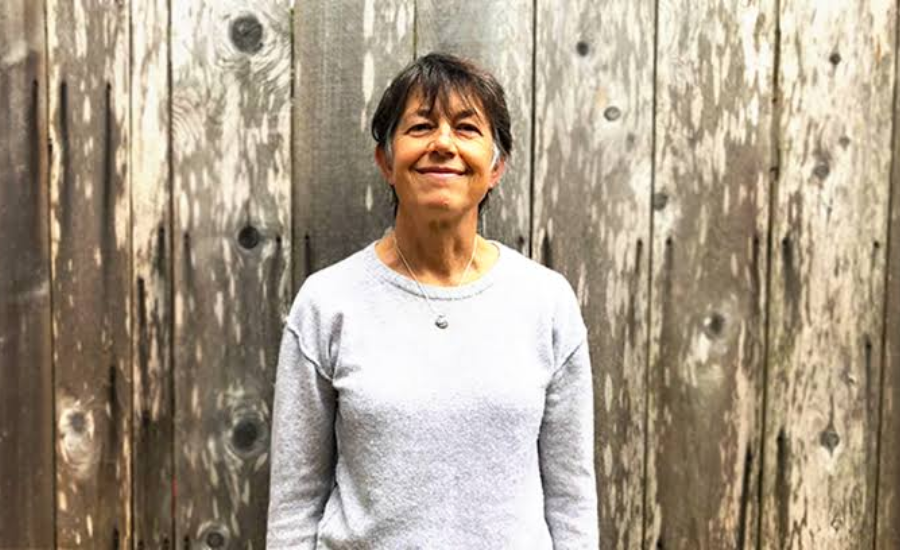
Martie Allen is a specific kind of courage that gets no applause. Not the courage of walking a red carpet or delivering an acceptance speech. The quiet kind — where someone stands at the edge of celebrity, looks at everything it offers, and walks the other way.
Quick Bio
| Detail | Info |
|---|---|
| Full Name | Martie Allen |
| Born | January 1, 1960 (widely reported; exact documentation unverified) |
| Birthplace | United States (raised in Los Angeles, CA) |
| Heritage | Irish and Lebanese descent |
| Profession | Former actress, TV production professional, acting teacher, advocate |
| Partner | Kristy McNichol (together since early 1990s) |
| Publicly Out | January 2012 |
| Net Worth | Estimated $500,000–$1 million (all figures are unverified estimates from third-party sources) |
| Social Media | None known/active |
Early Life: A City That Swallows People Whole
Los Angeles is not a gentle place to grow up. It hands children a dream with one hand and a rejection letter with the other. Martie Allen grew up inside that contradiction — Irish and Lebanese roots, a city built on reinvention, and an entertainment industry humming at full volume just outside the window.
She was born at the turn of 1960, the first day of a new year, in a country that wouldn’t legally recognize her relationship for decades. Details about her parents, her siblings, and her childhood home remain genuinely unknown — not because journalists haven’t looked, but because Allen has never offered them. That silence is deliberate. She learned early that privacy isn’t secrecy. It’s just a door you’re allowed to keep closed.
What we do know is that the entertainment world pulled at her young. Growing up in Los Angeles means growing up adjacent to sets, studios, and the particular electricity of people who perform for a living. Whether she attended film school, studied theater, or simply absorbed the city’s creative atmosphere is undocumented. Her educational background has never been publicly confirmed by Allen herself.
She did not arrive in Hollywood with a famous family name. She arrived with interest and ambition — two things the industry has always had in surplus.
The Turning Point: When the Industry Said No, She Pivoted
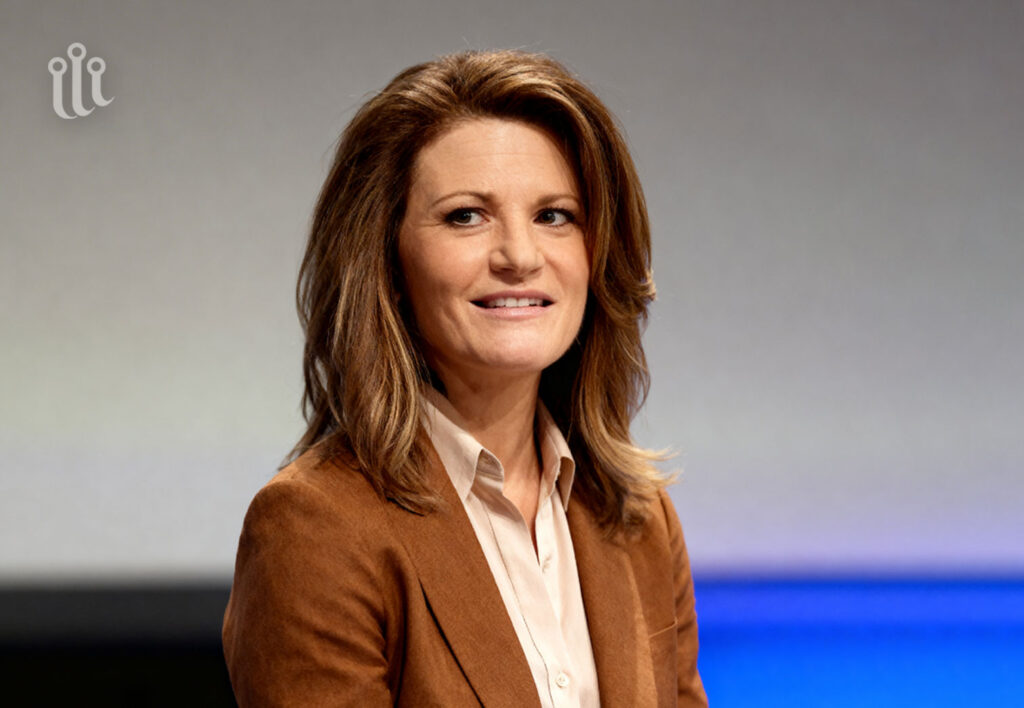
In the 1980s, Martie Allen attempted what thousands of others were trying simultaneously: a career in front of the camera. She reportedly appeared in minor roles in television productions of that era — a supporting appearance here, a background credit there. Some sources cite involvement with productions including The Forgotten One and the 1986 TV film Women of Valor, though detailed confirmation of her specific roles is difficult to verify independently.
She didn’t become a star. That’s not failure — that’s statistics. For every Kristy McNichol, there are hundreds of equally talented people the camera simply didn’t fixate on.
What Allen chose to do next matters far more than what didn’t happen. She moved behind the scenes. Production work. Stage management. The invisible architecture that makes television function. She reportedly worked as a production assistant and stage manager on popular shows including The Love Boat, The Golden Girls, and eventually talk show productions. These are not glamorous credits. But they are real ones — the kind earned by someone who understood how an industry actually works, not just how it looks from the outside.
The pivot from performer to craftsperson is its own kind of maturity. She didn’t quit. She adapted.
Career: Building Something That Lasts
By the time the 1990s arrived, Allen had carved out a quiet but functional professional life in production. The entertainment industry is famously unkind to people who don’t become famous — the support roles, the crew positions, the logistical labor are essential and almost entirely invisible to audiences. Allen occupied that world with apparent competence.
Some sources report that she went on to train as a Marriage and Family Therapist in the early 2000s, a significant professional shift that would require formal certification and years of study. If accurate, it represents a woman who reinvented herself not once but twice — from actress, to production professional, to licensed mental health worker.
Additionally, multiple sources suggest that Allen and McNichol eventually built or became involved with an acting academy in Los Angeles, where Allen took on a teaching and mentoring role. The exact name and current operational status of this academy has not been independently confirmed in any major publication.
Honesty note: Much of the specific detail around Allen’s post-1990s career comes from smaller biography aggregator websites with no cited primary sources. Readers should treat professional specifics as reported but unverified.
What’s clear is the trajectory: this was someone who spent decades contributing to her community through work, without needing to be seen doing it.
Personal Life: The Love Story That Waited Twenty Years to Be Told
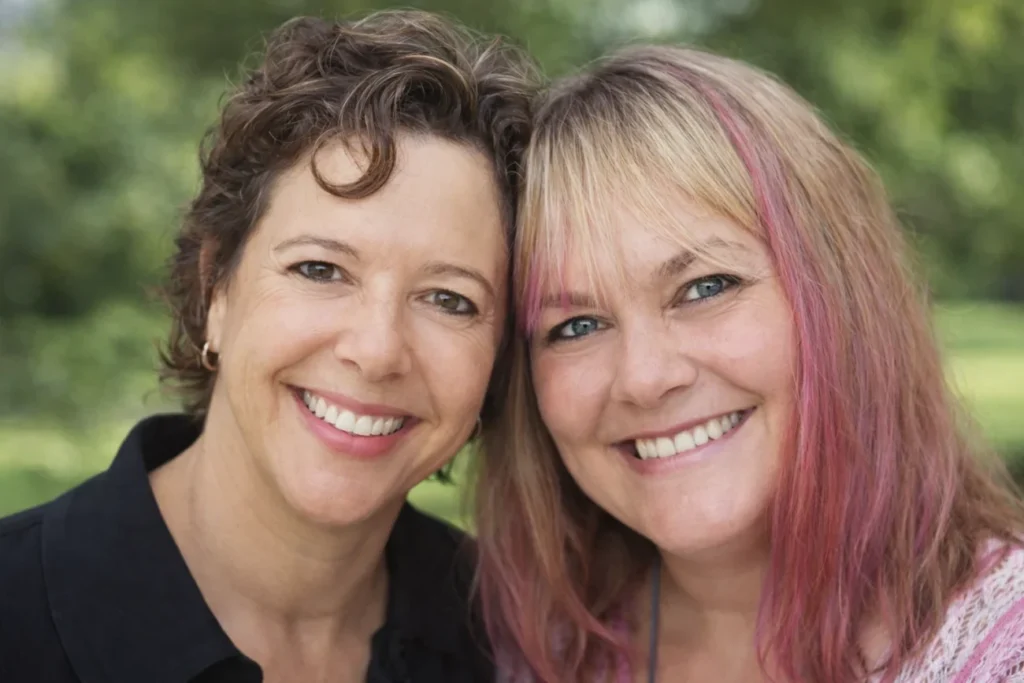
Sometime in the late 1980s or very early 1990s — accounts differ slightly — Martie Allen met Kristy McNichol. The exact circumstances of their first meeting have been described variously across sources, with some suggesting it happened during a music recording session. What all sources agree on: a friendship formed first. Then something more.
Kristy McNichol was, at that time, already a television legend navigating an extraordinarily complicated internal life. She’d won two Emmy Awards for Family in the late 1970s. She’d been a teen idol. She’d also been quietly managing both the early signs of bipolar disorder and the immense pressure of hiding her sexuality in an industry that didn’t yet have vocabulary for what she was.
Allen came into McNichol’s life during some of its hardest years. McNichol had stepped back from Hollywood — first gradually in the early 1990s, then officially by 2001 — and the two women built a domestic life together in Los Angeles that they kept almost entirely out of public view. No Instagram. No interviews. No red carpets.
For roughly twenty years, they existed together in the way most long-term couples do: through ordinary days, shared routines, and the slow accumulation of a life. Miniature dachshunds. Tennis. Yoga. A home that was theirs and nobody else’s.
The Announcement: January 2012
On January 10, 2012, Kristy McNichol’s publicist Jeff Ballard called People magazine. The message was brief and precise: McNichol was a lesbian, she’d been with her partner Martie Allen for two decades, and she wanted to say so publicly — not for herself alone, but for every kid being bullied in a school hallway for being different.
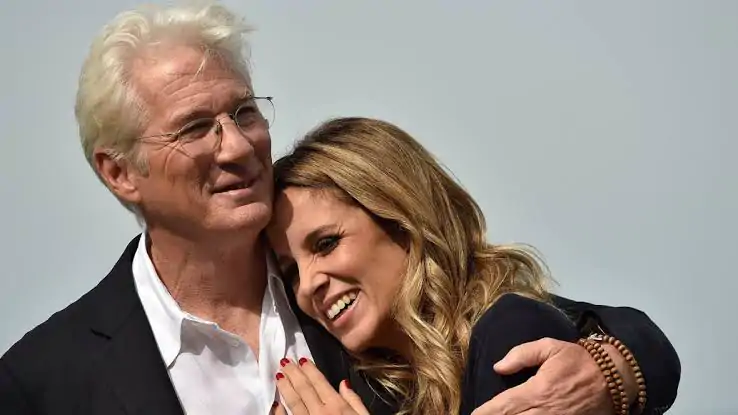
Allen appeared in the photo released alongside the announcement. She didn’t speak. She didn’t need to.
The decision was McNichol’s, but Allen’s presence in that photograph was a form of consent and solidarity. After twenty years of deliberate privacy, she allowed herself to be seen. That’s its own kind of statement.
At the time, McNichol was 49. Allen was 51. They weren’t young activists claiming a cause — they were two middle-aged women who had spent twenty quiet years together and wanted someone to know it was possible. That it was good. That it didn’t need to be hidden.
The reaction was largely warm. Old fans of Family and Empty Nest came forward with affection. The LGBTQ+ community celebrated. The news cycle moved on within days.
But the letter it sent to a fifteen-year-old somewhere didn’t expire.
Controversies: What We Don’t Know, and Why That Matters
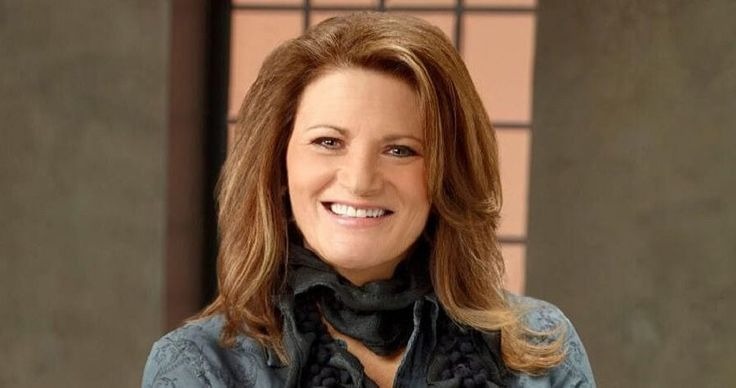
In a media landscape that tends to manufacture drama where none exists, Martie Allen’s story has attracted its share of low-quality speculation. Multiple websites offer wildly inconsistent facts: her birthdate ranges from January 1 to April 15 depending on the source. Net worth estimates swing from $500,000 to $6 million with no sourcing. Some sites claim the couple married in a private ceremony; others say they’ve never legally wed. Some place their home in Los Angeles; at least one source says Texas.
None of this inconsistency comes from Allen herself. She hasn’t spoken publicly. That’s not evasion — it’s simply the result of an entirely private person becoming a subject of public curiosity and multiple websites filling the vacuum with guesswork.
The actual controversy here, if it can be called that, is structural: Allen has been discussed almost entirely in relation to her partner, reduced in much of the coverage to a supporting character in someone else’s biography. A woman who spent decades building her own professional identity — in production, in education, potentially in therapy — gets described primarily as “Kristy McNichol’s partner.”
She chose privacy. The internet chose to fill that privacy with noise.
Current Life: Quietly, On Their Own Terms
As of 2026, Martie Allen and Kristy McNichol reportedly continue to live together in Los Angeles. Neither maintains a public social media presence. Neither has given recent interviews.
What the available evidence suggests: they are both well. McNichol has spoken in the past about managing her bipolar disorder, embracing yoga and tennis, and finding genuine happiness in retirement. By all accounts, Allen has been a consistent presence through all of it.
Today, Allen is believed to be involved in teaching — possibly acting instruction, possibly broader educational work — though the specifics have not been confirmed in any major press outlet since the 2012 disclosure. The acting academy that several sources reference has not been confirmed by name in any credible publication.
They attend events occasionally, have been photographed together in Los Angeles, and by every account they’ve given through proxies: they’re happy. Privately, sustainably, without performance.
That’s rare. That’s worth noting.
Conclusion
Fame has a way of distorting what actually matters. Kristy McNichol was famous. Martie Allen, by every measure, was not. And yet the arc of their shared life contains something genuinely instructive.
Allen spent her career doing the invisible work — stage managing, production assisting, later teaching and mentoring. When the person she loved most needed steadiness during years of illness, industry withdrawal, and secret-keeping, Allen provided it. Privately. Without credit.
Their 2012 disclosure didn’t just give McNichol’s fans a satisfying answer to old speculation. It gave a particular kind of visibility to a relationship built on decades of ordinary loyalty — the kind that doesn’t trend on social media because it has no interest in social media.
Martie Allen’s legacy, such as it is, isn’t a filmography. It’s a model of how to live: with intention, without performance, and on your own terms. In a city and an industry that runs on attention, choosing obscurity takes consistent effort. She made that choice repeatedly, across decades.
The loudest thing she ever did was stand in one photograph, in January 2012, next to the woman she loved.
You may also like Leanne Goggins
FAQ: What People Actually Search About Martie Allen
1. Who is Martie Allen?
Martie Allen is an American former actress, television production professional, and LGBTQ+ advocate, best known publicly as the longtime partner of actress Kristy McNichol.
2. When was Martie Allen born?
Most sources report January 1, 1960, though at least one source cites April 15, 1960. Neither date has been independently verified through primary documentation.
3. What is Martie Allen’s nationality and heritage?
She is American, reportedly of Irish and Lebanese descent, and grew up in Los Angeles, California.
4. What did Martie Allen do for a career?
She reportedly worked in acting during the 1980s, transitioned to television production work including stage management, and later moved into teaching — possibly including an acting academy alongside McNichol. Some sources report she trained as a Marriage and Family Therapist, though this is unverified in major publications.
5. Is Martie Allen married to Kristy McNichol?
Their legal marital status has never been officially confirmed. They have been in a committed relationship since the early 1990s. Some sources claim they married privately; others say they have not legally wed. Neither woman has confirmed a legal marriage on record.
6. When did Martie Allen come out publicly?
Allen’s relationship became public in January 2012 when McNichol came out via People magazine. Allen appeared in the photo accompanying the announcement.
7. Why did Kristy McNichol come out in 2012?
McNichol’s publicist stated she was motivated by concern over young people being bullied for their sexuality. She wanted her disclosure to offer support and hope to those who felt isolated.
8. Does Martie Allen have children?
No children have ever been reported or confirmed for either Allen or McNichol.
9. What is Martie Allen’s net worth?
Estimates range widely from $500,000 to $6 million depending on the source, with no credible sourcing behind any figure. The most conservative estimates from more careful publications place it around $500,000–$1 million.
10. Where does Martie Allen live now?
Most sources place her and McNichol in Los Angeles, California, as of the mid-2020s.
11. Does Martie Allen have social media?
No verified or active social media accounts have been identified for Martie Allen.
12. How did Martie Allen and Kristy McNichol meet?
Accounts vary. Some sources suggest they met during a music recording session; others are vague about the circumstances. The exact story has not been confirmed by either party.
13. Is Kristy McNichol still alive in 2026?
Yes. McNichol is alive and reportedly living quietly with Allen in Los Angeles.
14. What causes do Martie Allen and Kristy McNichol support?
Both are associated with LGBTQ+ advocacy and animal welfare causes, including support for animal rescue organizations.
15. Why is so little known about Martie Allen?
Allen has consistently chosen to live privately, has no social media presence, and has not given interviews. Most available information comes from third-party biographies of varying reliability, not from Allen directly.