She didn’t sign any papers when Nike was born. penny knight name doesn’t appear on any founding documents, any trademark registrations, or any corporate filings from those early, scrambling years in Portland. But when the company that would become the most recognizable sportswear brand on earth was nothing more than a shoe-stuffed, cramped office and a professor’s wild dream, one person showed up every single day and made sure the numbers made sense. That person was Penelope Parks — a young accounting student who said yes to the wrong kind of job and, in doing so, changed the course of her life and the course of a brand that would one day circle the globe.
This is the story the swoosh doesn’t tell.
Bio
| Detail | Information |
|---|---|
| Full Name | Penelope “Penny” Parks Knight |
| Birthdate | Not publicly available |
| Birthplace | United States |
| Education | Accounting, Portland State University |
| Occupation | Philanthropist |
| Known For | Wife of Nike co-founder Phil Knight; major charitable donor |
| Married | September 13, 1968 |
| Spouse | Phil Knight (Philip Hampson Knight) |
| Children | Matthew Knight (deceased 2004), Travis Knight, Christina Knight |
| Grandchildren | 7 (as of 2026) |
| Residence | Hillsboro, Oregon; La Quinta, California |
| Total Charitable Giving | Estimated $3.6+ billion (lifetime, jointly with Phil) |
Early Life: A Girl Who Loved Numbers

Penny Knight’s early years are, by her own design, largely hidden from the public record. What’s known comes mostly in fragments — details Phil Knight shared in his 2016 memoir Shoe Dog, or brief glimpses offered in charity announcements and award ceremonies over the years.
Born Penelope Parks somewhere in the United States, she grew up in a household where money was a constant consideration. She had four siblings, and financial security wasn’t guaranteed. It shaped her. Phil Knight later recalled that early in their relationship, Penny told him directly why she’d chosen accounting as a field: it was stable, predictable, and safe. In a world that hadn’t offered her much certainty growing up, numbers were something she could trust.
She enrolled at Portland State University in Portland, Oregon. She sat near the front of her classes. She worked hard. She earned the kind of quiet reputation that gets noticed not through noise but through consistently excellent results.
Nobody was writing magazine profiles about her then. That was fine with Penny. She wasn’t interested in being noticed. She was interested in being good.
The Turning Point: A Classroom, a Job Offer, and a Life Changed
It was 1968. penny knight was 30 years old, teaching Accounting 101 at Portland State University and earning $700 a month. His shoe company — Blue Ribbon Sports, not yet Nike — was growing fast but still couldn’t generate enough revenue to pay him a real salary. He was caught between two worlds, teaching to buy time and building a company on whatever was left.
Then, during roll call one morning, he read the name: Penelope Parks.
By Phil’s own account, she stood out immediately. She was sharp, poised, and one of the best students in the room. One afternoon she approached him after class and asked him to serve as her academic adviser. He did something unexpected instead. He offered her a job.
That was the turning point. Not just for Penny. For both of them.
She showed up at Blue Ribbon’s worn-down Portland office not long after. Two dollars an hour. Bookkeeping, typing, scheduling — whatever the company needed. She threw herself into every task with a focus that caught even Phil off guard. She surpassed every expectation he had, sometimes even refusing to cash her own paychecks, seemingly more invested in the company’s survival than in her own compensation.
penny knight fell for her quickly. Deeply. They went on a first date at the Oregon Zoo, a second at a Chinese restaurant, and by the time he had to fly to Japan on a business trip to meet with shoe suppliers, they were engaged. Before he boarded the plane, something crystallized for him. He wrote later: “The single easiest way to find out how you feel about someone. Say goodbye.
Career and Contribution: The Invisible Foundation
Penny Knight was never Nike’s co-founder in the legal sense. She didn’t negotiate with Japanese factories or design the original Cortez running shoe. But in those early days when Blue Ribbon Sports was one bad quarter away from collapse, she was as essential as anyone in the building.
She managed the books when there were barely books to manage. She organized schedules when the schedule was chaos. She kept the oxygen flowing in a company that had more ambition than cash. Phil’s own description of working alongside her — that she “lightened the air” in the office — was not a throwaway compliment. She kept people going.
When Blue Ribbon Sports posted $150,000 in sales in 1968, Penny was already part of the operation. By 1969, with sales approaching $300,000, Phil finally felt secure enough to quit teaching and pay himself an $18,000 annual salary. He walked away from Portland State. Blue Ribbon was no longer a side project. It was their life.
She stepped back from the operational side of the business as it grew. The company hired accountants, then departments, then entire divisions. Phil built the empire. Penny built the home.
She was, as Phil described in Shoe Dog, the personality in the marriage while he was the idiosyncratic one — a man who spent large portions of each day tumbling through his own thoughts, solving invisible problems, unreachable even when standing right in front of you. Penny adapted to him. She balanced the household budget with the same precision she’d brought to Blue Ribbon’s books. She managed the groceries when money was short. She moved with him to Beaverton, started a family, and kept the whole thing from falling apart on the domestic side while Phil focused obsessively on the professional one.
She never complained publicly about any of it. That’s not nothing. That’s actually quite a lot.
Personal Life: Love, Family, and the Weight of Lo
penny knight married on September 13, 1968, in Portland, Oregon. It was a simple ceremony. Nike didn’t exist yet by that name. Blue Ribbon Sports was barely a company. Phil was selling shoes out of a green Plymouth Valiant at track meets across the Pacific Northwest.
She married that man anyway.
They had three children together: Matthew, Travis, and Christina. The early years were far from glamorous — budgets were tight, Phil was perpetually distracted by work, and the pressure of building a company from nothing seeped into everything. Phil Knight later wrote in his memoir about the tension between his obsession with Blue Ribbon and his obligations at home, about the ways work consumed him during Matthew’s childhood, about the time he couldn’t get back.
penny knight managed those years. She held the family together through penny knight long absences — mental and physical — during the company’s defining decades. When Nike went public in 1980, the family’s financial situation changed overnight. But the habits of frugality and steadiness that Penny had built into the household didn’t disappear with the money. They stayed.
Then came May 2004. And nothing was ever quite the same.
Matthew Knight — their eldest son, 34 years old — traveled to El Salvador to film a fundraising video for a Portland nonprofit called Christian Children of the World. While scuba diving with colleagues in Lake Ilopango, near San Salvador, he died. An undetected congenital heart defect. One hundred and fifty feet underwater. He never came back up.
penny knight and Travis flew to El Salvador to bring Matthew home. Phil Knight later said that he received roughly 2,500 letters and emails in the aftermath. The one that helped him most came from a Wall Street analyst named Gordy Crawford, who told Knight that after his own loss, he’d locked his desk and not returned to work for six months. It showed Phil that what he was feeling was normal. It showed him grief takes whatever time it takes.
Penny grieved alongside him. She stayed close. She didn’t hold press conferences or give interviews about their loss. She absorbed it the same way she absorbed everything — quietly, completely, and without making a show of the weight she was carrying.
The arena at the University of Oregon bears Matthew’s name today. The Matthew Knight Arena, seating over 12,000 people, stands in Eugene as a permanent reminder of who he was and what his loss meant to the family.
Their son Travis grew up to become CEO of Laika Studios, the acclaimed stop-motion animation company behind films including Coraline, ParaNorman, and Kubo and the Two Strings. He began as an animator and worked his way up. Phil serves as chairman. Their daughter Christina maintains a private life.
penny knight have seven grandchildren as of 2026. They split their time between a home in Hillsboro, Oregon, and a residence in La Quinta, California. They are still married. That’s 57 years — through the early scramble, through extraordinary wealth, through the death of a child, through all of it.
Do You Know About Martie Allen
The Philanthropic Rise: Spending a Fortune on the Future
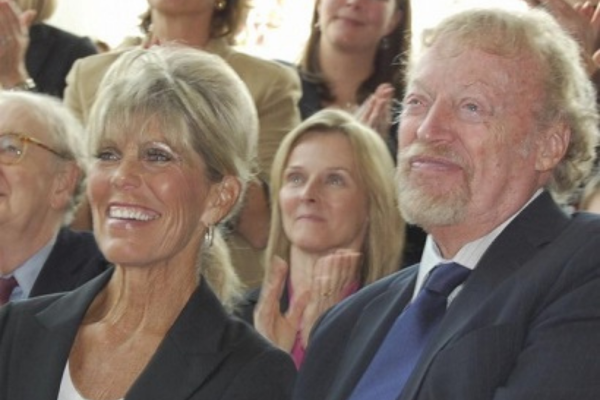
If Penny Knight has a second act, it’s this: she and Phil have become among the most consequential philanthropists in American history. Not because of the size of the checks alone — though the checks are staggering — but because of what they’ve chosen to fund.
The spending has been methodical and deeply personal.
In 2008, the Knights gave $100 million to Oregon Health & Science University to launch what became the OHSU Knight Cancer Institute. That was the seed. In 2013, they set a $500 million challenge grant — OHSU had to match it within two years. More than 10,000 donors from across the United States and 14 countries contributed. OHSU met the challenge. The Knight Cancer Institute doubled in capacity and ambition.
Then in August 2025, the Knights announced a $2 billion gift to OHSU — the largest single donation ever made to a U.S. academic institution. It will nearly double the institute’s size again, expand clinical trials, and extend support services to cancer patients that go beyond treatment: psychological counseling, nutritional care, financial support, survivorship programs. Phil’s motivation is partly personal. His father died of leukemia. A beloved aunt died of breast cancer. He watched people he loved face cancer without adequate support.
The Knight Cancer Institute’s director, Brian Druker, who revolutionized leukemia treatment through his work on the drug Gleevec, is the reason the Knights deepened their commitment to OHSU. Phil called him “wisdom in human clothing.”
The education giving has matched the medical giving in scale. The Knights gave $500 million to the University of Oregon in 2016 to launch the Phil and Penny Knight Campus for Accelerating Scientific Impact — at the time, the largest donation ever made to a public university in the United States. They gave another $500 million to expand it in 2021. They’ve given Stanford, where Phil earned his MBA, more than $580 million total, including $400 million in 2016 to establish the Knight-Hennessy Scholars program. In 2022, they gave Stanford an additional $75 million to fund the Phil and Penny Knight Initiative for Brain Resilience, focused on Parkinson’s, Alzheimer’s, and cognitive decline.
In 2023, the Knights pledged $400 million to the 1803 Fund, an organization working to revitalize North and Northeast Portland’s historically Black community — a neighborhood partially demolished in the mid-20th century to make way for a highway and sports arena.
Their total estimated lifetime giving, as of 2025, sits at approximately $3.6 billion. In 2024 alone, they donated roughly $370 million. TIME named them to its TIME100 Philanthropy list in 2025. The Association of American Cancer Institutes gave them its 2020 Champions for Cures award.
Penny’s name appears alongside Phil’s on every announcement, every institution, every honor. That’s no accident. The “Phil and Penny Knight Campus.” The “Phil and Penny Knight Initiative.” These aren’t gestures of courtesy. They reflect a genuine partnership — in philanthropy as in everything else.
Controversies: The Complicated Shadow of a Nike Fortune
Any honest account of Penny Knight must reckon with the source of the wealth she and Phil have given away so generously.
Nike’s rise to global dominance was, in part, built on manufacturing in low-wage regions of Asia. Through the late 1980s and 1990s, the company faced serious, documented allegations of sweatshop conditions, child labor, and abusive factory practices among its overseas suppliers. Nike initially denied the allegations. As scrutiny mounted — through investigative journalism, labor rights organizations, and student protests — Phil Knight was forced to respond publicly. In 1998, he announced a series of reforms, including factory audits and minimum wage increases in Nike-contracted facilities.
Critics argued the reforms were insufficient and slow. The controversy left a permanent mark on the brand’s reputation, even as Nike’s cultural dominance grew. Phil Knight’s personal image was entangled with it for years.
Penny Knight has never spoken publicly about this chapter of Nike’s history. She has played no visible role in Nike’s labor practices — her name doesn’t appear in any corporate governance role at the company. But the fortune that funds the cancer institute, the scholarship programs, and the university campuses was built, in part, during those years.
More recently, critics of mega-philanthropy have raised structural concerns about the Knights’ giving specifically. When the $2 billion OHSU gift was announced in 2025, some analysts noted that the accompanying governance structure — a semi-autonomous “Knight Cancer Group” operating within a nominally public university — concentrates significant decision-making power in a private donor. The Higher Education Inquirer described this as an example of “donor-driven governance” at a public institution, raising questions about accountability and democratic oversight.
These aren’t frivolous concerns. They’re real tensions that come with giving at this scale. Penny Knight has not addressed them publicly.
Phil is a registered Republican who has donated to Republican candidates in Oregon and nationally, a political identity that sits in tension with the progressive politics of the city where he built his fortune. Penny’s personal politics are not publicly known.
Current Life: Private, Purposeful, Present
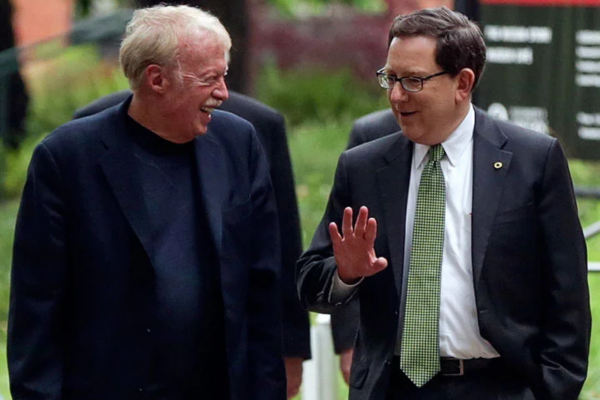
In 2026, Penny Knight is in her late 70s or early 80s — her exact birth year remains private. She lives between Oregon and California with Phil, who is 88 years old. They have seven grandchildren. They travel. They give money away. They stay largely out of the spotlight.
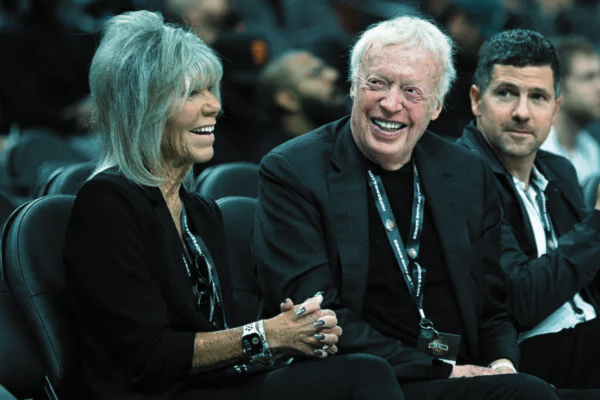
She doesn’t have a public social media presence. She doesn’t give speeches. She doesn’t appear on panels about philanthropy or women in business. She attends ceremonies when necessary, stands next to Phil when cameras appear, and gives nothing away about what she’s actually thinking.
That’s been her mode for more than five decades. She perfected it early and never broke character.
The Phil and Penny Knight Campus in Eugene continues to expand, drawing researchers and students into an environment that didn’t exist before a student said yes to her professor’s unusual job offer in 1968. The OHSU Knight Cancer Institute is now, with the 2025 gift, on track to become one of the most well-resourced cancer research centers in the world.
Penny Knight didn’t build any of that in the conventional sense. But she was present at the beginning, when it could still have gone any other way. She kept the books when the books were a mess. She stayed when staying required genuine faith in something that hadn’t yet proven itself. She’s still here.
Legacy: What She Actually Leaves Behind
The easy answer is the money. The billion-dollar campuses. The cancer institute. The scholarship programs. The 1803 Fund. The brain research initiative. By the time the Knights are done giving, the total will almost certainly exceed $5 billion. That’s a legacy by any measure.
But Penny Knight’s real legacy might be something harder to quantify.
She demonstrated, without ever announcing it, that influence doesn’t require visibility. She shaped the trajectory of one of the most valuable companies in history by showing up to a job that paid two dollars an hour and taking it seriously. She held a marriage and a family together through decades of pressure, public scrutiny, and private grief. She lost a child and kept going.
People who become names on buildings usually got there by making a lot of noise. Penny Knight got there by making almost none. That’s either a product of her era, her personality, or some combination of both — but it’s unusual enough to be worth noting.
Phil Knight’s memoir Shoe Dog devoted significant space to Penny. He described her as having all the personality in the marriage while he provided the quirks. He called her his partner. He described watching her hold Matthew for the first time. He wrote about her learning to budget groceries on his $18,000 salary. He recorded the texture of a real life built alongside another real person.
That’s the record. It’s incomplete — it’s his account, filtered through his memory and his way of seeing. But it’s evidence of something genuine. She wasn’t a supporting character who stayed in the background because she had nothing to offer. She was someone who chose where to direct her energy and directed it toward things that lasted.
The cancer research will outlast her. The scholars will outlast her. The campus in Eugene will still be there when no one alive today remembers who Penelope Parks was before she became Penny Knight.
That’s a legacy. She built it quietly, and it will last.
FAQ
1. Who is Penny Knight?
She’s the wife of Phil Knight, co-founder of Nike and one of the wealthiest people in the United States. Born Penelope Parks, she met Phil at Portland State University in 1968, worked at his shoe company Blue Ribbon Sports, and has been his partner — in life and philanthropy — ever since.
2. When was Penny Knight born?
Her exact birth date is not publicly available. She’s maintained intense privacy throughout her adult life, and no reliable source has published her birth year.
3. How did Penny and Phil Knight meet?
Phil was teaching accounting at Portland State University in 1968 when Penny was one of his students. After she asked him to be her academic adviser, he offered her a job at Blue Ribbon Sports instead. They dated, became engaged, and married that same year on September 13, 1968.
4. What role did Penny play at Nike?
She wasn’t a co-founder in the official sense, but she worked at Blue Ribbon Sports — the company that became Nike — in its earliest days. She handled bookkeeping, scheduling, and general operations. Without her steadiness during those fragile early years, the company might not have survived.
5. How much have Penny and Phil Knight donated to charity?
Their estimated lifetime giving is approximately $3.6 billion as of 2025. Their largest single gift is the $2 billion donated to the OHSU Knight Cancer Institute in August 2025, described as the largest single donation ever made to a U.S. university.
6. What happened to Penny Knight’s son Matthew?
Matthew Knight, her eldest son, died in May 2004 at age 34 during a scuba diving trip to Lake Ilopango in El Salvador. He was filming a fundraising video for a Portland nonprofit when he suffered a fatal cardiac event caused by an undetected congenital heart defect. The Matthew Knight Arena at the University of Oregon is named in his memory.
7. Who are Penny Knight’s other children?
Travis Knight, her second son, is the CEO of Laika Studios, the stop-motion animation company known for films like Coraline and ParaNorman. Her daughter Christina lives a private life and is rarely mentioned in public sources.
8. What is the Phil and Penny Knight Campus?
It’s a research and innovation hub at the University of Oregon in Eugene. The Knights gave $500 million to launch it in 2016 and another $500 million in 2021 to expand it. It focuses on biomedical science and converting research discoveries into real-world applications.
9. Did Penny Knight receive any awards for her philanthropy?
Yes. In 2020, she and Phil received the AACI Champions for Cures Award from the Association of American Cancer Institutes, recognizing their decade-plus commitment to cancer research. In 2025, TIME named them to its TIME100 Philanthropy list.
10. What is Penny Knight’s net worth?
She doesn’t have a separately disclosed net worth. Phil Knight’s net worth is estimated at approximately $35–42 billion depending on the source and date, primarily derived from Nike stock. As Phil’s spouse, Penny shares access to these assets, though she’s listed on no separate financial disclosures.
11. Where do Penny and Phil Knight live now?
They split time between a home in Hillsboro, Oregon, and a residence in La Quinta, California. Phil maintains a private hangar at the Hillsboro Airport.
12. Is Penny Knight active on social media?
No. She has no known public social media presence and has rarely given public interviews or statements throughout her adult life.
13. Has Penny Knight written any books?
She has not. Phil Knight wrote Shoe Dog (2016), which includes significant material about their relationship and early life together. Penny has never published a memoir or public account of her own.
14. How is Penny Knight connected to the OHSU Knight Cancer Institute?
The institute bears both her name and Phil’s. The original $100 million gift in 2008 and every subsequent gift to OHSU — culminating in the $2 billion announced in 2025 — have been made jointly in both their names. The cancer cause appears to be one of deep personal significance to both of them.
15. What is Penny Knight doing in 2026?
By all available accounts, she continues to live a quiet, private life focused on family and philanthropy. She and Phil have seven grandchildren. Their charitable giving continues at a large scale. She hasn’t changed her public approach — which is to say, she still doesn’t have one.
For More Information Click On This Link Viral Released