Clarence Franklin! The little girl never came back from Mildred Jennings.
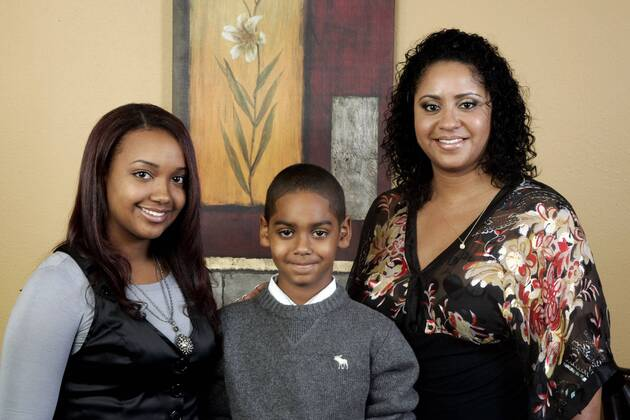
She was twelve years old when Reverend Clarence LaVaughn Franklin — married, 25, her pastor at New Salem Baptist Church in Memphis — got her pregnant. The baby was born November 17, 1940. Carol Ellan, they named her. Mildred was separated from the infant immediately and sent to live with relatives. The child went to her grandmother. The preacher kept his pulpit, his reputation, his marriage, and his growing fame.
Nobody called the police. Nobody filed charges. The congregation knew, or some of them did, but knowing and speaking are different currencies in 1940 Mississippi when the man holding power is the one who talks to God every Sunday.
That’s where Clarence Franklin story really lives — not in the sermons that made him famous, but in the wreckage he left behind every place his voice carried him.
Quick Bio Facts
| Detail | Information |
|---|---|
| Full Name | Clarence LaVaughn Franklin (born Walker) |
| Born | January 22, 1915 |
| Birthplace | Sunflower County (possibly Bolivar County), Mississippi |
| Died | July 27, 1984 (age 69) |
| Cause of Death | Complications from 1979 shooting; spent 5 years in coma |
| Parents | Willie Walker (biological father), Rachel Pittman Walker |
| Adopted By | Henry Franklin (stepfather, after age 5) |
| Nickname | “The Man with the Million-Dollar Voice” |
| Occupation | Baptist minister, civil rights activist, recording artist |
| First Wife | Alene Gaines (m. 1934, divorced 1936) |
| Second Wife | Barbara Siggers (m. 1936, separated 1948, never divorced) |
| Barbara’s Death | 1952 (heart attack, age 34) |
| Children | 6 total – Vaughn (adopted), Erma, Cecil, Aretha, Carolyn, Carol Ellan (with Mildred Jennings) |
| Main Church | New Bethel Baptist Church, Detroit (1946-1979) |
| Famous Sermons | “The Eagle Stirreth Her Nest,” “Give Me This Mountain,” “Dry Bones in the Valley” |
| Recordings | 70+ sermon albums starting in 1950s |
| Civil Rights | Organized 1963 Walk to Freedom with MLK (125,000 marchers) |
| Relationship | Clara Ward (gospel singer, on-and-off affair) |
| Shot | June 10, 1979, during home robbery |
| Burial | Woodlawn Cemetery, Detroit, Michigan |
| Portrayed By | Forest Whitaker (Respect, 2021), Courtney B. Vance (Genius, TV series) |
The Boy Who Cried on Christmas
Mississippi Delta, 1915. Willie and Rachel Walker’s sharecropping life produced a son they named Clarence LaVaughn. The only thing Willie taught him, Franklin would later say, was how to salute when he came home from World War I in 1919.
Then Willie left. Just walked away when Clarence was four years old. Left Rachel with two children, a sharecropping debt, and no way forward except remarrying.
Henry Franklin came next. A decent man who gave Clarence his surname and not much else. They picked cotton side by side — children worked fields back then, no childhood protecting you from economic reality — and Rachel cried every Christmas morning because they couldn’t afford toys.
Clarence had more problems than poverty. He was born with jaundice, that yellow tinge to skin and eyes that signals liver trouble. For him, it triggered a cascade of viral infections that followed him through childhood like a shadow he couldn’t outrun. Doctors put him on restricted diets. No playing with other kids during flu season. No normal routines. His immune system couldn’t handle what other children shrugged off.
School became something he couldn’t attend regularly. When other kids learned their ABCs, Clarence was home sick again. His attendance record made starting formal education nearly impossible.
But somewhere in his early teens, his body caught up. The infections came less frequently. He started attending school regularly and pushed through despite missing years. He actually finished, which wasn’t common for Black boys in 1920s Mississippi.
More importantly, he could finally be around people without his parents panicking.
When Flames Don’t Consume
One night when Clarence was maybe fifteen, he woke up and saw fire on his bedroom wall. Not a dream — he was certain he was awake. The flames covered one plank of wood but didn’t spread, didn’t consume the house, just burned in place like a vision.
He took it as God calling him to preach. At sixteen, he was ordained as a Baptist minister at St. Peter’s Rock Baptist Church in Cleveland, Mississippi. Not because he’d studied theology or attended seminary — he hadn’t. Because he could talk. Because when he opened his mouth, something happened in the room that hadn’t been there before.
He started working the Black itinerant preaching circuit, traveling from church to church across Mississippi and Arkansas. No permanent position, just whoever would have him for a Sunday, passing the collection plate and moving on.
In October 1934, at age 19, he married Alene Gaines. That marriage lasted maybe eighteen months before it dissolved in ways nobody bothered documenting. Divorce, abandonment, annulment — the record doesn’t say.
On June 3, 1936, he married Barbara Siggers, a gospel singer with a voice that matched his in power if not in fame. She came with a two-year-old son named Vaughn from a previous relationship. C.L. adopted the boy shortly after the wedding. Vaughn wouldn’t learn C.L. wasn’t his biological father until 1951, fifteen years into thinking he was.
Building a Ministry on Broken Ground
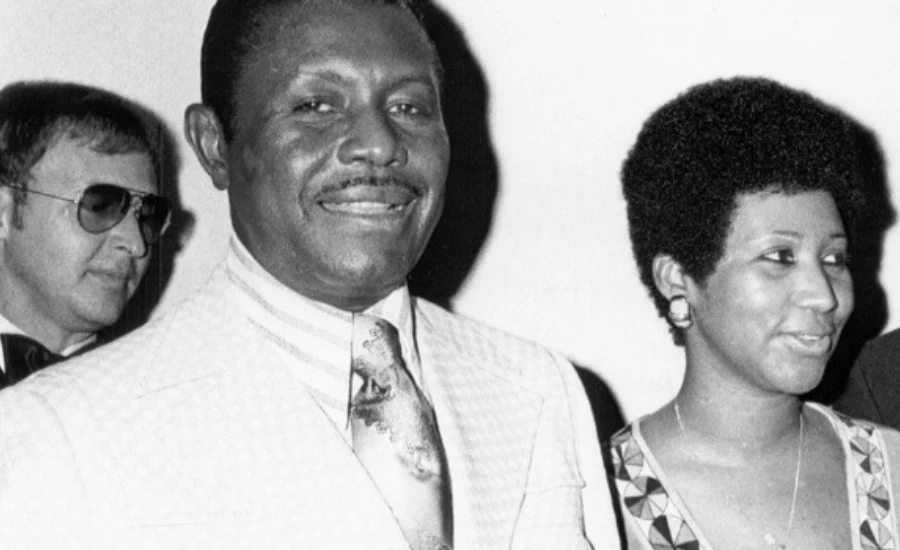
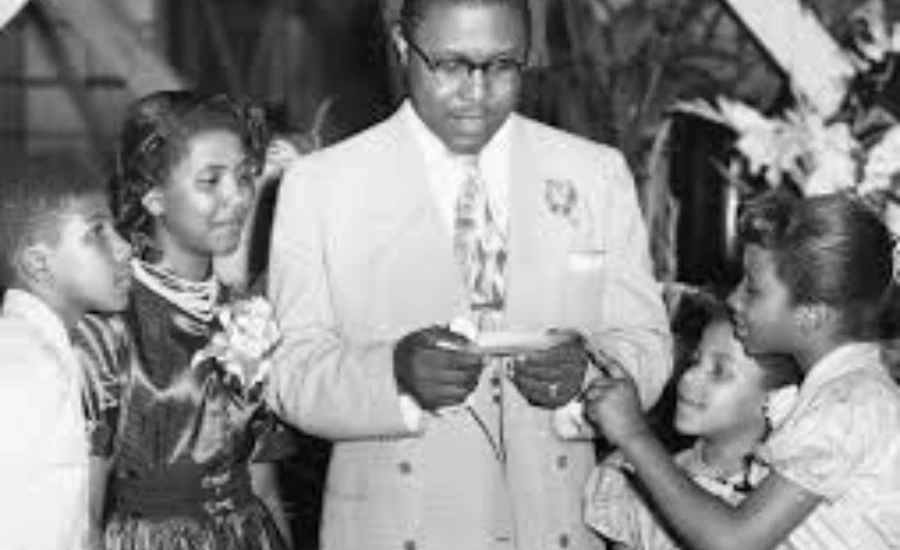
Barbara and C.L. had four children together between 1938 and 1944. Erma arrived first. Then Cecil. Then Aretha Louise, born March 25, 1942, in Memphis — the daughter who would eventually become more famous than her father ever was. Finally Carolyn in 1944.
In 1939, C.L. became pastor of New Salem Baptist Church in Memphis, Tennessee. Real money, real influence, a weekly radio broadcast where he sang and preached and analyzed current events affecting Black Americans. During World War II, his encouragement helped Memphis’s Black community buy more than a million dollars in war bonds.
But in 1940, something happened that would stay buried in whispers for decades. Mildred Jennings was twelve years old. C.L. was 25. She was a member of his congregation. He got her pregnant.
Carol Ellan was born November 17, 1940. Mildred was separated from the baby and sent away. Carol Ellan’s grandmother raised her. Nobody called the crime what it was — statutory rape, abuse of power, pedophilia. The child who resulted from that assault grew up knowing who her father was but not being claimed by him publicly until she was nearly eighteen and showed up in Detroit demanding acknowledgment.
Barbara knew. How could she not? But divorce wasn’t an option for a Baptist minister’s wife in 1940, not if she wanted to survive financially. So she stayed, had two more children with him, and watched him build a career while carrying the knowledge of what he’d done.
The Million-Dollar Voice Finds Detroit
In May 1944, C.L. moved to Buffalo, New York, to pastor Friendship Baptist Church. Better pay, northern city, escaping whatever whispers followed him from Memphis. He stayed two years.
Then Detroit called in June 1946. New Bethel Baptist Church needed a pastor. The congregation was modest, maybe a few hundred people, founded in 1932 by Southern Black migrants who’d come north for auto factory jobs and wanted a church that felt like home.
C.L. showed up and transformed it. His preaching style was called “whooping” — a chanted, improvisational technique featuring rhythmic repetition, melodic phrasing, emotional crescendo. He’d start slow, build momentum, and by the sermon’s climax people were on their feet shouting, crying, feeling something they couldn’t name but desperately needed.
Attendance exploded. Within a few years, New Bethel was packing the building every Sunday. In 1961, they moved to a converted movie theater on Linwood Boulevard with seating for 2,200 people. Even that wasn’t enough.
His fame spread beyond Detroit. He preached throughout the country while maintaining his Detroit pulpit. Radio stations broadcast his Sunday sermons. Joe Von Battle’s JVB label started recording them in the early 1950s, pressing them onto vinyl LPs that sold hundreds of thousands of copies.
“The Eagle Stirreth Her Nest” became his signature sermon. In 2011, the Library of Congress added it to the National Recording Registry. His voice was that powerful — rhythmic, hypnotic, pulling listeners into the narrative until they forgot they were sitting in a church and felt like they were standing at the edge of creation watching God work.
Gospel music royalty started showing up at New Bethel. Mahalia Jackson. James Cleveland. Clara Ward and the Famous Ward Singers.
Clara Ward changed everything.
The Singer He Couldn’t Leave Alone
Clara Ward was born in Philadelphia in 1924, nine years after C.L. Her mother Gertrude founded the Ward Singers and turned them into one of the most successful gospel groups of the 1950s. Clara’s voice could reach the highest soprano registers without losing purity or volume, then drop to growling low notes like a country preacher.
She and C.L. started touring together in the early 1950s. The Clara Ward Singers would perform, C.L. would preach, and together they drew crowds that paid thousands of dollars per show. His daughter Aretha, traveling with him since age twelve, watched Clara perform and decided that’s what she wanted to become — a singer who could make people feel something they couldn’t name.
But C.L. and Clara’s relationship went beyond professional collaboration. According to biographer Nick Salvatore and accounts from Clara’s sister Willa, they had a long-term romantic affair that lasted until Clara’s death in 1973.
C.L. was still technically married to Barbara, though she’d moved to Buffalo with Vaughn in 1948 after the final separation. Barbara never divorced him. She worked in a music store, gave private music lessons, trained to be a nurse’s aide, and made periodic trips to Detroit to visit Erma, Cecil, Aretha, and Carolyn.
Then on March 7, 1952, Barbara died of a heart attack. She was 34 years old.
C.L. didn’t attend his own wife’s funeral.
That absence told everyone who needed to know exactly where his priorities lived.
The Man Who Marched with King
The 1950s made Clarence Franklin rich and famous. His sermon recordings generated significant income. His traveling gospel shows commanded $4,000 per performance. He moved his family into a mansion on LaSalle Boulevard in Detroit’s affluent north end, far from the Black entertainment district where New Bethel sat.
But he wasn’t just collecting money and recording sermons. The civil rights movement was building momentum, and C.L. positioned himself at its center.
He met Martin Luther King Jr. in the mid-1950s. King was young, brilliant, building the Southern Christian Leadership Conference. C.L. was older, established, wealthy, with a massive congregation and media platform. They became friends and allies.
On June 23, 1963, C.L. organized the Walk to Freedom down Detroit’s Woodward Avenue. One hundred twenty-five thousand people marched — the largest civil rights demonstration in American history up to that point. Martin Luther King Jr. spoke that day, delivering an early version of the “I Have a Dream” speech he’d perfect two months later in Washington.
King later called the Detroit march “one of the most wonderful things that has happened in America.”
C.L. served on the executive board of the Southern Christian Leadership Conference. He organized fundraisers. He preached against segregation. He helped end racial discrimination against Black members of the United Auto Workers union.
His civil rights work was real. It mattered. People’s lives changed because of what he organized and who he mobilized.
But heroism in one arena doesn’t erase destruction in another.
What the Biographer Found
In 2005, Nick Salvatore published Singing in a Strange Land: Clarence Franklin, the Black Church, and the Transformation of America. The book was supposed to celebrate a civil rights pioneer. What it revealed was more complicated.
C.L. fathered Carol Ellan Kelley with 12-year-old Mildred Jennings. He had an affair with Clara Ward that lasted decades. He faced IRS troubles over unreported income. Rumors circulated about drug trafficking, though never proven. He had brushes with the law including drunk driving charges.
Ray Charles, who attended some of C.L.’s parties, later said he was disturbed by what went on — orgies, excess, behavior that violated everything the man preached on Sunday.
When Carol Ellan contacted C.L. at age seventeen, he acknowledged her publicly. For him, it was about doing what his own father never did — claiming his child. For Carol Ellan, it felt like being forced into existence by someone who’d rather she stayed hidden.
She visited Detroit, met her half-siblings (except Carolyn, who refused), and tried to build relationships with people who shared her blood but not her experience. Aretha eventually left her $50,000 in one of her drafted wills, suggesting some level of connection formed over the years.
Carol Ellan died January 30, 2019, five months after Aretha. Heart attack, same cause that killed her half-sister. She had children — Herman E. Wheatly III and Charles G. Smith — and grandchildren who carried forward a bloodline that started with a crime nobody prosecuted.
The Night Everything Changed
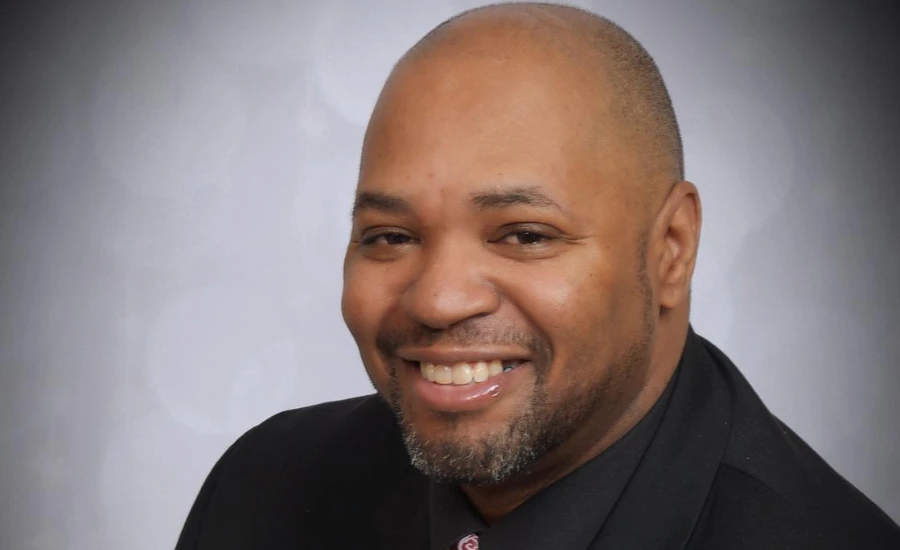
June 10, 1979. Shortly after midnight on Sunday morning. C.L. was watching television in his upstairs bedroom at the LaSalle Boulevard house when intruders broke in. They were stealing antique leaded glass windows, police later determined.
C.L. heard them. He grabbed his gun and fired twice, hitting nobody. They fired back, hitting him twice — once in the right knee, once in the groin. The groin shot severed an artery.
A neighbor found him hours later. Paramedics rushed him to Henry Ford Hospital on nearby West Grand Boulevard.
He never woke up.
The bullet severed the artery, limiting blood flow to his brain. Doctors stabilized him but couldn’t reverse the damage. He slipped into a coma.
Five people were eventually convicted in the shooting. A sixth received immunity for testifying against the others. Two got 25-50 years for assault with intent to murder.
But C.L. wasn’t there to see justice served. He was lying in a hospital bed, brain-dead, breathing but gone.
Five Years of Waiting
Aretha was performing at the Aladdin Hotel and Casino in Las Vegas when she got the call. She rushed back to Detroit immediately. Her siblings — Erma, Cecil, Carolyn, Vaughn — gathered at the hospital.
After six months, they made a decision. They moved C.L. home. Hired 24-hour nursing care. Refused to put him in a facility.
It cost $2,500 per week. For five years.
Caregivers monitored his vitals, changed his bedding, turned him to prevent bedsores, fed him through tubes. He wasn’t on life-sustaining equipment — his body kept breathing, heart kept beating. But the man who’d had the Million-Dollar Voice couldn’t speak, couldn’t see, couldn’t recognize the children sitting beside his bed telling him they loved him.
In mid-1984, his condition deteriorated. The family moved him to New Light Nursing Home.
One week later, on July 27, 1984, he stopped breathing. Doctors listed the cause as heart failure or stroke, though an autopsy was performed to confirm.
He was 69 years old. He’d spent the last five years of his life in a coma.
The Funeral Detroit Won’t Forget
August 1984. New Bethel Baptist Church couldn’t hold everyone who wanted to attend. It was the largest funeral ever held for a Black man in Detroit history up to that point.
Jesse Jackson delivered the eulogy. Detroit’s first Black mayor, Coleman A. Young, attended. Gospel singers filled the church with music. Civil rights leaders from across the country showed up to pay respects.
Young renamed Linwood Boulevard as Clarence Franklin Boulevard. A park near his former home became C.L. Franklin Park.
They buried him at Woodlawn Cemetery on North Woodward Avenue. The same cemetery where Carol Ellan would eventually be laid to rest in 2019, forty years after her father’s shooting.
Erma died in 2002 from throat cancer. Cecil died in 1989. Carolyn died in 1988 from breast cancer, never having finished law school after moving back to Detroit when her father was shot. Vaughn died in 2002.
Aretha outlived them all, dying August 16, 2018, at age 76 from pancreatic cancer. She left behind four sons — Clarence, Edward, Ted, Kecalf — and a legacy as the Queen of Soul that dwarfed anything her father accomplished.
But she never forgot where she learned to sing. Clara Ward’s influence, her father’s encouragement, the gospel training she received traveling with him as a child — all of it showed up in every note she sang for the next sixty years.
What Nobody Could Reconcile
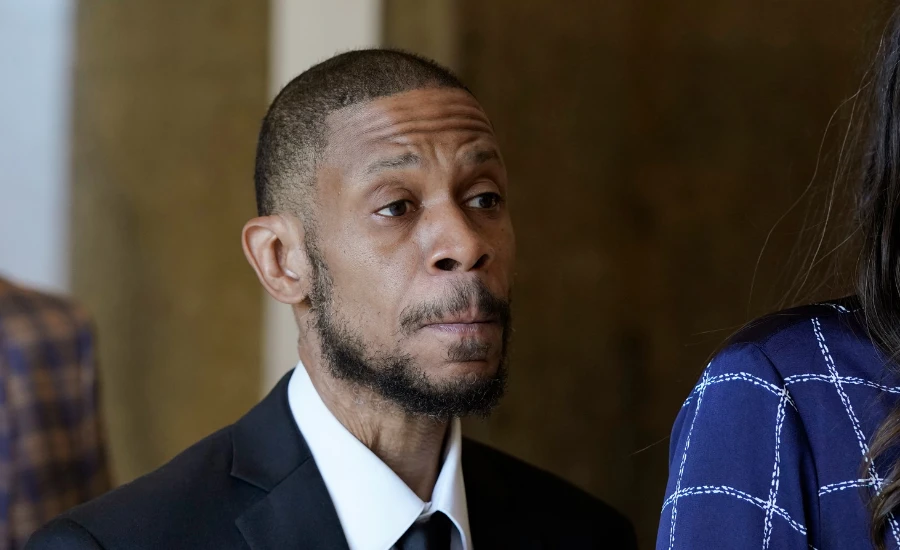
How do you measure a man who organized the largest civil rights march in American history before the March on Washington, but sexually assaulted a twelve-year-old girl?
How do you honor a voice that moved millions toward justice while destroying the people closest to him?
The answer is: you don’t. You tell the truth about both and let people sit with the discomfort.
Clarence Franklin was the most imitated Black preacher in history. Jesse Jackson called him “the Rabbi” because of his brilliance as a teacher. His sermon recordings influenced generations of ministers who learned to whoop, to build momentum, to make the Word feel alive.
His civil rights work was legitimate. The Walk to Freedom mattered. His friendship with Martin Luther King Jr. helped fund and organize a movement that changed American law.
But he also fathered a child through statutory rape and faced no consequences. He abandoned his wife emotionally and literally, didn’t attend her funeral, carried on affairs while preaching about righteousness every Sunday.
His children paid the price. Barbara died at 34. Erma, Cecil, and Carolyn all died relatively young — cancer taking two of them, Cecil from lung disease. Aretha carried trauma that shaped her entire life, including becoming a mother at twelve and fourteen under circumstances she never publicly explained.
Carol Ellan grew up knowing her father was famous but not claiming her, raised by her grandmother while her half-siblings lived in a mansion and traveled the country.
Conclusion
Detroit still honors Clarence Franklin. The street bears his name. The park commemorates his life. New Bethel Baptist Church, now run by different leadership, stands as a monument to what he built.
His sermon recordings remain in print. “The Eagle Stirreth Her Nest” plays in seminary classes teaching preachers how to structure a sermon. His vocal techniques — the whooping style, the rhythmic build — are studied and imitated by ministers across denominations.
The 1963 Walk to Freedom remains one of the most important moments in Detroit’s civil rights history.
But the truth about Mildred Jennings is also his legacy. The twelve-year-old girl who became pregnant by her pastor and lost her baby and was sent away to protect a man’s reputation — that’s part of the story too.
The wife he didn’t attend the funeral for. The affair he carried on while preaching about sanctity. The legal troubles, the rumors of excess, the life that didn’t match the sermons.
In 2021, Forest Whitaker played C.L. Franklin in Respect, the Aretha biopic. The movie showed a complicated man — supportive of his daughter’s talent, flawed in his personal life, caught between the pulpit and the world.
That’s probably the closest we’ll get to understanding him. Not a hero, not a villain. A man with a voice that moved millions and a life that left wreckage everywhere it landed.
“Give me this mountain,” he preached in one of his most famous sermons, taking the words of Caleb from the Book of Joshua. “The mountain that God promised, the mountain that seems impossible to climb.”
He spent his life climbing. Made it to the top of civil rights leadership, gospel recording fame, ministerial influence.
But some mountains aren’t meant to be conquered. Some are warnings about what happens when the climb becomes the only thing that matters.
You may also like Penny Knight
FAQ
1. Who was C.L. Franklin?
Clarence LaVaughn Franklin was an American Baptist minister, civil rights activist, and recording artist known as “The Man with the Million-Dollar Voice.” He was the father of singer Aretha Franklin and pastor of New Bethel Baptist Church in Detroit from 1946-1979.
2. How did C.L. Franklin die?
He was shot twice during a home robbery on June 10, 1979, and fell into a coma. He never regained consciousness and died on July 27, 1984, after spending five years in a comatose state. He was 69 years old.
3. What was C.L. Franklin’s most famous sermon?
“The Eagle Stirreth Her Nest” is his most famous sermon. It was added to the National Recording Registry of the Library of Congress in 2011. Other famous sermons include “Give Me This Mountain” and “Dry Bones in the Valley.”
4. Was C.L. Franklin involved in the civil rights movement?
Yes, extensively. He organized the 1963 Walk to Freedom in Detroit with Martin Luther King Jr., which drew 125,000 marchers—the largest civil rights demonstration in U.S. history at that time. He served on the executive board of the Southern Christian Leadership Conference.
5. Who was Carol Ellan Kelley?
Carol Ellan Kelley was C.L. Franklin’s daughter, born November 17, 1940, to Mildred Jennings, a 12-year-old member of his Memphis congregation. C.L. was 25 at the time. She was raised by her grandmother and didn’t make contact with C.L. until she was nearly 18.
6. Who was C.L. Franklin’s wife?
He married Barbara Siggers in 1936. They had four children (Erma, Cecil, Aretha, Carolyn) and separated in 1948, though never officially divorced. Barbara died of a heart attack in 1952 at age 34. C.L. did not attend her funeral.
7. How many children did C.L. Franklin have?
Six children total: Vaughn (adopted from Barbara’s previous relationship), Erma, Cecil, Aretha, Carolyn, and Carol Ellan (with Mildred Jennings).
8. What was C.L. Franklin’s relationship with Clara Ward? Clara Ward was a famous gospel singer who toured with C.L. Franklin in the 1950s-1970s. According to his biographer and Clara’s sister, they had a long-term romantic relationship that lasted until Clara’s death in 1973.
9. Where is C.L. Franklin buried?
He’s buried at Woodlawn Cemetery on North Woodward Avenue in Detroit, Michigan—the same cemetery where several of his children are also buried.
10. What is “whooping” in preaching?
Whooping is a chanted, improvisational preaching style featuring rhythmic repetition, melodic phrasing, and emotional crescendo. C.L. Franklin was a master of this traditional Black Baptist technique, which influenced generations of preachers.
11. Did C.L. Franklin have legal troubles?
Yes. Sources mention issues with the IRS over unreported income, drunk driving charges, and drug-related charges, though specific details aren’t well-documented in public records.
12. What happened to C.L. Franklin’s children?
Erma died in 2002 (throat cancer), Cecil died in 1989 (lung disease), Carolyn died in 1988 (breast cancer), Vaughn died in 2002, Aretha died in 2018 (pancreatic cancer), and Carol Ellan died in 2019 (heart attack).
13. How many sermon albums did C.L. Franklin record?
He recorded more than 70 albums of sermons and spiritual songs, primarily through Joe Von Battle’s JVB label, starting in the 1950s and continuing into the 1970s.
14. Who shot C.L. Franklin?
He was shot by home invaders who broke into his Detroit home on June 10, 1979, apparently attempting to steal antique leaded glass windows. Five people were eventually convicted; two received 25-50 year sentences for assault with intent to murder.
15. How has C.L. Franklin been portrayed in movies?
Forest Whitaker played him in the 2021 film Respect (the Aretha Franklin biopic), and Courtney B. Vance portrayed him in the Genius: Aretha television series.