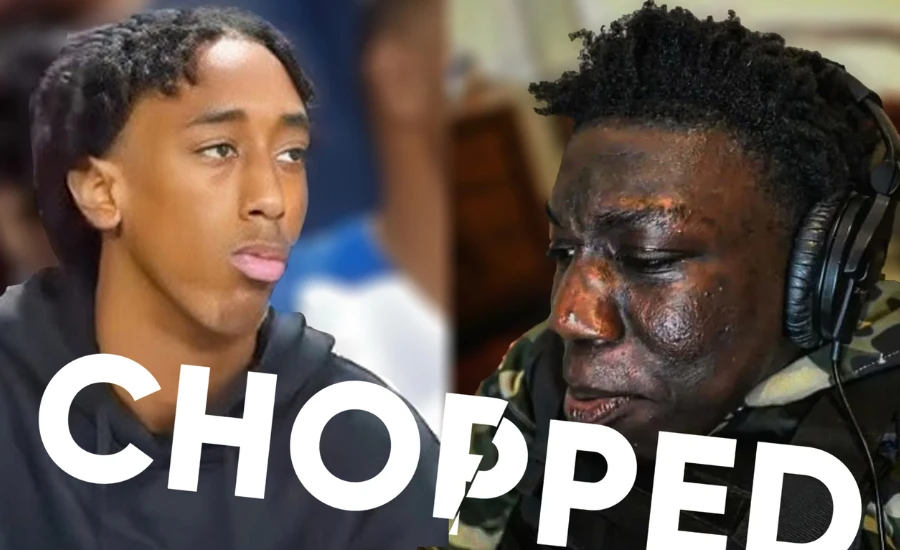
One word. Five different meanings depending on who is using it, where they are from, what platform they are on, and what tone they are using when they say it.
That is the honest starting point for understanding “chopped” as a slang term. It is not one thing. It is a word that traveled from Black American Vernacular English in the early 2000s through hip-hop, through ballroom culture, through Toronto, through South Africa, through TikTok, and into a 2025 Merriam-Webster dictionary entry — accumulating new meanings at every stop without fully dropping the old ones.
This article covers all of it. Every meaning. Every origin. Every usage context. Every common misconception. And what “chopped” actually means when someone says it to you in 2026.
The Core Definition: What “Chopped” Means in 2026
The Primary Definition
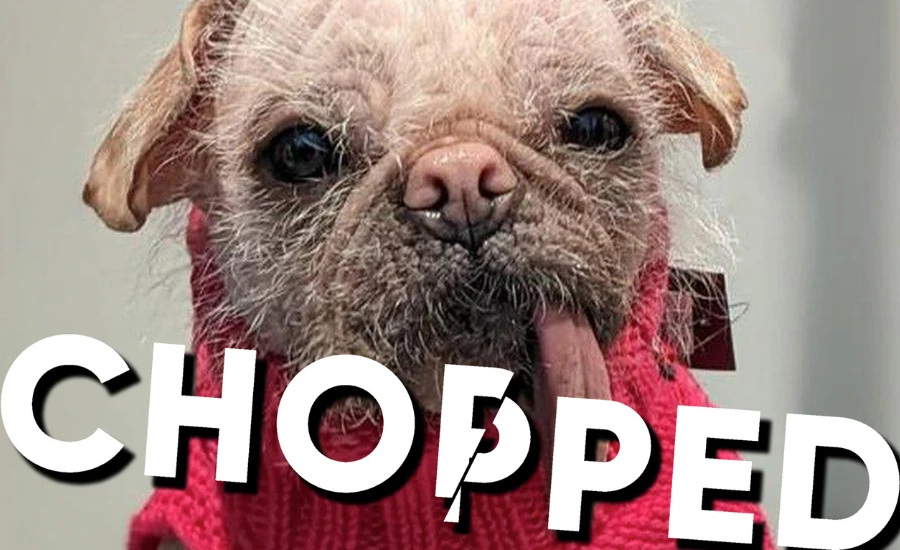
In its most widely used contemporary sense, “chopped” means unattractive, ugly, or physically undesirable.
When someone looks at a photo and says “he’s chopped” or “she looks chopped in that,” they are making a harsh judgment about physical appearance — typically rating the person very low on conventional attractiveness standards. This is the definition that Merriam-Webster added to their slang dictionary in 2025, and the one that has driven the most TikTok content, most meme culture, and most mainstream coverage.
The definition is simple. The cultural context around it is not.
Secondary Definitions
The word carries additional meanings that operate in different communities:
Rejected or dismissed — being “chopped” means being turned down, cut off, or excluded. “She chopped me” means she rejected you. “We chopped him from the group chat” means the group excluded him.
Not good enough / beneath consideration — something can be “chopped” if it fails to meet a standard. An outfit can be chopped. A haircut can be chopped. A skill level can be chopped.
Eliminated from competition — in ballroom culture specifically, being “chopped” means being judged out of a competition or performance. RuPaul uses this on RuPaul’s Drag Race during elimination rounds — the eliminated contestant is told they are “chopped” and will not move forward.
High on drugs — a separate, older usage in some communities where “chopped” describes being heavily intoxicated. This is more regional and less widely known in the TikTok era.
Off or messed up — a broader usage where “chopped” describes something that is badly done, odd, or wrong in some undefined way. Toronto rapper Jazz Cartier defined it in a 2016 Fader interview as “not normal” — using examples like selling drugs or Jeb Bush posting a gun photo on Twitter as things that can be “chopped.” In this usage, it is closer to “wild,” “off,” or “messed up” than to purely ugly.
Where It Came From: The Origin Question Nobody Agrees On Fully
The Honest Problem With Origin Claims
Here is where most slang articles fail: they state a single origin confidently and treat it as settled fact. The truth about “chopped” is messier than that.
Multiple credible sources point to different origins. A 2017 academic article from the City University of New York stated there is “no specific place the slang word chopped originated from” — which is the most honest assessment available. What the research community agrees on is that the word became prominent in Toronto and South Africa, was adopted into New York slang, and spread from there.
Merriam-Webster states that the slang use is believed to have roots in African American English, with some online commentators specifying the NYC and New Jersey area, and that it has “been around for decades” before its recent spike in usage.
Urban Dictionary’s first documented definition appeared in December 2014 — defining it as “a girl or boy that’s ugly” — though this documents when it was entered online, not when it started being used in spoken language.
The most honest summary of the origin: it emerged from Black American Vernacular English in the early 2000s, became notably prominent in Toronto and South African urban youth culture in parallel with New York and New Jersey communities, and crossed into mainstream internet culture through hip-hop, TikTok, and Black internet culture over the next decade.
The Toronto Connection
The Toronto connection is specific and documented. In 2016, Toronto rapper Jazz Cartier gave an extensive interview to The Fader specifically about the term. He described “chopped” as meaning “not normal” — an extremely flexible definition that captures the word’s original breadth before its TikTok-era narrowing to primarily mean ugly.
His examples were deliberately wide: selling drugs could be “chopped,” and Jeb Bush posting a handgun photo on Twitter could be “chopped.” Both describe something that is off, wrong, or out of place in a way that invites judgment. In this original Toronto usage, “chopped” is closer to “suspicious,” “wild,” “sketchy,” or “unacceptable” than to simply “ugly.”
The fact that a Toronto rapper was explaining the term’s meaning to a major music publication in 2016 — before its viral TikTok moment — confirms that the word had significant cultural traction well before it went mainstream.
The South Africa Connection
South Africa is less discussed than Toronto in most “chopped” origin coverage but appears in the same CUNY academic framing — the term became known in Toronto and South Africa as two parallel cultural sites where it developed meaning before spreading further. The specific South African context is not elaborated in widely available sources, but its inclusion alongside Toronto in the academic framing confirms that “chopped” was a diasporic Black youth slang term that developed across multiple English-speaking communities simultaneously rather than being strictly American in origin.
The Ballroom Culture Meaning: A Different Root
Alongside the appearance-based and general rejection-based meaning of “chopped,” there is a specific and documented usage in LGBTQ+ ballroom culture that predates and is distinct from the TikTok-era meaning.
In ballroom culture — the competitive performance community documented in the 1990 film Paris Is Burning and dramatized in the FX series Pose — “chopped” means being eliminated from a competition. When a performer is judged and does not advance, they are chopped. It is a performance verdict, not an appearance insult.
RuPaul’s Drag Race made this usage mainstream. At the end of each episode, RuPaul delivers a verdict to the contestant who is eliminated: they are “chopped” and will not continue in the competition. The word in this context means dismissed, ended, not good enough to move forward — but it is specifically a performance and competition judgment, not necessarily a physical appearance judgment.
This ballroom usage is older than the TikTok appearance usage and comes from a different cultural root. It shares the conceptual core — being cut, eliminated, dismissed — but applies it to competitive performance rather than physical appearance.
The relationship between these two meanings is real and documented. Distractify specifically noted that the term “has often been used in the LGBTQ+ ballroom culture” alongside its general appearance slang use — acknowledging both roots without resolving which came first.
Chopped and Screwed: The Music Meaning That Is Completely Different
“Chopped” also exists as a specific technical term in music production — completely unrelated to appearance or rejection.
Chopped and screwed is a hip-hop production technique pioneered by DJ Screw in Houston, Texas, in the 1990s. The technique involves two main processes: chopping, which means cutting and repeating sections of a song; and screwing, which means slowing the tempo down significantly to create a thick, syrupy, hypnotic sound.
The chopped and screwed style became synonymous with Houston rap culture and Texas hip-hop more broadly. It produces a sound that some describe as druggy or hallucinatory — the slowed tempo mimicking the sensory experience of codeine syrup, which was prevalent in Houston’s music scene during the 1990s. The irony is that while the music style’s name includes “chopped,” the style itself was partly inspired by drug culture — creating a linguistic connection between the music meaning and the drug intoxication meaning of “chopped” that is real but often unacknowledged.
The musical usage is one of the ways the word “chopped” embedded itself in Black American cultural vocabulary — through decades of Houston hip-hop’s influence on rap production nationally and globally. DJ Screw’s chopped and screwed approach became a respected production tradition that artists from Drake to Travis Scott have nodded to.
When someone talks about a “chopped” track, a “chopped” beat, or being a fan of “chopped and screwed” music, they are using a completely different definition from the appearance insult. Context matters enormously.
The TikTok Era: How “Chopped” Went Viral
Despite existing in spoken vernacular for at least two decades, “chopped” became a widely searched and widely discussed term primarily through TikTok content beginning in earnest around 2022 to 2023.
The platform’s short-form video format made “chopped” perfect content. Reaction videos where creators judged other people’s appearances or fashion choices with a single word. “He’s chopped.” Comments sections on celebrity photos. The “chopped man epidemic” TikTok from Stella Wang — a 24-year-old who posted a video about her observation that she was not seeing many attractive men — which went viral and was specifically cited by Merriam-Webster when they added the term to their slang dictionary in 2025.
The TikTok acceleration also produced regional variations and intensified forms:
“Chopped cheese” — popularized by New York rapper Lola Brooke, this means extremely unattractive. In her words: “Instead of saying ‘Yo, you chopped,’ we say ‘Yo, you chopped cheese.’ That means you extra unattractive.” The reference is to chopped cheese sandwiches — a specific New York City food item sold in bodegas — being used as an intensifier for the base insult.
“Super chopped” — an intensified form for particularly severe judgments about appearance or behavior.
“Objectively chopped” — a framing that claims objectivity in the judgment, typically used in debates about attractiveness standards.
Merriam-Webster’s 2025 addition of “chopped” to their slang dictionary represented the word’s official crossing from internet slang into documented mainstream English vocabulary. This is not a trivial milestone — Merriam-Webster’s slang tracking is rigorous and their additions reflect documented widespread usage.
How “Chopped” Works in Practice: Real Usage Examples
Understanding “chopped” requires understanding context. The same word used in different settings carries different meanings and different social weight.
In a dating context: “She/he’s chopped” means the person is unattractive. Used as a verdict about whether you would date someone. “I got chopped” means you were rejected or ghosted.
In a fashion context: “That fit is chopped” means the outfit is ugly, poorly coordinated, or generally bad. “His haircut is chopped” means the haircut looks bad.
In a social exclusion context: “We chopped him from the group” means someone was removed or excluded. “She got chopped from the plans” means she was left out.
In competitive or performance contexts: “She got chopped in round two” means she was eliminated from competition. This is closer to the ballroom usage.
In Toronto/older usage: “That move was chopped” means the behavior was off, wrong, or sketch. Not necessarily ugly — just wrong in some way.
In the drug context: “He’s looking chopped” can mean someone appears intoxicated or out of it. This usage is less prominent in 2026 but documented in earlier slang references.
In the music context: “Throw on some chopped and screwed” means play Houston-style slowed hip-hop music. Completely unrelated to appearance.
Why “Chopped” Spread: The Linguistic Reasons
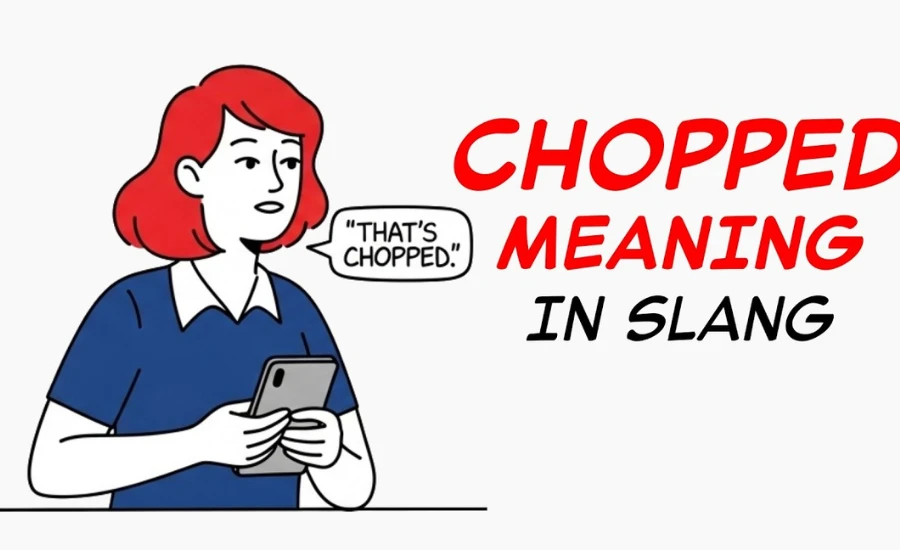
Several linguistic and social factors explain why “chopped” became a dominant slang term rather than fading after its local origins.
It is short and punchy. One syllable. Immediately delivered and immediately received. Slang terms that stick tend to be efficient — “mid,” “sus,” “cap,” “slay” — and “chopped” fits that pattern.
It is versatile. A person can be chopped. A situation can be chopped. An object can be chopped. A performance can be chopped. Slang words that can adapt across noun types and contexts have significantly longer linguistic lives than single-use terms.
It is definitive. There is a finality to “chopped” that softer alternatives lack. “Mid” suggests something is mediocre but not catastrophically bad. “Chopped” signals clear rejection or clear judgment. The word carries weight that its synonyms do not fully replicate.
It comes from a credible cultural source. Slang that originates in Black American Vernacular English and hip-hop culture has historically had extraordinary staying power and broad adoption. “Chopped” carries the cultural credibility of its origin — which is why white and non-Black users adopting it are participating in a borrowing pattern that has characterized American slang for decades and has been widely noted by linguists and cultural critics as a process that carries ethical dimensions.
The Cultural Appropriation and Ethics Question
“Chopped” originated in Black American Vernacular English. It was developed in Black communities, spread through Black hip-hop culture, amplified through Black TikTok creators, and carried into mainstream usage by the same pattern that has characterized most American internet slang since the early 2000s: Black cultural innovation followed by mainstream adoption, frequently without credit or acknowledgment.
This is not a new observation. It is the documented pattern of American popular language. It raises genuine questions about who benefits when slang crosses cultural lines — the communities that created the language, or the much larger populations that adopt and commercialize it.
Whether individual people using “chopped” in everyday conversation are engaging in cultural appropriation depends significantly on how you define appropriation and what standard you apply. What is not in dispute: the term’s Black American origins are documented, its spread followed existing patterns of Black cultural innovation going mainstream, and acknowledging that origin is both accurate and respectful.
“Chopped” vs. Other Slang: How It Compares
Where It Sits in the Slang Ecosystem
Understanding “chopped” is easier in comparison to adjacent terms.
“Mid” — means mediocre, average, neither good nor bad. Less severe than chopped. Mid suggests something is okay but not impressive. Chopped suggests something is actively bad or below standard.
“L” — means a loss or failure. “You took an L” means you failed or were embarrassed. Similar energy to being chopped but focuses on outcome rather than appearance.
“Curved” — means being rejected in a smooth, dismissive way. Someone who curved you let you down gently. Being chopped implies a harder, more definitive rejection.
“Slept on” — means undervalued or underappreciated. The opposite of being chopped in an attractive sense.
“Based” — means living according to your own values without caring what others think. The opposite of being chopped in the social judgment sense.
“Slay” — means to perform or look exceptionally well. The direct opposite of being chopped in most contexts.
What the Internet Gets Wrong About “Chopped” Slang
Several things circulate about this term that need correction.
“Chopped means the same as ugly” — it does in the most common TikTok usage. But the full range of meanings includes rejection, exclusion, competitive elimination, and general wrongness or off-ness. Reducing it to purely “ugly” misses significant dimensions of the word.
“Chopped originated on TikTok” — false. The word has been documented in spoken AAVE for decades, in Urban Dictionary since 2014, and in Toronto hip-hop journalism since 2016. TikTok amplified it massively but did not create it.
“Chopped and screwed music and chopped slang mean the same thing” — false. These are completely different usages. DJ Screw’s chopped and screwed technique is a specific music production style from Houston in the 1990s. The appearance insult is a separate, later development.
“Merriam-Webster adding ‘chopped’ means it is no longer slang” — false. Merriam-Webster adding a term to their slang dictionary confirms its widespread documented usage. It does not make the word formal English. It remains slang — just officially documented slang.
“Only Gen Z uses chopped” — false. The word has crossed into millennial usage, is used across age groups on social media, and has been documented in casual face-to-face conversations by people of multiple generations.
Where “Chopped” Is Going: 2026 and Beyond
Slang terms follow predictable lifecycles. They start in tight-knit communities with specific meaning. They spread to broader communities, gaining new meanings and losing some specificity. They either fade as the next term takes over or stabilize as permanent vocabulary additions.
“Chopped” is at a late-stage spread moment. Its Merriam-Webster inclusion in 2025 marks its peak mainstream acceptance. Whether it stabilizes as permanent English vocabulary or gets replaced by the next term depends on whether younger users in 2026 and beyond continue using it or adopt something that replaces it.
Signs point toward continued use: it is short, versatile, carries cultural weight, and has been absorbed into multiple languages of youth culture globally. British urban youth culture has adopted it. South African and Toronto communities already used it before Americans did. Its global spread is documented.
The next evolution is likely a gradual softening. Words that start as harsh insults tend to either fade or soften through overuse. “Chopped” used playfully between friends already carries a different weight than “chopped” used as a deliberate harsh rejection. The softer ironic version — celebrities captioning their own casual photos “looking chopped today” — signals that the word is already beginning to lose its sharpest edge through mainstream adoption.
Final Words
“Chopped” is a word with a specific origin, multiple meanings, a documented linguistic journey, and enough cultural weight to earn a Merriam-Webster entry in 2025.
It means unattractive in its most common use. It means rejected or dismissed in its second most common use. It means eliminated from competition in ballroom culture. It means off or wrong in its Toronto origin usage. It means a completely different thing in Houston music production. And it means intoxicated in certain older drug-adjacent contexts.
Understanding which meaning is in play requires understanding context, tone, platform, and who is speaking. That is not a bug in how language works. That is how language works — especially slang, especially slang that has traveled across cultures, platforms, and decades to arrive at its current moment of mainstream visibility.
If someone calls you chopped: they either think you are unattractive, think you have been rejected, think you are wrong in some fundamental way, or — if you are lucky — they are just doing RuPaul.
You may also like Ryan Seacrest Net Worth
FAQ: 12 Real Questions About “Chopped” Slang
1. What does “chopped” mean in slang?
In its most common current usage, “chopped” means unattractive, ugly, or physically undesirable. It is used to make a harsh judgment about someone’s appearance. Secondarily it means rejected, dismissed, or excluded — as in “she chopped me” meaning she rejected you. It can also mean not good enough, below standard, or off in some undefined way depending on context.
2. Where did “chopped” slang come from?
It originated in Black American Vernacular English, with documented significant early usage in Toronto, Canada, and South Africa. The City University of New York’s 2017 research noted there is “no specific place” the term originated from. It appears to have developed across multiple English-speaking Black youth communities in parallel before spreading through hip-hop and social media. Urban Dictionary first documented it in December 2014.
3. What does “chopped cheese” mean?
An intensified version of chopped, popularized by New York rapper Lola Brooke. “Chopped cheese” means extremely unattractive — going beyond just chopped to something even more emphatic. It references chopped cheese sandwiches — a specific New York City bodega food item — as an intensifier for the base insult.
4. What is the difference between “chopped” slang and “chopped and screwed” music?
They are completely different and unrelated in meaning. Chopped and screwed is a hip-hop production technique pioneered by DJ Screw in Houston, Texas, in the 1990s — it involves cutting and repeating sections of songs while slowing the tempo to create a hypnotic sound. The appearance insult slang is a separate development that came later. The two usages share a word but not a meaning.
5. How does “chopped” work in ballroom culture?
In LGBTQ+ ballroom culture — documented in Paris Is Burning and dramatized in Pose — “chopped” means being eliminated from a competition or performance event. RuPaul uses this on RuPaul’s Drag Race when a contestant is eliminated. In this context it is a competition verdict rather than an appearance insult — though both involve some form of judgment and dismissal.
6. Did Merriam-Webster add “chopped” to the dictionary?
Yes — in 2025, Merriam-Webster added “chopped” to their slang dictionary, defining it as “unattractive or undesirable.” Merriam-Webster specifically cited the viral TikTok usage and noted the term had roots in African American English that had been around for decades before its recent spike. Dictionary inclusion confirms widespread documented usage but does not make the word formal English — it remains slang.
7. What does it mean if someone says “I got chopped”?
Most likely it means they were rejected — by a romantic interest, from a group, from a competition, or from a social circle. The specific meaning depends on context. In dating: they were turned down or ghosted. In a friend group: they were excluded or removed. In a competition: they were eliminated. It can also mean someone rated them as unattractive.
8. Is “chopped” an insult?
Yes, in most contexts. It is a harsh judgment about appearance, worthiness, or social standing. However, between close friends the same word can carry playful or ironic weight — people teasing each other about looking rough, or self-deprecatingly calling their own casual photo “chopped.” The severity depends heavily on tone, relationship, and context.
9. What does “chopped” mean in Toronto slang?
Toronto rapper Jazz Cartier described it in 2016 as meaning “not normal” — with a broader definition than the purely appearance-based American usage. In Toronto’s original usage, a person can be chopped for their behavior, a situation can be chopped for being off or wrong, and an action can be chopped for being suspicious, sketchy, or out of place. This broader meaning was part of the word’s original range before the TikTok era narrowed it primarily to appearance.
10. Can objects and situations be “chopped” or only people?
Both. Slang.org and multiple other sources confirm that objects, situations, and actions can all be “chopped.” A haircut can be chopped. An outfit can be chopped. A situation can be chopped. A skill can be chopped. In the Toronto usage particularly, any person, object, or situation that is wrong, off, or unacceptable qualifies as chopped. The appearance insult applied to people is the most common current use but not the only one.
11. Is using “chopped” cultural appropriation?
The term originated in Black American Vernacular English and spread through Black hip-hop and internet culture. Non-Black people using it are participating in a well-documented pattern of mainstream adoption of Black cultural language. Whether this constitutes cultural appropriation in a morally significant sense is a question that depends on how you define appropriation and what standards you apply. What is not disputed is the term’s documented Black American origin and the fact that acknowledging that origin is both accurate and respectful.
12. What comes after “chopped” — what is replacing it?
As of 2026, “chopped” is still widely in active use — it has not been clearly replaced by a successor term. Its Merriam-Webster inclusion signals mainstream peak rather than fade. The word is showing signs of softening through ironic self-application, which typically signals a term moving from sharp insult toward general vocabulary. Whether a new specific term displaces it or it becomes permanent general slang is not predictable. The pattern suggests continued use with gradual meaning expansion.