
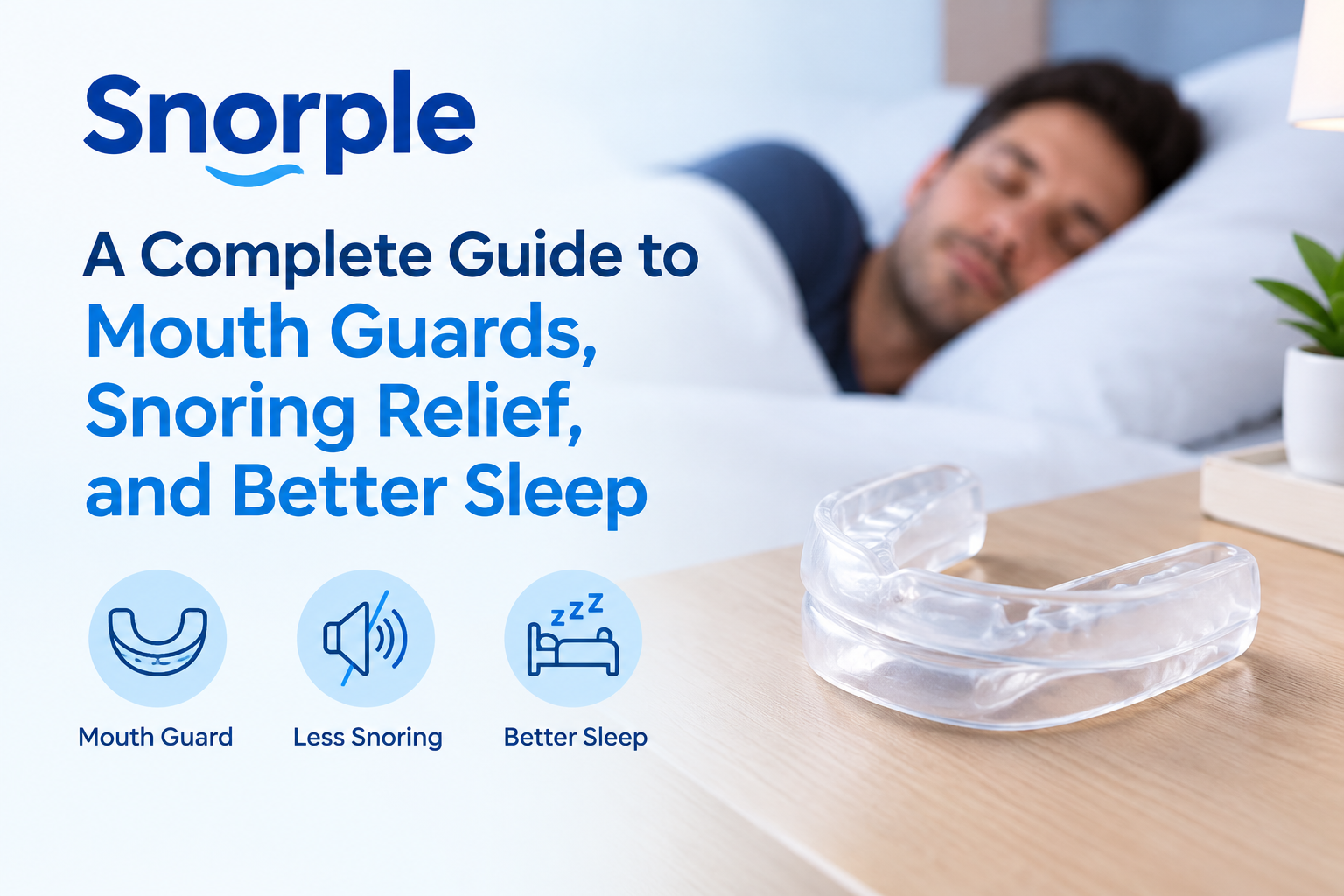
Snorple is a brand that markets an anti-snoring mouthpiece designed to help reduce nighttime snoring and support a more comfortable sleeping experience. According to its official website, the product combines two approaches: a mandibular advancement device (MAD), which gently moves the lower jaw forward, and a tongue-stabilizing device (TSD), which helps keep the tongue from falling backward during sleep. These mechanisms aim to reduce airway narrowing that can cause the soft tissues in the throat to vibrate and produce snoring sounds. The brand describes its mouthpiece as an over-the-counter option for adults who want to explore alternatives to traditional snoring solutions. However, individual results vary, and marketing claims should not be treated as independent proof of clinical effectiveness.
Understanding Snoring and Its Common Causes
Snoring occurs when air moves through a narrowed airway during sleep, causing surrounding tissues to vibrate. Several factors can contribute to this problem, including nasal congestion, sleeping on your back, alcohol consumption before bedtime, excess body weight, and the natural relaxation of throat muscles during sleep. Some people snore occasionally, while others experience it almost every night. Although ordinary snoring can be disruptive, loud and persistent snoring may also indicate obstructive sleep apnea, a condition involving repeated interruptions in breathing during sleep. Understanding the cause is important because a mouth guard may help certain people but will not address every underlying problem. If snoring occurs alongside gasping, choking, or excessive daytime sleepiness, professional medical evaluation is recommended.
How Snoring Affects Sleep Quality
Poor sleep can affect concentration, mood, energy levels, and everyday productivity. When snoring repeatedly disturbs a person’s sleep, they may wake up feeling tired even after spending enough hours in bed. The problem can also affect a partner who shares the same bedroom, leading to interrupted rest and frustration. Over time, these disruptions may create tension between couples who struggle to maintain a consistent sleep routine. Addressing snoring can therefore be about more than reducing noise; it can also involve improving bedroom comfort and identifying possible sleep-related health concerns. A suitable solution depends on the cause of the snoring, the person’s overall health, and whether an underlying sleep disorder is present.
How a Mouth Guard May Help Reduce Snoring
An anti-snoring mouth guard is an oral appliance worn during sleep to help reduce the vibrations responsible for snoring. Some designs reposition the lower jaw slightly forward, helping maintain more space in the upper airway. Other devices focus on keeping the tongue in a forward position so that it is less likely to obstruct airflow. Snorple’s mouthpiece is marketed as a combination of these two approaches. When the device fits correctly and suits the user’s needs, it may help reduce snoring and make nighttime rest more comfortable. Nevertheless, effectiveness depends on individual anatomy and the reason for snoring, so no mouthpiece should be considered a guaranteed solution.
Types of Anti-Snoring Mouth Guards
Anti-snoring mouth guards come in several designs, each offering different levels of customization and support. Boil-and-bite models soften in hot water before users shape them around their teeth, while custom-made appliances are created by a qualified dentist using dental impressions or digital scans. Tongue-stabilizing devices use a different mechanism to hold the tongue forward during sleep. Some products combine jaw advancement and tongue stabilization in a single device, as Snorple claims to do. The right choice depends on comfort, dental health, ease of cleaning, and the type of snoring involved. For people with diagnosed obstructive sleep apnea, professional assessment is particularly important before choosing an oral appliance.
Snorple and Other Sleep Solutions
Snorple is one option for adults exploring ways to manage snoring, but it is not the only approach available. Depending on the underlying cause, people may benefit from changing their sleeping position, treating nasal congestion, reducing alcohol consumption before bedtime, or discussing an oral appliance with a dental professional. Nasal strips may help some people whose snoring is related to nasal airflow, although they do not treat obstructive sleep apnea. Oral appliances can be useful when the jaw or tongue contributes to airway narrowing, while other treatments may be more appropriate for different causes. The best approach is to identify the problem rather than assume that one product will work for everyone.
Mouth Guards Compared With CPAP Therapy
A mouth guard and a continuous positive airway pressure (CPAP) machine work differently, so choosing between them depends on the person’s diagnosis and treatment needs. An oral appliance fits inside the mouth and may help keep the airway open by adjusting jaw or tongue position. CPAP uses a mask connected to a machine that delivers pressurized air to prevent airway collapse during sleep. Although some people find a mouth guard easier to travel with and wear, CPAP is generally more effective for controlling obstructive sleep apnea. A dentist-supervised oral appliance may be an appropriate alternative for selected patients who cannot tolerate CPAP or prefer another medically suitable option. People diagnosed with sleep apnea should consult their healthcare provider before replacing prescribed treatment with Snorple or another over-the-counter device.
| Feature | Snorple mouthpiece | CPAP therapy |
| Main approach | Oral appliance intended to reduce snoring | Pressurized air keeps the airway open |
| How it is used | Worn inside the mouth during sleep | Worn with a fitted mask during sleep |
| Portability | Compact and easy to carry | Requires a machine, mask, and accessories |
| Best suited for | Selected people with snoring, subject to dental and medical considerations | Commonly prescribed for obstructive sleep apnea |
| Professional guidance | Recommended when dental or sleep-related concerns exist | Important for diagnosis, setup, and ongoing treatment |
Benefits of Reducing Snoring for Couples
Snoring can affect both people in a relationship, particularly when one partner wakes frequently because of nighttime noise. Finding an effective solution may help couples establish a more comfortable bedtime routine and reduce frustration caused by interrupted sleep. A suitable mouth guard may reduce snoring for some users, allowing their partners to rest with fewer disturbances. Better sleep can also support daytime concentration, mood, and energy levels, although results depend on the cause of the original sleep problem. Couples should approach snoring as a shared concern rather than a personal failing. Discussing symptoms openly, testing appropriate solutions, and seeking medical advice when necessary can help both partners work toward more restful nights.
Choosing the Right Mouth Guard
Selecting the right mouth guard involves more than comparing prices or reading customer reviews. You should consider the device’s design, fit, adjustability, material information, cleaning instructions, and suitability for your dental health. Snorple’s website describes its product as a boil-and-bite mouthpiece with adjustable jaw positioning and a tongue-stabilizing component. These are manufacturer descriptions, so prospective buyers should review the current product specifications and return policy before purchasing. People with loose teeth, significant gum disease, dentures, jaw joint problems, or extensive dental work should consult a dentist before using an appliance that changes jaw position. A professional can help determine whether an oral device is appropriate and whether a custom-fitted option would be safer or more effective.
Important Features to Check Before Buying
When comparing anti-snoring mouth guards, focus on practical features that affect everyday use. A well-fitting device should remain secure without causing significant discomfort, and its materials should be suitable for repeated oral contact. Adjustable positioning can help users find a tolerable fit, but it does not guarantee that the appliance will control snoring or sleep apnea. You should also check whether the manufacturer provides clear cleaning instructions, customer support, replacement guidance, and a written refund policy. Independent clinical evidence is more valuable than promotional ratings alone. For ongoing snoring or suspected sleep apnea, a healthcare professional can help you assess whether an over-the-counter product is suitable or whether a dentist-prescribed device is a better choice.
Tips for Using and Maintaining a Snorple Mouth Guard
Proper care helps keep an oral appliance clean, comfortable, and ready for regular use. Follow the manufacturer’s instructions for fitting and cleaning, and avoid changing the shape of the device unless the instructions specifically allow it. Snorple’s published guidance recommends rinsing the mouthpiece with cool water after use and avoiding hot water that could distort its shape. Store it in a clean, ventilated case, and inspect it regularly for cracks, damage, or changes in fit. Never continue using an appliance that causes persistent pain, bleeding, or significant discomfort. If you experience jaw soreness, tooth sensitivity, or changes in how your teeth meet, stop using the device and consult a dental professional.
Simple Habits That May Help Reduce Snoring
A mouthpiece may work better as part of a broader approach to improving sleep habits. Sleeping on your side instead of your back can reduce snoring in some people because the tongue is less likely to fall backward toward the throat. Avoiding alcohol close to bedtime, treating nasal congestion, maintaining a consistent sleep schedule, and pursuing weight management when appropriate may also help. These measures are not a substitute for treatment when a sleep disorder is present, but they can address common contributing factors. If snoring continues despite lifestyle changes and a mouth guard, discuss the problem with a healthcare professional rather than repeatedly purchasing new products without understanding the cause.
When to Seek Professional Sleep Care
Persistent snoring deserves attention when it occurs alongside other symptoms that suggest a breathing problem during sleep. Warning signs include pauses in breathing noticed by a partner, repeated gasping or choking, morning headaches, and excessive daytime sleepiness. The National Heart, Lung, and Blood Institute recommends discussing possible sleep apnea symptoms with a healthcare provider, who may recommend a sleep study to establish a diagnosis.This assessment matters because untreated obstructive sleep apnea can affect health beyond nighttime noise. A clinician can help determine whether a mouth guard, CPAP, lifestyle changes, or another treatment is appropriate. Do not rely on reduced snoring alone as proof that your breathing is normal throughout the night.
Conclusion
Snorple offers an anti-snoring mouthpiece designed to help reduce nighttime noise through jaw positioning and tongue stabilization. For some adults, an appropriately selected oral appliance may provide a convenient way to address snoring and improve comfort for both the user and their sleeping partner. However, results vary, and product claims should be evaluated carefully alongside independent medical guidance. Choosing the right mouth guard means considering your symptoms, dental health, comfort, and any underlying sleep conditions. If snoring is loud or persistent, or if you experience gasping, breathing pauses, or daytime fatigue, seek professional assessment before relying on an over-the-counter solution. The goal is not simply a quieter bedroom but healthier, more restorative sleep.