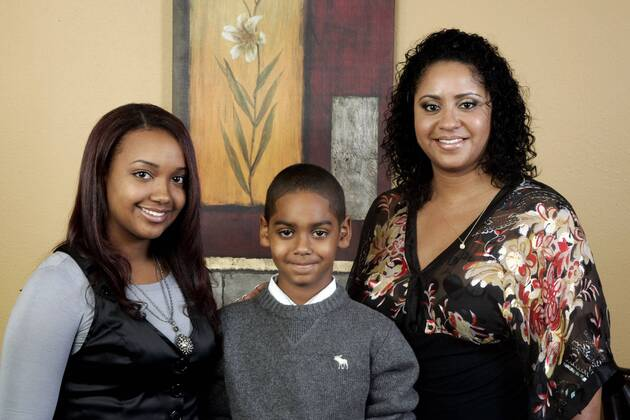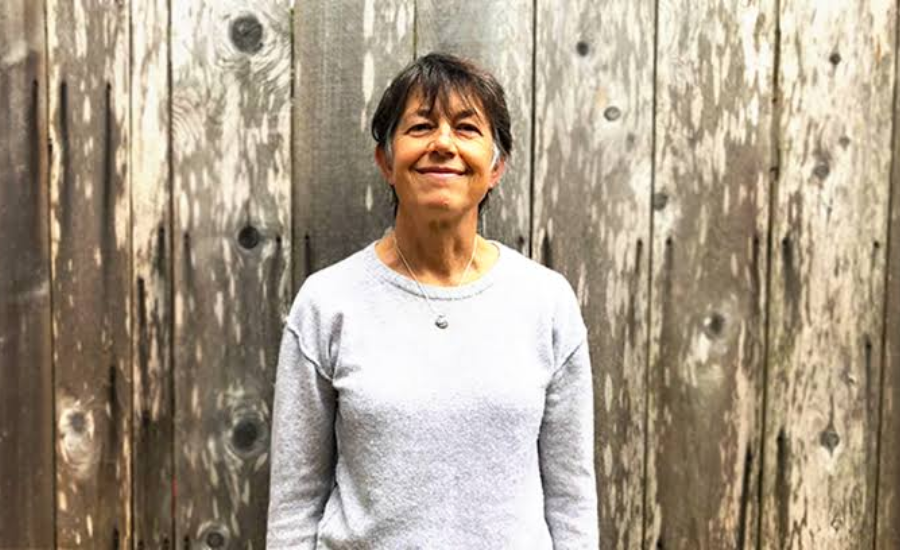
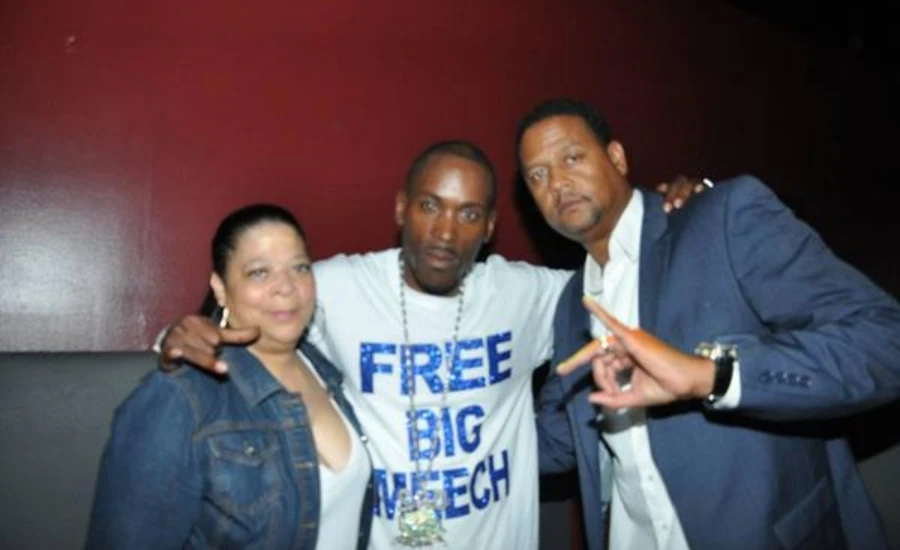
Two decent people. One struggling family. A household built on faith, steel guitar, and prayers when the food stamps ran out.
That is where the Black Mafia Family started. Not in a trap house. Not in a cartel meeting. In a broke Christian household in southwest Detroit where a father played gospel music and a mother worked fast food to keep the lights on.
Charles and Lucille Flenory are the parents of Demetrius “Big Meech” Flenory and Terry “Southwest T” Flenory — the brothers who built a drug empire that moved over $270 million in cocaine before federal agents shut it down. They also raised a daughter named Nicole. They were never charged with anything. They never took drug money. They never stopped going to church.
Their story is the part of the BMF legend that never gets told fully. The part that explains how two boys raised in a gospel home ended up running one of the most powerful criminal organizations in American history.
This is that story.
Bio at a Glance: Charles Flenory
| Detail | Info |
|---|---|
| Full Name | Charles Flenory |
| Date of Birth | March 18, 1948 |
| Birthplace | Cleveland, Ohio |
| Father | Bishop George Flenory |
| Mother | Mary Flenory |
| Religion | Church of the Living God, Jewell Dominion |
| Instruments | Guitar, steel guitar |
| Education | Recording Institute of Detroit, Recording Engineering Program (graduated 1977) |
| Founded | Gospel Sounds Record Corporation (1963) |
| Awards | Special Motown Achievement Award (2004), Billboard Platinum Award (studio design) |
| Marriage | Lucille Flenory (m. 1968) |
| Children | Demetrius “Big Meech” Flenory, Terry “Southwest T” Flenory, Nicole Flenory |
| Death | July 8, 2017 (cause undisclosed) |
| Portrayed in BMF by | Russell Hornsby |
Bio at a Glance: Lucille Flenory
| Detail | Info |
|---|---|
| Full Name | Lucille Flenory |
| Date of Birth | February 26, 1948 |
| Birthplace | Not publicly confirmed |
| Religion | Devout Christian |
| Occupation | Multiple jobs including Wendy’s, housewife, BMF merchandise entrepreneur |
| Marriage | Charles Flenory (m. 1968) |
| Children | Demetrius “Big Meech” Flenory, Terry “Southwest T” Flenory, Nicole Flenory |
| Status | Alive as of 2026, age 77–78 |
| Social Media | Active on Instagram as @realbigmeechmom |
| Portrayed in BMF by | Michole Briana White |
Charles Flenory: The Gospel Man Who Never Took a Dollar of Drug Money
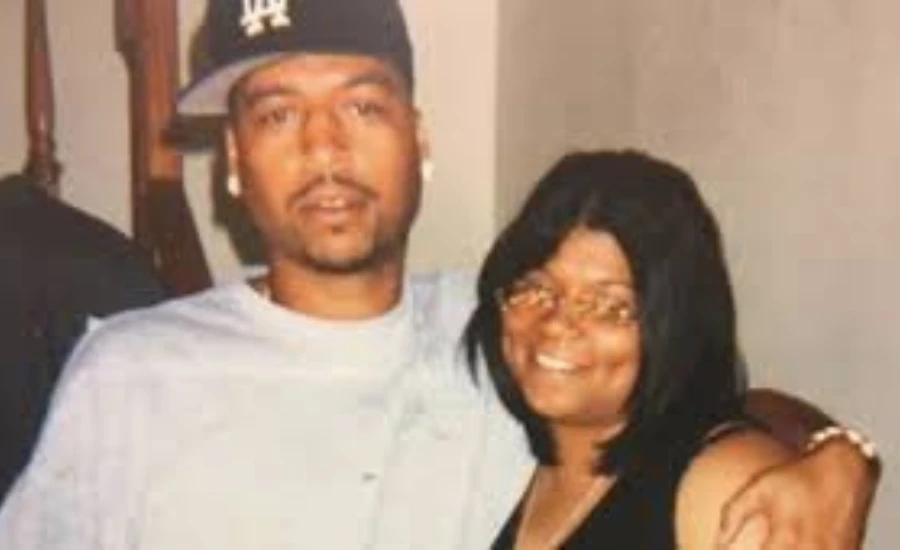
Born into a Church, Raised on Sacred Steel
Charles Flenory was not just a man who happened to play guitar. He was born into the Church of the Living God, Jewell Dominion. His father — Bishop George Flenory — was an elder in the church. Music was not a hobby in this household. It was worship.
Charles picked up the guitar at age five. He was playing in the House of God, Keith Dominion Church by the time other kids were learning to ride bikes. By 13, he had already moved to the steel guitar — a demanding instrument associated with the Sacred Steel tradition, a Pentecostal guitar style born in the American South and the Midwest that became one of the most distinctive sounds in African American gospel music.
He was not just competent. He was gifted. Sacred Steel players who knew him have described him as a “pioneer” and an “innovator” who could “tap into” other musicians in ways that felt almost spiritual. When he died in 2017, a fellow Sacred Steel musician wrote on a tribute forum: “What an awesome innovator of music. One occasion I was on the set playing bass guitar and he said, ‘Do you hear that? I hear musical notes from heaven.'”
This is who Charles Flenory was before anyone knew his sons’ names.
The Record Label, the Studio, the Awards
In 1963 — when Charles was 15 years old — he launched the Gospel Sounds Record Corporation. A fifteen-year-old starting a record label dedicated to gospel music. That is not a hobby. That is vision.
He graduated from the Recording Institute of Detroit’s Recording Engineering Program in 1977 — adding technical knowledge to his musical talent. He designed and built the Platinum Sound Studio facilities in Atlanta, Georgia, work for which he received a Billboard Platinum Award. In 2004, Bob Dennis presented him with the Special Motown Achievement Award. He is credited as the songwriter for the Campbell Brothers’ hit song “Jump for Joy.”
He combined faith, music, craftsmanship, and entrepreneurship throughout his life. He earned recognition in Detroit’s gospel music community that existed completely independent of his sons’ infamy.
He was not a rich man. He drove a truck for income at various points. He struggled financially. But he built real things. He earned real awards. He left a real mark on Sacred Steel gospel music that has nothing to do with BMF.
The Line He Refused to Cross
When Big Meech and Southwest T started dealing cocaine as teenagers in Detroit, Charles found out. He was furious.
According to the BMF series — which was produced with direct input from Big Meech, Southwest T, and the family, giving it a degree of authenticity to the real story — Charles found a gun in Meech’s room and kicked him out of the house. When Meech revealed the family home was in foreclosure and offered to pay the mortgage with drug money, Charles refused. The confrontation escalated to physical.
He would not touch that money. Not for a foreclosure. Not for anything.
That position was tested repeatedly. The family went through severe financial pressure. Lucille was working multiple jobs. The gas got cut. The food stamps were late. The house was facing foreclosure. And Charles still said no.
Big Meech told AllHipHop in a 2012 interview: “Neither of my parents had any type of drug or drinking habits, nor did they ever get involved in the trade. While they taught us to pray for God’s provision when things got tough, my brother and I decided to start selling to put food on the table and have a roof over our heads.”
Federal prosecutors confirmed this independently. In the years when BMF was under investigation and eventually prosecuted, no charges were ever brought against Charles or Lucille Flenory. No evidence connected them to the operation. They were completely clean.
For a family this deep in federal crosshairs — where agents were tracking money flows across 11 states — that is not nothing. That is a clear record.
Death and Legacy
Charles Flenory died on July 8, 2017. He was 69. The cause of death was never publicly disclosed. His family described him as having “fought a good fight” before passing, suggesting a prolonged illness, though the specific condition was never confirmed.
Lucille posted on Facebook the following day: “My heart is so broken. You fought a good fight and are now free from pain and suffering. We will always carry you in our hearts.”
He died while both of his sons were still in federal prison. He never got to see them come home.
The Starz BMF series — which premiered in 2021, four years after his death — is partly his legacy too. Actor Russell Hornsby, who plays Charles in the show, spoke publicly about getting Big Meech’s blessing before filming. In a phone call on Lil Meech’s 21st birthday, Big Meech called to wish his son happy birthday and ended up on the phone with Hornsby — asked who he was, what movies he had been in, and then gave his approval.
Charles never met Hornsby. He never saw his family’s story become a Starz production. He never got the acknowledgment in life that came after his death.
Lucille Flenory: The Woman Who Held Everything Together and Still Is
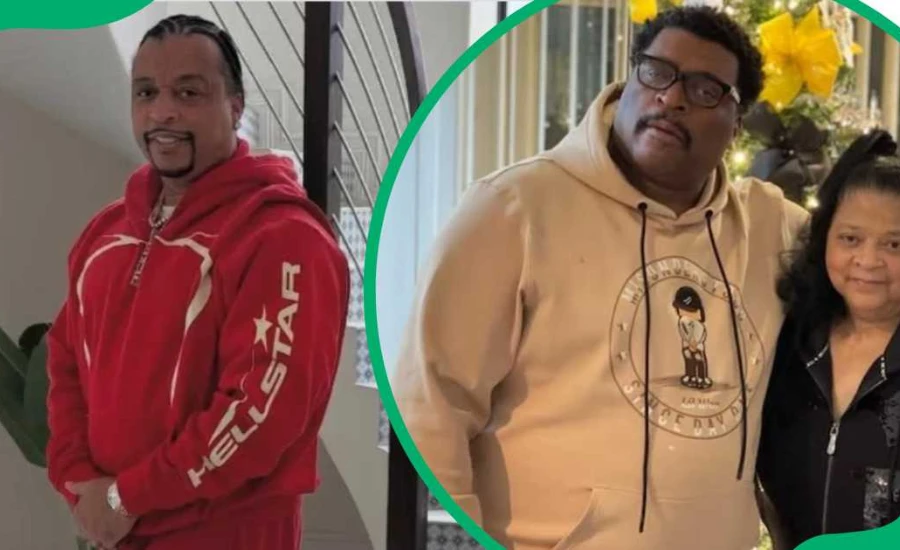
Wendy’s and Prayers and Three Jobs
Lucille Flenory was born on February 26, 1948. She and Charles got married in 1968 — both were 20 years old. Big Meech was born in June of that same year.
She was a mother by 20. She was juggling bills, a husband’s music career that did not always pay, and a household in southwest Detroit — one of the poorest and most crime-affected areas in one of America’s most economically devastated cities.
When things got tight, she worked. She took a job at Wendy’s. She took whatever else was available. She kept the household running while Charles pursued music and carpentry.
She was also the spiritual anchor. A devout Christian who prayed with her children, took them to church, and believed that faith was the answer when money wasn’t. Big Meech confirmed this picture in his own words: “My siblings and I were raised in the church. So, whenever the food stamps were late, and our gas got cut, we would pray.”
And then her boys started selling.
What She Said — and What She Didn’t Do
Lucille did not take drug money. She did not participate in BMF. Federal prosecutors investigated the family thoroughly and never charged her with anything.
But she also did not walk away from her sons.
When they were arrested and sentenced in 2008 to 30 years each, she stood by them. She visited. She advocated. She prayed.
She told an interviewer that while she “disapproved” of Meech’s business, she praised him as a “brilliant man with excellent business sense.” She described him as “family oriented,” a “man of integrity,” and someone “very loyal.” She said she raised her kids in the Christian religion and was happy with how they turned out.
That is a complicated set of statements. She disapproves of the drug empire. She is proud of the man. Both things exist in her at the same time. She never reconciled that publicly and she probably does not need to. It is how a mother thinks.
The Business Pivot: BMF Brand and “Mamma Meech”
After her sons were sentenced, Lucille did something unexpected. She became a brand.
Not a criminal brand. A merchandise brand. She began selling official BMF clothing under the name “Mamma Meech,” with a double-L logo. When unauthorized sellers started moving counterfeit BMF merchandise, she publicly organized a fundraiser on Custom Ink and issued a clear statement: “There are many vendors who have been selling BMF clothing without any authorization, and none of the profits going to the family. This is the only official clothing line authorized and designed by the only Lucille ‘Big Meech Mom’ Flenory. If you don’t see the double L logo for Mamma Meech, it ain’t official. Remember ‘Family First.'”
A 70-something grandmother policing counterfeit streetwear with an official logo and a trademark phrase. That is not a passive grieving mother. That is someone who understood the cultural value of her family’s name and moved to protect it.
She also became an active social media presence — posting on Instagram, celebrating birthdays, tributing Charles on the anniversary of his death, sharing updates on the BMF show. She has met actress Michole Briana White — who plays her on the show — and the two have developed a genuine friendship. Lucille said publicly they look “like we could be related” and that she is “impressed” with White’s portrayal.
She is, as of 2026, alive, active, and very much the public face of the Flenory family legacy.
The Children: What Charles and Lucille Actually Produced
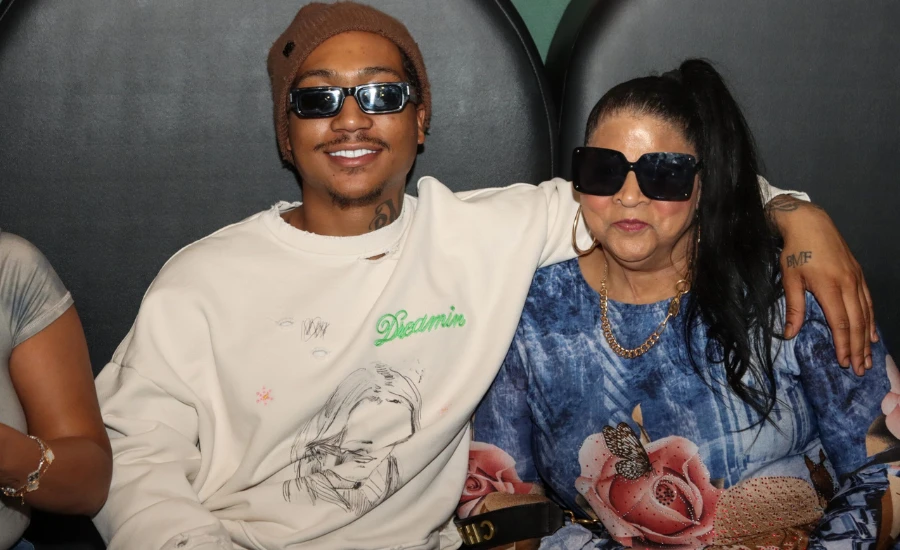
Big Meech: The Son Who Became a Legend
Demetrius “Big Meech” Flenory was born on June 21, 1968, in Detroit, Michigan. He and his brother Terry started selling drugs as teenagers in southwest Detroit. They founded what became the Black Mafia Family in the mid-to-late 1980s, expanding from Detroit to Atlanta and Los Angeles. The operation eventually spanned 11 states, maintained ties to Mexican drug cartels, and generated an estimated $270 million.
BMF Entertainment was launched in the early 2000s as an apparent hip-hop label — but federal prosecutors argued it was a front for laundering drug proceeds. The label was connected to hip-hop royalty, with figures like Young Jeezy publicly associated with the BMF name.
In October 2005, a massive DEA-led raid resulted in the arrest of over 30 BMF members. Big Meech and Southwest T pled guilty in 2007. Both were sentenced to 30 years in federal prison in 2008.
In October 2024, Big Meech was transferred from FCI Coleman Low in Florida to a halfway house in Miami under community confinement. His attorney Brittany K. Barnett had secured a 32-month reduction in his sentence through Amendment 821 of the U.S. Criminal Code, citing his good behavior, GED completion, and rehabilitation work since 2021. His scheduled full release date was January 27, 2026. As of early 2026, that date has passed, making it likely he is now fully free — though no confirmed public statement of his full release has been widely documented at the time of writing.
Southwest T: The Quieter Brother Who Got Home First
Terry “Southwest T” Flenory was born on January 10, 1970 — almost two years younger than Big Meech. He co-founded BMF alongside his brother. He managed the Los Angeles operation and coordinated directly with the Mexican cartels on the supply side, according to federal prosecutors.
In April 2020, during the COVID-19 pandemic, Southwest T was released to home confinement due to health concerns. Big Meech’s request for similar compassionate release was denied four times. Terry’s supervised sentence was set to end August 17, 2025, per federal prison records.
He has maintained a lower public profile than his brother but has been involved in the BMF brand and series as a producer and collaborator.
Nicole: The Daughter Nobody Covers
Nicole Flenory is Charles and Lucille’s youngest child and their only daughter. She appears in the BMF series as a character — portrayed by actress Laila Pruitt. In the show she is caught between her brothers’ world and her parents’ attempts to protect her from it.
In real life, almost nothing is known about Nicole. She has stayed almost entirely out of public view. She appears in family photos on Lucille’s Instagram. She has not given interviews. She has not become a public figure despite her family’s notoriety.
Lucille has mentioned spending time with Nicole and with her grandson Lil Meech. Beyond that, Nicole Flenory is the least publicly documented member of the immediate family.
The Poverty Question: Did Charles and Lucille’s Struggle Create BMF?
What Big Meech Actually Said
This is the critical question that most BMF coverage dances around: did Charles and Lucille’s poverty create the conditions for what their sons became?
Big Meech addressed this directly in a 2012 AllHipHop interview. His words: “We had 30 days to come up with $7,500, or we would be put out in the street. My brother and I found a way to make fast money. It was pure supply and demand.”
He was not blaming his parents. He was describing a material condition. The family faced eviction. The boys found a way to prevent it. The way they found happened to be selling cocaine.
This is the contradiction that sits at the center of the whole story. Charles Flenory was a godly man who refused drug money on principle. His sons sold drugs to save the house Charles refused to protect with that same drug money. The father’s integrity and the sons’ crime are connected. Not as cause and effect. As response and counter-response. The boys saw the same problem their father saw and chose a different solution.
What the Record Shows
Federal prosecutors never suggested poverty as a mitigating factor. The judge who sentenced both brothers to 30 years was not moved by the origin story.
But the origin story is real. Southwest Detroit in the 1980s was a specific kind of place — economically devastated, with a crack epidemic beginning and legal economic options shrinking. It is not an excuse. It is a context. And it is a context that Charles and Lucille were living inside of while trying to keep their family together with gospel music and Wendy’s wages.
Whether better circumstances would have produced different sons is a question nobody can answer. What is documented is that the poverty was real, the faith was real, the refusal to take dirty money was real — and the drug empire was also real.
What the Internet Gets Wrong About Big Meech’s Parents
Several things circulate about Charles and Lucille that are worth correcting.
“Charles was a truck driver who had no real career” — multiple sources reduce his professional life to truck driving. The fuller picture is that he was a lifelong gospel musician, a record label founder, a studio designer who won a Billboard Platinum Award, and a Motown Achievement Award recipient. The truck driving was income. It was not his identity.
“Lucille was just a housewife” — she worked multiple jobs including Wendy’s to support the family. She was not a stay-at-home mother by choice in comfortable circumstances. She worked to survive. She also runs a legitimate merchandise business as of 2026 and maintains an active public brand presence.
“The parents must have known and looked the other way” — no evidence supports this. Federal prosecutors spent years dismantling BMF and never charged either parent. Charles famously refused drug money even when the mortgage was at stake.
“Charles died of a drug-related illness” — the cause of death was never disclosed publicly. One source calls it an “undisclosed illness” without any specifics. Any claim linking his death to drugs or BMF is unsupported speculation.
“Big Meech was released in 2025” — his scheduled full release date per Bureau of Prisons records was January 27, 2026. He was transferred to community confinement in October 2024. Full release by January 2026 was the official timeline, though as of early 2026 this date has passed.
The BMF Show and What It Means for the Family
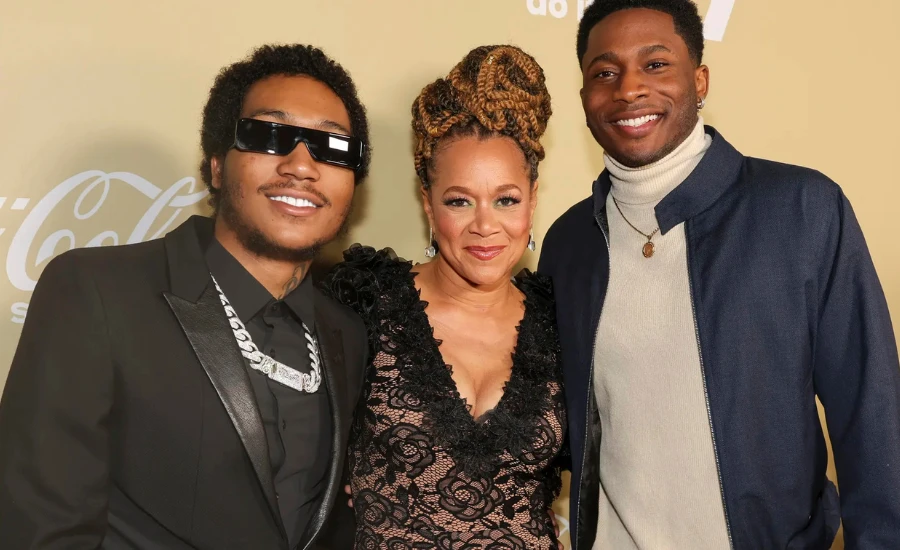
The Starz series BMF — produced by 50 Cent and premiered in September 2021 — has changed how Charles and Lucille are seen. Before the show, they were footnotes in a crime story. After it, they are characters. Real characters, based on real people, portrayed by serious actors.
Russell Hornsby — who plays Charles — is a respected dramatic actor known for serious TV work. Michole Briana White — who plays Lucille — struck up a genuine friendship with the real Lucille, who has praised her performance publicly and said the two look like they could be related.
The show dramatizes scenes that are painful to watch in context. Charles finding a gun in his son’s room. Charles refusing mortgage money. Charles eventually leaving the family home over the conflict. Charles dying before he sees his sons come home.
Lucille has said she can see elements of real truth in how their story is told. She also sells official merchandise connected to the brand that the show has amplified. She is now arguably the most public face of BMF’s cultural legacy — a position she did not seek and could not have anticipated when she was working shifts at Wendy’s to keep the heat on.
Final Words
Charles and Lucille Flenory did not raise criminals. They raised three children in a broke household in southwest Detroit and tried to do it right — church, faith, guitar, prayer, three jobs, and a mortgage they could barely pay.
They failed to keep their sons on the path they wanted. Or their sons chose something else. Depending on how you look at it, the story reads differently.
What is not in dispute: Charles never touched drug money. Lucille never touched drug money. Federal prosecutors confirmed it. Big Meech confirmed it. The family confirmed it. The record is clear.
Charles died in 2017 with his integrity intact — a gospel musician who won a Motown award and built a studio and played steel guitar from the age of five and refused to save his own home with his son’s cocaine proceeds. He did not get a Starz series named after him. He did not get a Wikipedia page. He got a tribute post from a Sacred Steel forum and a Facebook post from a grieving wife.
That is the real story of where Big Meech came from. Not a drug family. Not a cartel household. A church family in financial trouble whose boys found the fastest way out of poverty and ran with it for twenty years.
Lucille is still here. Still posting on Instagram. Still fighting counterfeit merch sellers. Still supporting her sons. Still carrying Charles in the tributes she writes on his birthday every March.
She is 77 years old. Her son is finally coming home.
She has been waiting since 2008.
You may also like Habiba Abdul Jabbar
FAQ
1. Who are Big Meech’s parents?
His parents are Charles Flenory (born March 18, 1948, died July 8, 2017) and Lucille Flenory (born February 26, 1948, still alive). They married in 1968 and had three children: Demetrius “Big Meech” Flenory, Terry “Southwest T” Flenory, and daughter Nicole Flenory.
2. Were Charles and Lucille involved in BMF?
No. Federal prosecutors investigated BMF thoroughly and never charged either parent with any crime. Big Meech himself stated in a 2012 AllHipHop interview that “neither of my parents had any type of drug or drinking habits, nor did they ever get involved in the trade.” Charles famously refused to accept drug money even when the family home faced foreclosure.
3. What did Charles Flenory do for a living?
He was a Sacred Steel gospel guitarist who played from age five, founded the Gospel Sounds Record Corporation at age 15 in 1963, graduated from the Recording Institute of Detroit in 1977, designed and built studio facilities in Atlanta that earned a Billboard Platinum Award, and received a Special Motown Achievement Award in 2004. He also worked as a carpenter and drove trucks for income. He was recognized in gospel music circles as a pioneer of the Sacred Steel tradition.
4. What did Lucille Flenory do?
She worked multiple jobs to support the household — including shifts at Wendy’s — while also serving as the spiritual center of the family. She was a devout Christian who raised her children in the church. After her sons’ conviction, she became an entrepreneur selling official BMF merchandise under the “Mamma Meech” brand. She is active on Instagram and remains close to her daughter Nicole and grandson Lil Meech.
5. When did Charles Flenory die?
He died on July 8, 2017. The cause of death was never publicly disclosed. He was 69 years old. He died while both Big Meech and Southwest T were still in federal prison, before the BMF Starz series was produced and before either son came home.
6. Is Lucille Flenory still alive?
Yes. As of early 2026 she is approximately 77 or 78 years old and remains active on Instagram, celebrating family milestones, sharing BMF series updates, and tributing Charles on his birthday and the anniversary of his death.
7. Why did Big Meech start selling drugs despite his Christian upbringing?
Big Meech explained it in his own words: the family faced eviction and needed $7,500 in 30 days. He and Terry found a way to make fast money. He framed it as “pure supply and demand.” He did not blame his parents. He described a specific financial crisis and the choice he and his brother made in response to it.
8. Who plays Charles and Lucille in the BMF series?
Charles is played by actor Russell Hornsby, who received Big Meech’s personal blessing via phone call before taking the role. Lucille is played by actress Michole Briana White, who has developed a genuine friendship with the real Lucille, who has praised her performance publicly and noted their physical resemblance.
9. What is the “Mamma Meech” brand?
It is Lucille Flenory’s official BMF merchandise line, identified by a double-L logo. She launched it after unauthorized vendors began selling counterfeit BMF clothing with none of the proceeds going to the family. She publicly organized a boycott of fake merchandise and established her line as the only officially authorized BMF clothing brand.
10. Did Big Meech have siblings?
Yes. His younger brother is Terry “Southwest T” Flenory, born January 10, 1970, who co-founded BMF with him. Their younger sister is Nicole Flenory, who was portrayed in the BMF series by actress Laila Pruitt. Nicole maintains a private life and has not given public interviews.
11. When was Big Meech released from prison?
He was transferred from FCI Coleman Low in Florida to community confinement in Miami on October 15, 2024, following a 32-month sentence reduction secured by his attorney Brittany K. Barnett under Amendment 821 of the U.S. Criminal Code. His scheduled full release date per Bureau of Prisons records was January 27, 2026. As of the date of this article, that date has passed.
12. Where did the Flenory family live?
They grew up and lived in southwest Detroit, Michigan — one of the economically hardest-hit areas of a city that itself was in severe economic decline during the 1970s and 1980s. The family struggled with foreclosure, utility shutoffs, and food stamp delays. Big Meech and Southwest T both attended schools in Detroit before dropping out and expanding their drug operation to Atlanta and Los Angeles.