Dalia Asafi It was a Friday in Houston, Texas, sometime in the mid-1990s. A Nigerian father walked through the doors of his local mosque for prayer — the same mosque he had attended for years. Across the prayer hall, separated by the gender partition that Islamic tradition requires, a towering Nigerian man was doing the same thing. The two men had worshipped at the same mosque for years without ever meeting each other’s families. The father prayed. The basketball player prayed. Neither man knew that this shared space, this brick-and-mortar act of faith, was quietly arranging their futures.
When that father’s daughter turned eighteen, he went looking for a suitable match. The man he found was Hakeem Olajuwon — already a two-time NBA champion, already one of the most celebrated athletes on the planet. What happened next wasn’t a celebrity love story. It was something older than celebrity: a family arrangement, a faith decision, and a private ceremony that the press barely noticed.
That daughter was Dalia Asafi. And nearly thirty years later, she’s still the person most fans of her husband can’t find a single photograph of.
Quick Bio: Dalia Asafi at a Glance
| Detail | Information |
|---|---|
| Full Name | Dalia Asafi (married name: Dalia Olajuwon) |
| Birth Year | Most sources cite 1978; conflicting sources range from 1969–1978 (disputed — see Honesty section) |
| Birthplace | Nigeria |
| Religion | Islam |
| Ethnicity | Nigerian; some sources suggest Hausa-Fulani heritage (unverified) |
| Relocated to | Houston, Texas (with family, before marriage) |
| Education | Completed schooling in Houston; no further details publicly available |
| Married | August 8, 1996, Houston, Texas |
| Husband | Hakeem Olajuwon — NBA Hall of Famer, 2x champion |
| Age gap at marriage | 15 years (she was 18; he was 33) |
| Marriage type | Traditional Islamic arranged marriage (Nikah) |
| Children with Hakeem | Four — Abdullah, Aziz (also known as Abdul), Rahmah, and Aisha |
| Step-daughter | Abisola Olajuwon (Hakeem’s daughter from prior relationship) |
| Professional career | None on public record; full-time homemaker |
| Social media | None — completely absent from all platforms |
| Died | Still living (as of 2026) |
| Note on conflicting data | Birth year, number of children, and children’s names vary significantly across sources |
Growing Up in Two Worlds
Nigeria gave Dalia her foundation. Houston gave her a new one. The transition between those two places shaped everything about who she became — but neither chapter of that story has been told by her, because she’s never told any chapter of her story publicly.
What sources agree on: she was born and raised in Nigeria in a practicing Muslim household where Islamic values weren’t abstract principles but daily practice. Prayer times structured the day. Modesty shaped dress. Family came before everything outside the home. These weren’t rules she resented — they were the architecture of her upbringing, and she’s carried them intact across continents and across decades.
Her family relocated to Houston, Texas — a city with a well-established Nigerian-Muslim community — during her formative years. She completed her schooling there, though no verified details about her secondary education or any higher studies exist in the public record. What Houston gave her, beyond an education, was proximity to the mosque where her father prayed — and proximity, in this case, was everything.
The Turning Point: A Proposal Arranged in Sacred Space
Hakeem Olajuwon had been worshipping at his Houston mosque for years before anyone connected the dots. He never saw the women’s section. He didn’t know Dalia’s family. In a mosque where men and women pray separately, you can share a house of worship with someone for a decade and never share a single glance.
When Dalia’s father decided to look for a match for his eighteen-year-old daughter, he didn’t look far. He approached the man he’d observed through years of shared community — a man whose faith, character, and conduct he’d watched up close. The fact that this man happened to be one of the most famous athletes alive didn’t change the logic of the approach. Faith and values were the criteria. Fame was incidental.
Hakeem said yes. The families met. A marriage was arranged. “There is no dating process, no boyfriends and girlfriends in Islam,” Olajuwon explained publicly at the time. “Families meet, talk, get to know one another. Then the marriage is arranged.” By every account, the first substantial interaction between Dalia and Hakeem came after the families had already made their decision.
August 8, 1996: The Wedding Nobody Photographed
The ceremony took place on August 8, 1996, in Houston. It was a Nikah — an Islamic marriage ceremony — attended only by immediate family from both sides. No media. No celebrity guests. No photographers hired to document the occasion for public consumption. The Houston Rockets had just won back-to-back championships in 1994 and 1995. Hakeem Olajuwon was arguably the most dominant center in NBA history at that moment. And his wedding made barely a ripple in the press.
That was intentional on both sides.
She was 18. He was 33. The fifteen-year age gap drew Western media attention that the couple didn’t seek and didn’t address at length — except for Hakeem’s one careful public statement: “In the Islam faith, it is customary for a girl to marry much younger than they do in America, at age 15 or 16, for instance. Dalia may be 18 in terms of age, but because of her background, beliefs and religious understanding, she, like many other Islamic young women, possesses a maturity, knowledge and wisdom beyond her years.”
That was the last extended public comment either of them made about their marriage for years.
A Life Built Entirely Off-Camera
Dalia Asafi has no documented professional career. No job title, no employer, no LinkedIn profile, no public business venture. In nearly thirty years of marriage to one of the wealthiest athletes in basketball history, she’s never sought a platform, a brand deal, or a spotlight of her own.
What she’s built instead is harder to quantify. Four children — Abdullah, Aziz, Rahmah, and Aisha — raised in a faith-grounded, privacy-protected household in Houston. A home that Hakeem has described as stable and spiritually anchored. A marriage that has outlasted the vast majority of high-profile sports unions without a single public dispute on record.
She also stepped into the role of stepmother to Abisola Olajuwon, Hakeem’s daughter from a relationship before their marriage — a child who was eight years old when Dalia entered the family. That’s not a small thing. Dalia arrived as a teenager herself and immediately became a maternal presence to another woman’s child. No public credit was ever sought for that either.
The results of her parenting are becoming visible now in her children. Son Aziz committed to Stanford University for basketball — choosing the program, as he told ESPN, because “the coaching staff made it clear they are about me not just as an athlete, but as a person.” That’s a sentence that sounds like it was shaped at home. Son Abdullah has moved from playing into coaching within basketball. Abisola followed Hakeem’s path all the way to the WNBA draft, picked fourth by the Chicago Sky after helping the University of Oklahoma reach the NCAA Final Four in both 2009 and 2010.
The children have performed publicly. Dalia has not.
Personal Life: Faith as the Framework
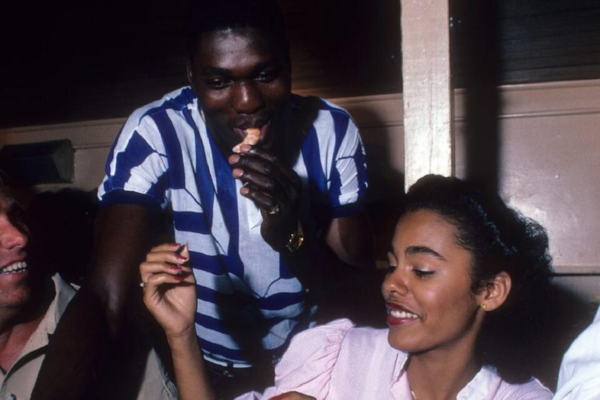
Their shared faith isn’t context for this marriage — it is the marriage. Hakeem Olajuwon public transformation during the early 1990s — his deeper embrace of Islam, his Ramadan fasting during the 1995 NBA season, his reputation for character on and off the court — made him someone Dalia’s father recognized as a worthy match. What the mosque revealed about Hakeem over years of observation mattered more than any press coverage or basketball highlight.
Inside their Houston home, Dalia has maintained that same standard. Prayer times are observed. Modesty is practiced. The children have grown up inside a household where their parents’ values are demonstrated rather than announced. People who know the family describe her as warm but unassuming — someone who kept a full house with an open door for her children’s friends, the kind of mother whose influence runs deep precisely because it’s never performed for an audience.
Hakeem splits his time between Houston and Jordan for business and charitable work. When he travels, Dalia remains the steady presence at home — the person keeping the structure intact. That’s not a diminished role. It’s the central one.
The Controversies: Honest and Factual
The most discussed element of Dalia Asafi’s story is the circumstances of her marriage — specifically her age and the arranged nature of the union.
She was eighteen. He was thirty-three. In Western cultural terms, both facts draw scrutiny: the age gap and the arrangement itself raise questions that fair coverage must acknowledge. Western critics have pointed out that an eighteen-year-old with no prior contact with her future husband cannot be said to have exercised fully informed consent in the way contemporary discussions of marriage and agency demand.
Hakeem’s public defense — that Islamic tradition views young Muslim women as mature beyond their years due to their upbringing — is a sincere cultural explanation, but it doesn’t resolve the Western-framed concern, and it was never intended to. Two different value frameworks are in genuine conflict here, and neither side of that conversation disappears simply because the marriage has proven stable.
What the record shows is this: the marriage was legal. It has lasted nearly thirty years without any documented conflict, separation, or legal dispute. Dalia has never spoken publicly to express regret, discomfort, or grievance. Hakeem has never been the subject of any legal accusation related to the marriage. The absence of Dalia’s own voice on the matter — a consistent feature of her entire life — means the question of her full consent and perspective remains, structurally, unanswerable.
There’s also significant factual confusion across biographical sources. Different sites list different birth years (1969, 1971, 1978), different numbers of children (two, three, or four), and even conflicting children’s names. This is partly Dalia’s doing — her total media absence has created a factual vacuum that low-quality content farms have filled with guesswork dressed as biography. This article flags these conflicts rather than resolving them with invented certainty.
Do You Know About Mary Mandel
Where She Is Now
As of 2026, Dalia Asafi continues to live in Houston, Texas. She has no social media accounts of any kind that have been verified. She hasn’t given an interview. She hasn’t attended any public event where she was photographed with identification.
Hakeem, now in his early sixties, has moved into business, real estate, and faith-based philanthropic work. He travels frequently between Houston and the Middle East. Dalia, by all accounts, remains Houston’s constant — the person the children come home to, the person the household orbits around.
Her daughters Rahmah and Aisha follow her lead, maintaining private lives well away from the sports celebrity world their last name opens doors to. Her sons have moved publicly into athletics and coaching, carrying the family name into arenas. She watches none of it from a courtside seat at any documented event.
Some people might read this life as small. It isn’t. Quiet and small are not the same thing.
What She Leaves Behind
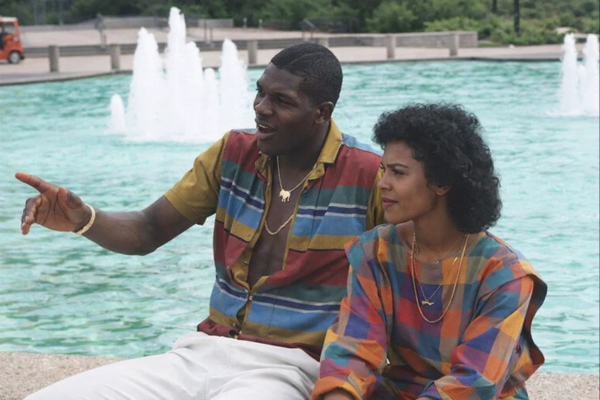
The Olajuwon name will outlast everyone in this story. Hakeem is already in the Hall of Fame, already retired with his jersey hanging in the rafters of a stadium that bears the city’s heart. His legacy in basketball is written permanently into the record books.
Dalia Asafi’s legacy is different — and in some ways harder to erase. It’s in Aziz, choosing Stanford because the coaching staff saw him as a person first. It’s in Abdullah, transitioning from player to coach because the game matters more than the paycheck. It’s in Abisola, who played through the Final Four and heard her name called in the draft and carried herself with a restraint her stepmother would recognize.
It’s in the fact that her granddaughter’s generation — whenever it arrives — will inherit a family culture of faith, discipline, privacy, and purpose that was built not by the Hall of Famer but by the woman who never appeared in a single photograph people can confirm is her.
There’s a particular kind of influence that only works when no one’s watching. Dalia Asafi has practiced it for nearly thirty years.
She is, by every account, exactly the person she chose to be.
FAQ:’s
1. Who is Dalia Asafi?
Dalia Asafi is a Nigerian-born woman who married NBA Hall of Famer Hakeem Olajuwon on August 8, 1996. She is known for maintaining complete privacy despite being married to one of basketball’s greatest players for nearly thirty years.
2. How old is Dalia Asafi?
Most sources place her birth year at 1978, making her approximately 48 in 2026. However, at least one source lists her birth year as 1969 and another as 1971. None of these dates are verified against public birth records. This article treats 1978 as the most commonly cited figure while acknowledging the uncertainty.
3. Where is Dalia Asafi from?
She was born and raised in Nigeria, in a Muslim household. Her family later relocated to Houston, Texas, where she completed her schooling and eventually married Hakeem Olajuwon.
4. How did Dalia Asafi meet Hakeem Olajuwon?
They did not meet in the conventional sense. Their fathers — both members of the same Houston mosque — connected through community ties. Dalia’s father approached Hakeem with a marriage proposal when she turned 18, and the two met formally only after their families had agreed to the arrangement.
5. What is the age difference between Dalia Asafi and Hakeem Olajuwon?
Fifteen years. She was 18 and he was 33 at the time of their marriage in August 1996. This gap attracted media attention, which Hakeem addressed publicly by explaining Islamic marriage customs.
6. How many children do Dalia Asafi and Hakeem Olajuwon have?
Most sources cite four children together: sons Abdullah and Aziz (also referred to as Abdul), and daughters Rahmah and Aisha. Dalia also became stepmother to Abisola, Hakeem’s daughter from a prior relationship. Sources conflict on exact names and numbers — this remains one of the least verified areas of her biography.
7. Does Dalia Asafi have a career?
No documented professional career exists. She has functioned as a full-time homemaker and mother throughout her marriage.
8. What is Dalia Asafi’s net worth?
No independent net worth exists on public record. Her family’s financial comfort comes from Hakeem’s wealth, estimated at approximately $300 million from his NBA career, real estate, and business ventures.
9. Does Dalia Asafi have social media?
No. She has no verified accounts on any public platform. Her digital absence is total and appears entirely deliberate.
10. What religion does Dalia Asafi practice?
Islam. She was raised Muslim in Nigeria and has maintained Islamic practice throughout her life in the United States. Her faith shapes her daily routine, dress, and family values.
For More Information Click On This Link Viral Released