
One source reviewing this term states it directly and accurately: “Insoya isn’t a standard dictionary word.” That sentence is the most useful thing written about this topic across all the content reviewed for this article, and it appears near the bottom of an article that then spends several paragraphs discussing Insoya as though it were a specific, standardized, purchasable food product anyway. That contradiction — knowing the word is not established, then writing about it as though it is — captures the entire Insoya content ecosystem in miniature. The underlying ingredient is real. The specific word “insoya” as a defined, regulated, standardized product category is not.
Quick Reference Table
| Factor | Detail |
|---|---|
| Is “Insoya” A Standardized Food Term? | No — not in Codex Alimentarius, FDA, EFSA, or any food regulatory body reviewed |
| Is It In Any Major Dictionary? | No |
| Underlying Real Ingredient | Soy protein — a genuine, well-documented, widely regulated food ingredient |
| Claimed Identity One | A specific fermented, probiotic-enhanced soy superfood with Vitamin B12 and ashwagandha |
| Claimed Identity Two | A broad category term for modern processed soy protein products in general |
| Claimed Identity Three | A digital productivity and collaboration framework |
| Claimed Identity Four | A linguistics education term for studying word formation |
| Source That Admits It Is Not Standard | Soultio.co.uk — states directly it is not a standard dictionary word |
| Source That Is Most Honest Overall | Insidergists.co.uk — explicitly flags that definitions vary, technical structure is unclear, and nutritional claims are for soy generally, not Insoya specifically |
| Verified Brands Selling A Product Called “Insoya” | None confirmed across any review source |
The Real Ingredient Behind Every Soy Claim
Before going further with the word itself, it is worth separating the real from the invented, because the underlying food science here is genuine even if the branding is not.
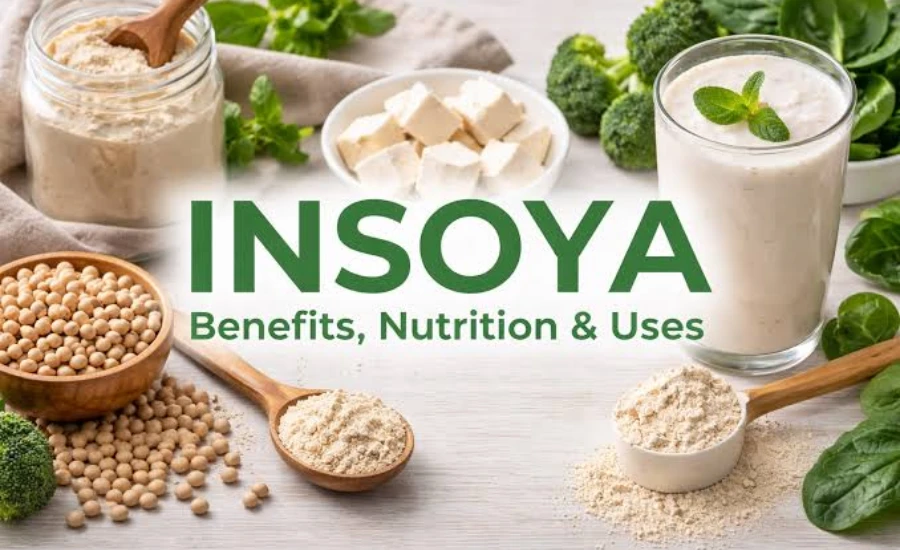
Soybeans are one of the most widely cultivated, studied, and regulated plant-based protein sources in the world. Scientifically classified as Glycine max, they contain all essential amino acids, making them a complete protein — rare among plant sources. They are rich in fiber, B vitamins, iron, calcium, and plant compounds called isoflavones. They have been consumed in East and Southeast Asian diets for centuries, appearing as tofu, tempeh, miso, soy milk, and fermented pastes.
Modern food processing has developed several distinct, regulated soy protein products from this base ingredient. Soy protein isolate (SPI) is approximately 90 percent protein by weight and appears widely in protein supplements and meat alternatives. Soy protein concentrate (SPC) retains more fiber and runs around 65 to 70 percent protein. Textured soy protein (TSP), also called textured vegetable protein (TVP), is formed from defatted soy flour pressed into chunks or granules, widely used as a meat substitute in cooking. Tempeh — whole fermented soybeans — has genuine clinical research supporting digestibility improvements through the fermentation process.
Every specific health claim made across the content about Insoya — protein content, digestive benefits, amino acid profile, sustainability advantages — is an accurate, documented, well-sourced claim about soy protein products as a category. The problem is not the food science. The problem is that none of it specifically describes a verified, standardized, named product called “Insoya” as distinct from the broader soy protein category.
Four Definitions, None Of Them Verified
The content about Insoya does not simply vary in emphasis. It describes four fundamentally incompatible things.
Definition One: A specific advanced soy superfood. The most detailed and specific version describes Insoya as a fermented soy product created through enzymatic hydrolysis, fortified with probiotics, Vitamin B12, iron, and adaptogens including ashwagandha. It claims a specific manufacturing process involving organic soybean selection, enzyme treatment to reduce phytic acid, and probiotic addition. This description presents Insoya as a defined, proprietary product with a traceable production method. No manufacturer, no brand, no product listing, no regulatory filing, and no third-party laboratory analysis behind this specific product was found in any source.
Definition Two: A general category term for modern soy protein. Several other sources treat Insoya not as a specific product but as a broad, flexible umbrella term covering all processed or enhanced soy-based ingredients. Under this definition, tofu, tempeh, soy protein isolate, and textured soy protein all qualify as “insoya” depending on context. Soultio explicitly frames it this way — as a term that “covers a broad range of soy-related nutrition” rather than a single product. This is a more intellectually honest framing, but it also means “insoya” adds nothing to the existing, well-established terminology already used by nutritionists, food scientists, and regulatory bodies to describe these products.
Definition Three: A digital productivity framework. Two sources describe Insoya as a “forward-thinking concept that emphasizes efficiency, collaboration, and purposeful action” — a framework applicable to digital platforms, organizational management, and community initiatives. These articles contain no mention of soybeans, plant protein, or food of any kind. They describe what is recognizable as the generic, fabricated “platform concept” template seen repeatedly across this kind of content investigation — the interchangeable language about connecting people, processes, and technology that could describe any tool in any industry. No company, software product, or organizational methodology under this name was found.
Definition Four: A linguistics education term. One source describes Insoya as a term used in language study to illustrate word formation, sound patterns, and how language conveys meaning. It connects the word to an entity called “Sérya” as a related concept, without explaining what either term actually refers to, and provides no verifiable linguistic source, academic paper, or language education curriculum using this term. This description appears to be generated content filling space with educational-sounding language rather than describing any real linguistic concept.
The Source That Got It Right
Among all the content reviewed, Insidergists.co.uk handles this term most responsibly and deserves direct acknowledgment for doing so. It explicitly states that Insoya “remains somewhat ambiguous in terms of its official branding, technical structure, and commercial identity.” It notes directly that definitions “vary slightly depending on the source” and that the word is “not always clearly defined as a single standardized product.” Crucially, it separates the verified from the claimed: health benefits attributed to Insoya are “generally associated with soy-based nutrition as a category, rather than uniquely proven clinical benefits of Insoya specifically.” This is accurate, responsible, and the most useful thing a reader could take from any source on this topic.
Soultio similarly earns credit for the admission that Insoya “isn’t a standard dictionary word” — though it then somewhat undercuts that honesty by describing specific claimed benefits without returning to the qualification.
The Specific Claims That Cannot Be Verified
Several articles include claims specific enough that they would be checkable if a real product existed behind them. None of them check out.
One source claims Insoya is “fortified with Vitamin B12 and iron.” No supplement facts panel, no manufacturer nutritional disclosure, and no regulatory filing confirming this specific formulation was found anywhere.
One source claims Insoya contains adaptogens such as ashwagandha “in some versions.” No product version, brand, or SKU was identified to verify this claim.
One source claims Insoya uses “enzymatic hydrolysis” to break down complex proteins into smaller pieces, improving digestibility. This is a real, documented industrial food processing technique. Whether it is specifically applied to a product called “Insoya” by any actual manufacturer cannot be confirmed.
One source claims Insoya is available at “health food stores, online retailers, or specialty shops” and can be purchased on Amazon. A search for “Insoya” as a distinct branded product rather than a generic soy protein product returned no specific, consistently branded product across any major retailer.
This pattern is by now familiar across other entries in this series: specific, checkable claims attached to a name that has no confirmed, registered, purchasable product behind it.
Why The Word Exists And What It Likely Means
The construction of the word itself offers a useful clue. “In” as a prefix commonly signals enhancement, improvement, or intensification in English — as in innovation, improvement, increase. “Soya” is British English for soy or soybean, widely used in the UK and Europe alongside the North American “soy.” Combining them produces a word that reads as “enhanced soy” or “improved soy” — a natural, effective branding construct for a plant-based protein product or product line.
This kind of invented compound brand name is common in the food supplements and plant-based nutrition industry. A real, specific company could coin this name for a specific, verified product, file it as a trademark, and build a genuine brand around it. The problem is that no such filing or brand was confirmed. Instead, the name appears to float freely across content, used by different writers to mean different things, because no owner has established exclusive, documented use of it for a specific, defined product.
The most honest interpretation is this: Insoya is a plausible, well-constructed brand name for a soy protein product that may or may not belong to a real, operating company, surrounded by a significant volume of content-farm articles that describe the general soy protein category using this specific word, with varying degrees of specificity about whether a distinct, purchasable product behind it actually exists.
What You Should Actually Do
If you are looking for a plant-based protein source because you read about soy protein benefits in articles describing “Insoya,” you do not need a product specifically called “Insoya” to access those benefits. Textured soy protein, soy protein isolate, tempeh, and tofu are all verified, widely available, independently tested, and nutritionally documented products sold by named, regulated manufacturers whose ingredient lists, nutritional panels, and manufacturing standards are publicly available.
If you encountered “Insoya” on a product label in a health food store or online retailer, apply the standard food product verification process: check the ingredient list, look for third-party testing certifications (NSF, Informed Sport, USP), verify the manufacturer’s name and contact information, and check whether specific health claims on the label are backed by a clear regulatory framework (such as FDA or EU food law approval for any structure-function claim).
If you encountered “Insoya” described as a productivity framework or linguistics education tool, those descriptions have no verifiable product, company, or institution behind them based on any source reviewed for this article.
You may also like Rádiem
FAQ
1. What is Insoya?
There is no single, standardized definition. The most consistent and honest framing is that it is a general, informal term used across online content to describe modern soy-based protein products. It is not a standardized food category term used by regulatory bodies, food scientists, or nutritionists. It is not in any major dictionary.
2. Is Insoya a real food product I can buy?
No specific, consistently branded, independently verified product called “Insoya” was found during research for this article across major retailers. General soy protein products — textured soy protein, soy protein isolate, soy protein concentrate — are real and widely available from named manufacturers.
3. Is Insoya the same as soy protein?
In most of the content describing it as a food product, yes — the claims made about Insoya are claims that accurately describe soy protein products as a category. The specific name “Insoya” does not describe a distinct, separately verified ingredient beyond that general category.
4. Does Insoya contain probiotics, Vitamin B12, and ashwagandha?
These claims appear in at least one source but could not be independently verified. No product with these specific fortifications under the “Insoya” name was confirmed through any manufacturer, retailer, or regulatory filing.
5. Is Insoya a digital productivity tool or framework?
No verified evidence supports this claim. Two sources describe it this way using generic, interchangeable language about connectivity, efficiency, and collaboration, with no company, software product, or framework behind the name.
6. Is Insoya a linguistics term?
No verified evidence supports this. One source describes it as an educational example for studying word formation, but provides no academic source, curriculum, or linguistic database using this term.
7. Are the health benefits described for Insoya accurate?
The underlying health claims — high protein content, complete amino acid profile, fiber for digestive health, heart health advantages over saturated fats — are accurate descriptions of soy protein products generally. They are not uniquely proven clinical benefits of a specific product called “Insoya.”
8. Why do so many different articles describe Insoya differently?
Because no single, authoritative, verified product or definition establishes what the word means. Without an anchor, different content creators each invent their own plausible description to capture search traffic from people searching the term.
9. What is the most reliable alternative to searching for Insoya?
For plant-based protein, search specifically for “textured soy protein,” “soy protein isolate,” “tempeh,” or “soy protein concentrate” — all established, regulated terms with documented nutritional profiles and widely available from named manufacturers.
10. Could Insoya be a real brand that just has low online visibility?
Possibly. A small, regional, or newly launched brand could use this name for a real product. If you encounter it on a physical product, verify the manufacturer’s name, contact details, ingredient list, and any certifications before purchasing.
11. Is there any risk in eating soy-based products described as Insoya?
The soy protein products themselves are broadly safe for most people, with documented exceptions for people with soy allergies and considerations for people with thyroid conditions around high-dose isoflavone consumption. These are category-level considerations, not specific to the “Insoya” name.
12. Which source about Insoya was most accurate?
Insidergists.co.uk, which explicitly acknowledged the term’s ambiguity, flagged that definitions vary across sources, and distinguished between verified soy protein benefits and unverified claims specific to the “Insoya” name.