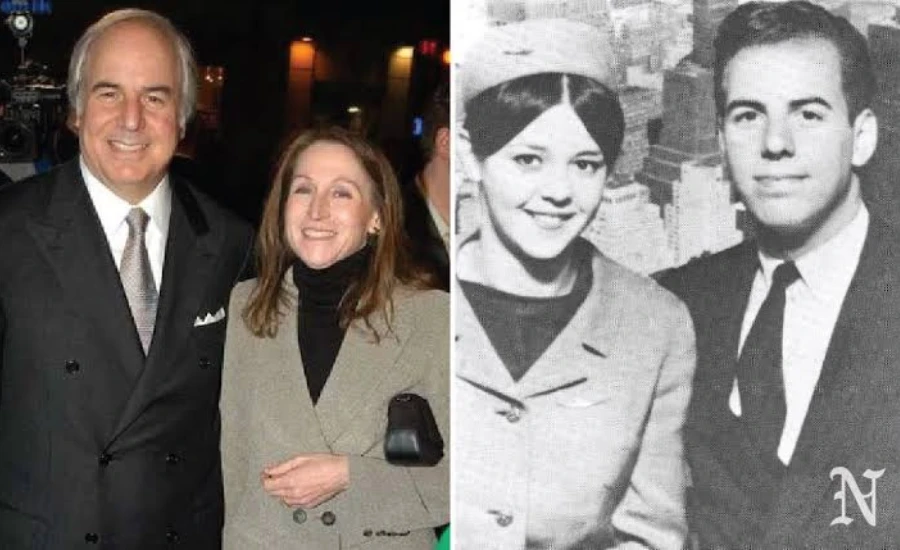
Every article about Kelly Anne Welbes Abagnale describes the same thing: a quiet, private woman who stood by Frank Abagnale Jr. as he transformed from a teenage con artist into a respected FBI consultant. Her loyalty is the emotional center of his redemption story.
There is a problem with that framing. Investigative journalists, a 2020 book based on years of archival research, and Frank Abagnale’s own former speaking agent have all concluded that large parts of the redemption story she allegedly helped build may never have happened the way Frank told it.
This article covers what is actually documented about Kelly Anne Welbes Abagnale — and what it means that her entire public identity is built on top of a story whose factual foundation is now seriously disputed.
Bio at a Glance
| Detail | Info |
|---|---|
| Full Name | Kelly Anne Welbes Abagnale |
| Birth Name | Kelly Anne Welbes |
| Date of Birth | June 26, 1954 |
| Age in 2026 | 71 years old |
| Birthplace | Galveston, Texas |
| Father | Louis Andrew Welbes — described as a U.S. Army engineer, World War II |
| Mother | Maxine Cecilia Rust Welbes — described as a Rice University professor |
| Siblings | Brothers Timothy and Robert Welbes |
| Husband | Frank W. Abagnale Jr. (m. November 6, 1976) |
| Frank’s birth date | April 27, 1948, Bronx, New York |
| Children | Three sons (names not confirmed in available sources) |
| Career before marriage | Disputed — possibly nursing or education-related work, unverified |
| Current residence | Reported as Charleston, South Carolina |
| Social media | None confirmed |
| Net worth (est.) | Not documented independently from Frank’s |
| Frank’s reported net worth | Estimated $10–$25 million across various sources |
The Problem With Every Existing Article About Her
Before going further, this needs to be stated plainly: nearly every published profile of Kelly Anne Welbes Abagnale repeats the same uncritical narrative — that she “stood by” Frank during his “transformation from crime to a respected professional career” and helped him “leave behind a troubled past.”
This framing treats Frank Abagnale’s autobiography and the 2002 film Catch Me If You Can as settled historical fact. They are not.
In 2020, science journalist and author Alan C. Logan published The Greatest Hoax on Earth: Catching Truth, While We Can — a book built on public records, court documents, archival newspaper research, and interviews, including with Frank’s own former speaking agent, Mark Zinder. Logan’s research concluded that many of Abagnale’s most famous claims were fabricated, exaggerated, or could not be independently verified.
This was not a fringe accusation. Journalists had been raising doubts about Abagnale’s story since the 1970s. Stephen Hall’s reporting in the San Francisco Chronicle in 1978 debunked elements of the story. Ira Perry of The Daily Oklahoman did a line-by-line investigation around the same period. Mark Zinder, who worked as Abagnale’s speaking agent for years, later called him a “two-bit criminal” and said he was “embarrassed” to have ever been associated with him.
Britannica’s own current entry on Frank Abagnale states directly that “many of these claims have been debunked by journalists and public records,” specifically noting that Abagnale’s claim of cashing more than 17,000 false checks totaling $2.5 million is “highly improbable” given that he was only out of prison for 14 months total between ages 16 and 21. Britannica also confirms he impersonated an airline pilot for only a few weeks, primarily for TWA rather than Pan Am as he claimed, and that the romantic motivation behind it — pursuing a flight attendant — was a far smaller story than the multiyear international manhunt depicted in the film.
This matters enormously for any honest article about Kelly Anne. If the criminal empire Frank claimed to have built was substantially smaller and shorter than he said, then the “redemption” Kelly Anne is consistently credited with supporting was also a smaller and different story than the one sold to Hollywood, to college lecture audiences, and to Google’s Security and Privacy Month in 2017, where his talk drew over 15 million YouTube views before being affected by the growing public skepticism about his account.
What Is Actually Documented About Kelly Anne’s Background
Multiple sources agree on her birth date — June 26, 1954 — and birthplace, Galveston, Texas. This level of agreement is unusual for a private individual and suggests this specific detail may be more reliably sourced than most of what follows it.
One detailed source names her parents as Louis Andrew Welbes, described as a U.S. Army engineer during World War II, and Maxine Cecilia Rust Welbes, described as having worked as a professor at Rice University. The same source names two brothers, Timothy and Robert Welbes.
These specific names and details do not appear repeated with the same specificity across other sources, which raises the same caution flag seen throughout this kind of content: a single source introduces unusually precise biographical detail — full names, a university affiliation, a military role — that other sources either omit entirely or describe only in vague terms like “a working-class household” or “a simple and values-based environment.”
Her career before marriage is one of the least consistent details across sources. Multiple articles hedge heavily, using phrases like “she may have worked as a nurse” or “some reports suggest she also worked in educational or child-focused environments” without committing to a specific claim or citing any source for it. This kind of soft, unverified hedging is a consistent marker across this entire body of content — it allows an article to include a career detail without taking responsibility for its accuracy.
The Marriage: What Is Consistently Reported
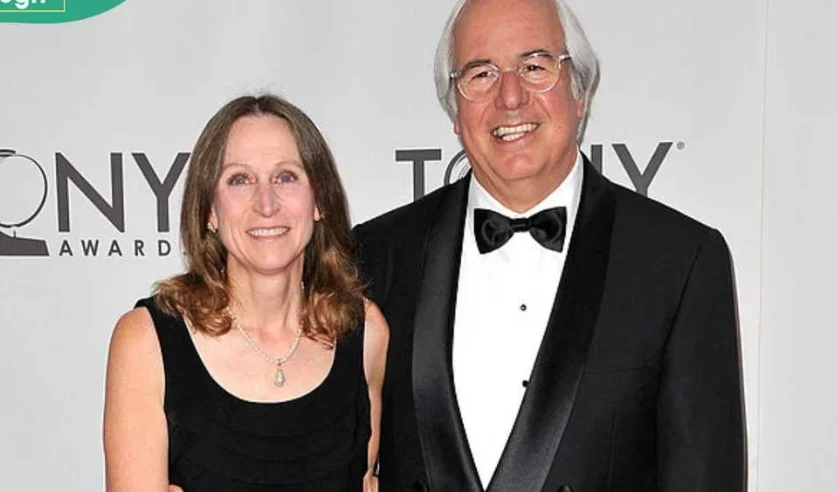
The most consistently repeated specific fact across sources is the marriage date: November 6, 1976. Multiple independently written articles cite this same date, which is a stronger signal of accuracy than most other claims in this body of content, though no article cites a primary source such as a marriage record.
Frank Abagnale was released from prison in 1974, after serving time connected to his check fraud convictions. By his own account and the film’s framing, he then began consulting with the FBI and building a legitimate career. The marriage to Kelly Anne in 1976 falls within this period, after his release but while his public reinvention as a security consultant and author was still being constructed — his bestselling memoir was not published until 1980, four years after the wedding.
This timing matters. Kelly Anne married Frank Abagnale before his story became a national phenomenon, before the 1977 appearance on To Tell the Truth that first thrust him into the spotlight, before The Tonight Show appearance, and well before the 2002 film made him a household name. Whatever she knew about him in 1976, she was not marrying a celebrity. She was marrying a man with a criminal record who was, by his own later telling, in the early stages of reinventing himself.
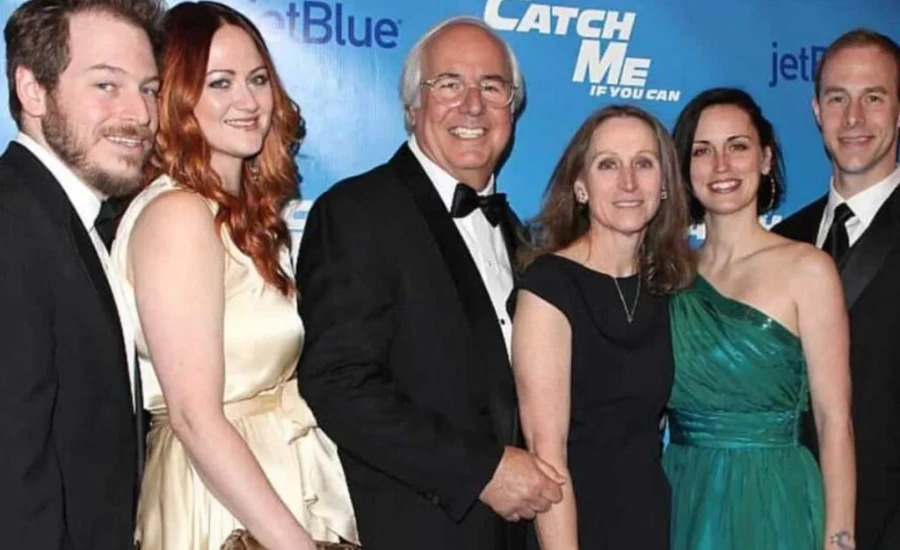
Several sources describe three sons born to the couple, though none names them specifically in the available research, and family details are consistently kept vague across all sources — consistent with a family that has maintained genuine privacy over five decades.
The Brenda Question
Multiple sources address a specific recurring search query: whether Frank Abagnale married a woman named Brenda, the character played by Amy Adams in Catch Me If You Can.
The answer, confirmed across sources, is no. Brenda Strong is a fictionalized or composite character created for the film. She was reportedly inspired by a real person from Frank’s past, but the film version is acknowledged even by sympathetic biography sites as fictionalized and not representative of his actual wife. Kelly Anne Welbes Abagnale is Frank’s real-life and only publicly documented wife, and the film’s Brenda character does not correspond to her.
This is one of the few claims in the entire body of research that can be stated with confidence, precisely because it is a claim about what the film changed rather than a claim about Frank or Kelly Anne’s actual unverified history.
The FBI Consulting Claim Itself Is Disputed
The film’s epilogue states that Frank Abagnale worked with the FBI for over 25 years, and this detail is repeated as fact across nearly every biography source about Kelly Anne, framing her marriage as support for a man building “a respected professional career” with federal law enforcement.
Independent fact-checking is more cautious about the nature and extent of this relationship. Multiple investigative sources note that Abagnale’s claimed close relationship with FBI agent Joseph Shea — portrayed by Tom Hanks in the film as a mentor who recruited him during his parole — is itself disputed. Research indicates Abagnale and Shea likely did not meet again until the late 1980s, more than a decade after the parole period the film depicts, undermining the specific mentor-recruitment narrative at the emotional center of the film’s account of his reform.
This does not mean Frank Abagnale never did any consulting or training work related to fraud prevention — multiple sources, including more skeptical ones, acknowledge he built a real career as a security consultant and lecturer over subsequent decades. What is disputed is the scale, drama, and origin story of that career as presented in the memoir and film — the same origin story that every Kelly Anne biography credits her with supporting.
What This Means for How to Read Her Story
None of this evidence suggests anything negative about Kelly Anne Welbes Abagnale personally. She does not appear to have made any public claims herself. She has given no interviews referenced in any available source. She has not co-authored a book, appeared in promotional material, or made public statements defending or elaborating on Frank’s story.
What it does mean is that the entire genre of article written about her — “the quiet strength behind a man’s redemption,” “the woman who believed in him when no one else did,” “her loyalty helped him leave his criminal past behind” — is built on accepting the very autobiography that journalists and at least one full investigative book have concluded is substantially unreliable.
A more accurate framing is this: Kelly Anne Welbes married a man in 1976 who had a criminal record from his late teens and early twenties, who was working to build a legitimate post-prison life, and who would go on, starting the following year, to construct an increasingly elaborate and lucrative public narrative about that criminal past — a narrative that multiple journalists across five decades have found significant reason to doubt.
Whether Kelly Anne herself ever questioned the more dramatic elements of her husband’s public story, believed them fully, or simply chose not to engage with his professional mythology at all, is not addressed in any available source. That silence is consistently reframed by existing articles as “quiet strength” and “loyalty.” It could equally be read as simple privacy, disinterest in correcting a narrative that was not hers to correct, or something else entirely. No source provides enough information to know which.
What the Internet Gets Wrong About Kelly Anne Welbes Abagnale
“She helped Frank build a stable and honest life after his troubled past” — this framing assumes the troubled past was as extensive as Frank described it. Investigative journalism, including a dedicated 2020 book, found that much of the original criminal story was fabricated or significantly exaggerated, which means the “transformation” she is credited with supporting may be a different and smaller story than commonly described.
“She worked as a nurse before marriage” — this appears in multiple sources but every one of them hedges with words like “may have” or “some reports suggest,” and no source provides any verifiable detail such as an employer, location, or credential.
“Her parents were Louis Andrew Welbes, a WWII Army engineer, and Maxine Cecilia Rust Welbes, a Rice University professor” — this specific, detailed claim appears in only one source among several covering the same subject, and is not corroborated elsewhere, which is consistent with either uniquely good original research or fabricated specificity designed to sound credible.
“Frank Abagnale worked with the FBI for over 25 years in a close mentorship beginning with agent Joseph Shea during his parole” — this is the film’s framing, repeated across biography articles as background fact. Independent investigation suggests Abagnale and Shea did not actually reconnect until the late 1980s, undermining the parole-era mentorship narrative specifically.
“She lives quietly in Charleston, South Carolina” — this specific current location appears in at least one source without any supporting citation, photograph, public record, or independent confirmation.
Final Words
Kelly Anne Welbes Abagnale has been married to Frank Abagnale Jr. since November 6, 1976 — a fact repeated consistently enough across sources to be treated as reliable. She was born June 26, 1954, in Galveston, Texas. Beyond these two points, almost everything else written about her, including her parents’ specific identities, her own career, her children’s names, and her current residence, ranges from thinly sourced to entirely unverifiable.
More importantly, the entire emotional architecture built around her — the loyal wife who stood by a man’s redemption from a life of crime — depends on accepting a redemption story that does not hold up to the scrutiny multiple investigative journalists and at least one full-length investigative book have given it over nearly five decades.
That does not mean Frank Abagnale’s marriage to Kelly Anne is not real, or that her support for him over nearly fifty years is not genuine. It almost certainly is. What it means is that the version of “what she supported him through” sold in hundreds of biography articles is likely a dramatized and partly fictional account — and any honest profile of her has to say so, rather than simply repeating the legend as established fact.
You may also like Dallas Yocum
FAQ: 12 Real Questions About Kelly Anne Welbes Abagnale
1. Who is Kelly Anne Welbes Abagnale?
She is the wife of Frank Abagnale Jr., the former check forger whose memoir and the 2002 film Catch Me If You Can made him internationally famous. She was born June 26, 1954, in Galveston, Texas, and married Frank on November 6, 1976. She has maintained a private life and has given no public interviews referenced in available research.
2. Is Kelly Anne Welbes Abagnale the same as “Brenda” from the movie?
No. Brenda Strong, played by Amy Adams in Catch Me If You Can, is a fictionalized or composite character created for the film. Kelly Anne Welbes Abagnale is Frank’s real and only publicly documented wife, and the Brenda character does not represent her.
3. When did Kelly Anne and Frank Abagnale get married?
November 6, 1976. This date is consistently repeated across multiple independent sources, making it one of the more reliably sourced specific facts about their relationship, though no primary record such as a marriage certificate is cited by any source.
4. Is Frank Abagnale’s story from Catch Me If You Can actually true?
Significant parts of it are disputed by investigative journalists. A 2020 book by science journalist Alan C. Logan, The Greatest Hoax on Earth, found that many of Abagnale’s signature claims — including the scale of his check fraud, the length and nature of his pilot impersonation, and his relationship with FBI agent Joseph Shea — were fabricated, exaggerated, or unverifiable. Journalists raised similar doubts as far back as 1978.
5. Did Frank Abagnale really steal $2.5 million through 17,000 fake checks?
This is one of his most repeated claims and one of the most disputed. Britannica notes the claim is “highly improbable” given that Abagnale was only out of prison for about 14 months total between ages 16 and 21 — making the scale of fraud he claimed difficult to reconcile with the limited time available to commit it.
6. Did Frank Abagnale really impersonate a Pan Am pilot for years?
No, according to investigative research. He is documented to have impersonated an airline pilot for only a few weeks in 1964, primarily for TWA rather than Pan Am, reportedly to pursue a romantic interest with a flight attendant — a far smaller story than the multiyear international scheme depicted in his memoir and the film.
7. What was Kelly Anne’s career before marrying Frank?
This is not reliably documented. Multiple sources mention nursing or education-related work, but every source hedges this claim with phrases like “may have” or “some reports suggest,” and none provides a verifiable employer, credential, or other supporting detail.
8. Do Kelly Anne and Frank Abagnale have children?
Multiple sources state they have three sons together, but none of the available sources names them specifically, and family details are consistently and deliberately kept vague across all coverage.
9. Where does Kelly Anne Welbes Abagnale live now?
At least one source states Charleston, South Carolina, but this claim is not corroborated by any other source or supporting evidence in the available research and should be treated as unverified.
10. Did Frank Abagnale really work with the FBI for 25 years as the film claims?
The film’s epilogue states this, and it is repeated as background fact across most biography content. Independent investigation has specifically disputed the early mentorship narrative involving agent Joseph Shea, suggesting they did not reconnect until the late 1980s rather than during Abagnale’s parole in the 1970s as the film depicts. Abagnale did build a real career in fraud prevention consulting and lecturing over subsequent decades, though the scale and origin of that career as commonly described is contested.
11. Has Kelly Anne Welbes Abagnale ever spoken publicly about her husband’s disputed story?
No public statement from her addressing the controversy around her husband’s autobiography has been found in any available source. She has maintained complete public silence throughout the decades of journalistic skepticism about Frank’s claims.
12. Why does it matter that Frank Abagnale’s story has been disputed when writing about his wife?
Because nearly every existing biography of Kelly Anne Welbes Abagnale is built entirely around the idea that she supported Frank through a dramatic transformation from major criminal to FBI-trusted security expert. If that transformation was substantially smaller, shorter, or different than Frank described, then the foundational premise of her own public story — what she stood by him through — is also different from what has been repeatedly published about her. An honest account has to note this rather than repeating the legend as settled history.