
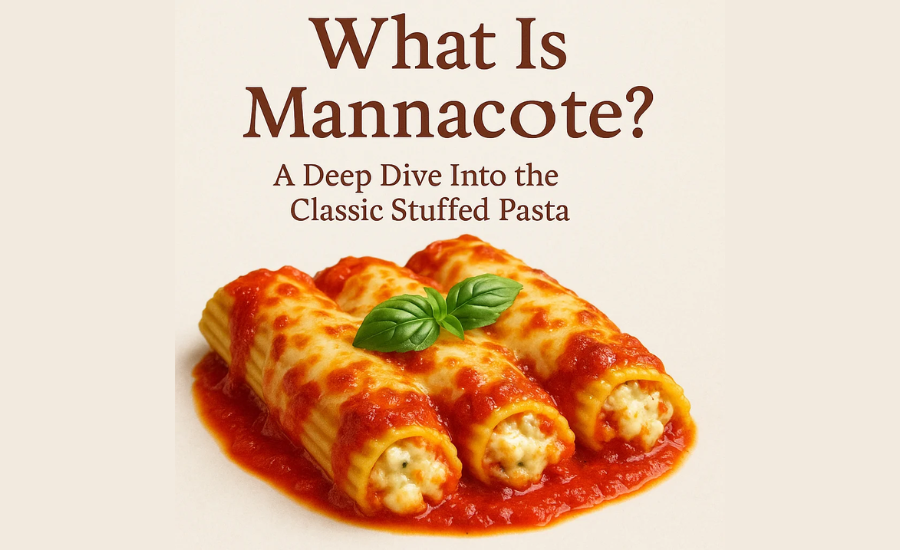
Mannacote is a word that means genuinely different things depending on where you encounter it. That part is true and should be said upfront rather than used as a mystery hook. In the kitchen, it is a widely used phonetic spelling of manicotti — the Italian-American stuffed pasta dish — reflecting how Italian-American communities have always pronounced and written the name in everyday speech rather than in cookbooks. In the garden, it is an independently real product: Manna Cote is a documented slow-release fertilizer sold through verified retailers including Amazon UK. Those two identities are real and distinct. A third cluster of articles inventing a third meaning — mannacote as a mysterious industrial protective coating — is far less verifiable and deserves to be flagged rather than repeated as fact.
Quick Reference Table
| Identity | Verdict |
|---|---|
| Mannacote as a phonetic spelling of manicotti (stuffed pasta) | Real — documented across Italian-American oral tradition, widely used informally |
| Manna Cote slow-release fertilizer | Real — documented product sold through verified retailers |
| Mannacote as a traditional cooking thickener ingredient | Unverified — no documented product or culinary tradition behind this specific claim |
| Mannacote as an industrial metal protective coating | Unverified — described in content-farm articles with no manufacturer, brand, or product listing found |
| Mannacote as a traditional cooking ingredient “valued for generations” | Fabricated — generic filler language with no historical culinary record behind it |
| The Most Honest Source | Binge Saga — explicitly states the two meanings are “completely different and belong to separate industries” |
The First Real Identity: Italian-American Manicotti
The most common reason someone searches “mannacote” is the simplest one. They want to make manicotti and they are spelling it the way it sounds in Italian-American households rather than the way it appears in a standard cookbook.
Manicotti comes from the Italian word “manica,” meaning sleeve — a description of the large, sleeve-shaped pasta tubes the dish is built around. In formal Italian, the word is manicotti. In Italian-American communities — particularly in the mid-Atlantic and northeastern United States where Italian immigration was concentrated in the late nineteenth and early twentieth centuries — pronunciation shifted through everyday speech. The word was heard before it was read. It was passed down at kitchen tables rather than through written recipes. The result was a range of phonetic spellings including “mannacote,” “manicoat,” and variations that reflected how the word actually sounded in those communities rather than how it appeared in an Italian dictionary.
This is a completely normal and well-documented feature of how language evolves in immigrant communities. It is not a corruption of the original word — it is how living languages work when transmitted orally across generations and across linguistic boundaries. “Mannacote” is not a separate dish from manicotti. It is the same dish, known by the name as spoken rather than as written.
What Manicotti / Mannacote Actually Is

The dish itself has a clear, consistent identity regardless of which spelling you use to find it.
The foundation is large pasta tubes — either the ridged dried tubes sold in most supermarkets, or thin pasta crepes called crespelle in formal Italian cooking, which are used in some regional and family traditions. The tubes are filled with a mixture of cheeses, then arranged in a baking dish, covered with tomato sauce, and baked until golden and bubbling.
The classic filling is ricotta cheese — soft, mild, slightly grainy — combined with mozzarella and Parmesan. Fresh parsley and black pepper are standard additions. Some families add ground beef or Italian sausage to the cheese mixture, making the dish more substantial. Others add spinach, which blends into the ricotta for color and mild flavor. Egg is typically added to bind the filling and help it hold its shape during baking.
The tomato sauce is often a simple marinara — crushed tomatoes, garlic, olive oil, and basil — though families with their own Sunday gravy traditions use that instead. The assembled dish can be refrigerated overnight before baking, which makes it a practical choice for entertaining: the work is done the day before and the dish goes directly from refrigerator to oven.
It is baked covered with foil first to allow the filling to heat through, then uncovered at the end to let the top brown. The result is a dish that holds its shape when sliced into portions, with a filling that stays creamy and a top that develops some golden color where the cheese and sauce meet.
A Complete Recipe
Ingredients (serves 6):
- 14–16 manicotti/mannacote pasta tubes (one standard box)
- 2 cups (450g) whole-milk ricotta cheese
- 2 cups (225g) shredded mozzarella cheese, divided
- ½ cup (50g) grated Parmesan cheese, divided
- 2 eggs, lightly beaten
- 2 tablespoons fresh parsley, chopped
- 1 teaspoon salt
- ½ teaspoon black pepper
- ¼ teaspoon garlic powder (optional)
- 3 cups (700ml) marinara sauce, divided
Instructions:
- Preheat oven to 375°F (190°C).
- Cook pasta tubes in generously salted boiling water for 6–7 minutes — slightly underdone. They will finish cooking in the oven. Drain and rinse under cold water to stop cooking. Lay flat on a lightly oiled baking sheet to prevent sticking.
- Mix ricotta, 1½ cups mozzarella, ¼ cup Parmesan, eggs, parsley, salt, pepper, and garlic powder in a bowl until well combined.
- Spread 1 cup of marinara sauce across the bottom of a 9×13 inch baking dish.
- Fill each pasta tube with the cheese mixture. A piping bag or a zip-lock bag with the corner cut off makes this easier. Fill from both ends for even distribution.
- Arrange filled tubes in a single layer over the sauce in the baking dish.
- Pour remaining 2 cups of sauce over the top, covering the pasta evenly.
- Scatter remaining mozzarella and Parmesan over the sauce.
- Cover tightly with foil and bake for 35 minutes.
- Remove foil and bake an additional 10–15 minutes until cheese is golden and sauce is bubbling at the edges.
- Rest for 5 minutes before serving.
Make-ahead note: Assemble through step 8, cover, and refrigerate overnight. Add 10 minutes to covered baking time if going from cold refrigerator to oven.
Variations:
- Meat filling: Brown ½ pound Italian sausage or ground beef, drain fat, cool, and mix into the cheese filling.
- Spinach filling: Add 1 cup cooked, squeezed-dry frozen spinach to the cheese mixture.
- Crespelle (crepe version): Make thin egg crepes, fill them with the cheese mixture, and roll rather than stuffing tubes — a slightly more elegant version for special occasions.
The Second Real Identity: Manna Cote Fertilizer
Separately and unconnected to the pasta dish, Manna Cote is a documented, real slow-release fertilizer product. The name is typically written as two words — Manna Cote — and refers to a formulation designed to release nutrients gradually over time through a controlled-release coating on fertilizer granules rather than delivering everything at once.
The appeal of slow-release fertilizers is straightforward: they reduce the risk of nutrient burn from over-fertilization, require less frequent application, and reduce the environmental impact of nutrient runoff compared to conventional quick-release formulations. Manna Cote is sold through verified online retailers including Amazon UK and through professional gardening supply channels.
This product exists independently of any pasta dish and has its own legitimate identity in horticulture. The name overlap with the manicotti spelling variant is coincidental.
The Third and Fourth “Identities”: Not Verified
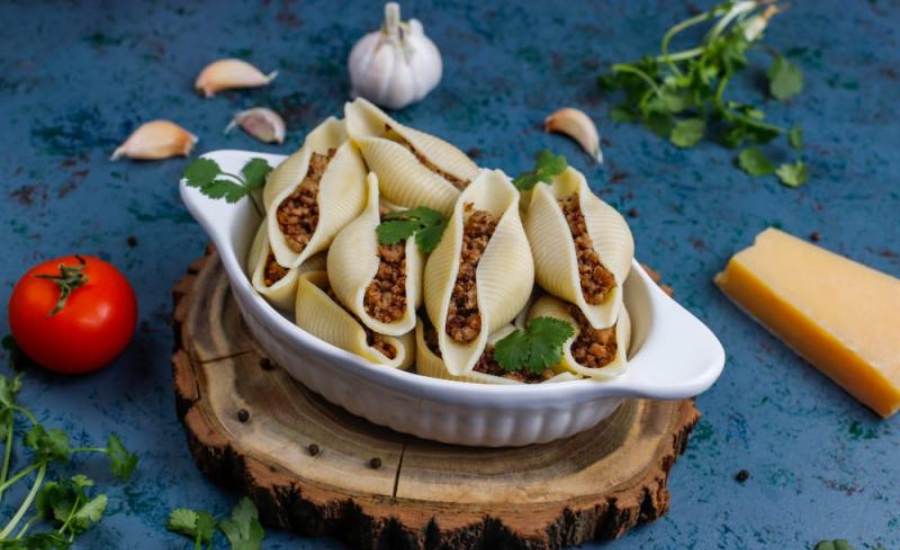
Two additional definitions circulate in content-farm articles and deserve direct scrutiny.
Mannacote as a traditional cooking thickener. One article describes mannacote as “a traditional cooking ingredient known mainly for its thickening properties” used in soups, stews, sauces, and desserts, with roots in “traditional food culture for generations.” No culinary reference — no cookbook, no food historian, no regional cooking tradition — identifies a cooking thickener called “mannacote.” Cornstarch, arrowroot, flour, gelatin, pectin, and dozens of other thickeners are well-documented by name. Mannacote is not among them. This description appears to be invented content that borrowed the word’s name and attached it to generic thickener information without any real product behind it.
Mannacote as an industrial metal coating. Several articles describe a third meaning: a protective coating applied to metal or machinery surfaces to prevent corrosion and rust. No manufacturer, no product listing, no industrial catalog, and no safety data sheet for a coating product called “mannacote” was found during research. Industrial coatings have documented names — Rust-Oleum, powder coating, galvanization, epoxy coatings — all with traceable manufacturers. “Mannacote” does not appear in any verified industrial coating database or catalog. This appears to be a fabricated third identity invented to make the term appear more multidimensional and therefore more article-worthy.
The Pattern Behind the Extra Definitions
The invented definitions follow the same content-farm logic documented across this investigation series. A word with real search interest — here driven by people looking for a manicotti recipe — gets enriched with additional invented meanings to create the impression of a multi-industry concept, which enables longer articles and more keyword coverage. The “industrial coating” and “cooking thickener” definitions give writers something to describe beyond pasta, expanding word count without adding verified information.
The tell-tale signs are consistent: no named manufacturer for the coating, no named product for the thickener, no source, no history, and language generic enough to apply to any coating or thickener without changing a word.
You may also like Readmymanga com
FAQ
1. What is mannacote?
Most commonly, a phonetic spelling of manicotti — the Italian-American baked stuffed pasta dish. Separately, Manna Cote (two words) is a real slow-release fertilizer product sold through verified garden supply retailers.
2. Is mannacote the same as manicotti?
Yes, in culinary usage. Mannacote is how many Italian-American families have pronounced and spelled the dish across generations of oral tradition. It is the same dish — large pasta tubes filled with cheese, baked in tomato sauce.
3. Where does the word manicotti come from?
From the Italian word “manica,” meaning sleeve — describing the large, sleeve-shaped pasta tube the dish uses. The formal Italian spelling is manicotti.
4. Is Manna Cote a real fertilizer?
Yes. Manna Cote (two words, sometimes styled as Manna-Cote) is a documented slow-release fertilizer product available through verified retailers including Amazon UK and professional garden supply channels.
5. Is mannacote a real industrial coating product?
No verified manufacturer, product listing, or industrial catalog entry for a coating product called “mannacote” was found. This definition appears in content-farm articles but lacks any independently verifiable backing.
6. Is mannacote a traditional cooking thickener?
No. No culinary reference, cookbook, or food history source identifies a thickening ingredient called mannacote. This description appears to be fabricated content unrelated to any real ingredient.
7. How do you make mannacote (manicotti)?
Fill large pasta tubes with a mixture of ricotta, mozzarella, Parmesan, egg, and herbs. Arrange in a baking dish over marinara sauce, top with more sauce and cheese, and bake at 375°F (190°C) for approximately 45 minutes. A complete recipe is included in this article.
8. What is the difference between manicotti and cannelloni?
Manicotti traditionally uses ridged dried pasta tubes or crepes and is associated with Italian-American cooking. Cannelloni typically uses smooth pasta sheets rolled around a filling and is more closely associated with northern Italian regional cooking. The fillings and sauces overlap considerably.
9. Can mannacote be made ahead of time?
Yes. The dish can be assembled, covered, and refrigerated overnight before baking. Add approximately 10 minutes to the covered baking time if going from cold refrigerator to oven.
10. Why do so many articles describe mannacote as having multiple unrelated meanings?
Because adding invented meanings expands the apparent scope of an article for search engine purposes. The pasta dish and the fertilizer are genuinely separate real things that share a similar word. The industrial coating and thickener definitions appear to have been invented to extend the article rather than reflect documented reality.
11. Is mannacote gluten-free?
Standard manicotti pasta is wheat-based and not gluten-free. Gluten-free versions can be made using gluten-free pasta tubes or by wrapping the filling in thin slices of grilled eggplant or zucchini instead of pasta — an approach common in low-carb adaptations of the dish.
12. Where is the mannacote.net website?
Mannacote.net is a website specifically dedicated to the pasta dish, with recipe content. It is the source of one of the cleaner culinary descriptions of the dish found during research.