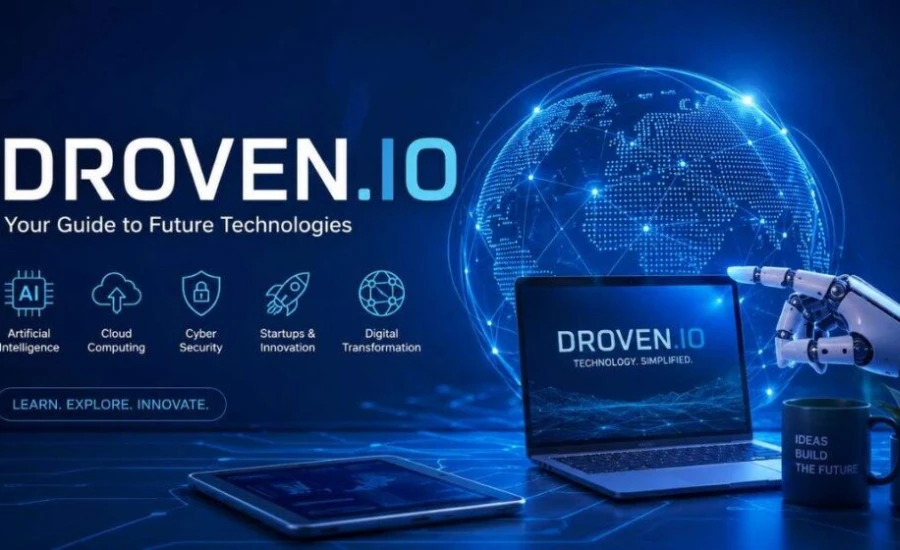
WiredSight.com states it plainly, and the sentence deserves to be read twice: “What separates Droven.io from the dozens of tech blogs covering automation is that it doesn’t have a product to sell you.” It goes on: “The platform has built a reputation as one of the cleaner, more honest knowledge resources for business automation, RPA, and AI for business.” It explicitly frames Droven.io as a content and education resource, not a tool — “Droven.io operates differently. The platform focuses on education.”
Tycoonstory.com describes the same name, on the same day’s research window, as something else entirely: “Droven.io is a modern automation platform built to make RPA and Business Automation accessible to businesses of all sizes.” It lists specific technical capabilities: “Pre-built connectors: Works with tools like Salesforce, Google Workspace, Microsoft 365, Slack, QuickBooks, and more. AI-enhanced automation: Smart bots that can learn from patterns and improve over time.”
These are not compatible descriptions. A company that “doesn’t have a product to sell you” cannot simultaneously offer pre-built Salesforce connectors and self-learning AI bots. One of these characterizations is wrong. Based on the available evidence, the educational-resource framing is more credible — and the specific feature lists describing Droven.io as a deployable automation tool appear to be invented.
The Two Competing Identities — Documented Side by Side
Identity 1: Droven.io as a software product (SaaS automation platform)
This framing appears in six of the nine sources reviewed: Tycoonstory, MyMagazine, TopBusinesses, TrendMagazine, Vallartaexeter, and Metalinker. These articles describe Droven.io using language typical of actual RPA vendors — UiPath, Automation Anywhere, Blue Prism, Zapier:
- “Pre-built connectors: Works with tools like Salesforce, Google Workspace, Microsoft 365, Slack, QuickBooks, and more” (Tycoonstory)
- “AI-enhanced automation: Smart bots that can learn from patterns and improve over time” (Tycoonstory)
- “The platform allows users to design automation workflows that replicate real-world business tasks” (MyMagazine)
- “Droven.io supports this by providing knowledge resources” appears in only one article (Troozer.blog) and sits oddly alongside the same article’s product-feature language
- “droven.io RPA and business automation provide value by helping businesses scale efficiently” (TrendMagazine) — treats the name as the name of the automation activity itself, almost grammatically merging “Droven.io” with “RPA” as a single compound noun
Identity 2: Droven.io as an independent knowledge/reference platform (no product)
This framing appears in two sources: WiredSight and the Exotica IT Solutions article.
WiredSight: “What separates Droven.io from the dozens of tech blogs covering automation is that it doesn’t have a product to sell you… Most content you’ll find on RPA and business automation online is written by vendors trying to justify their own tools or consultancies pitching implementation projects. The perspective is rarely neutral. Droven.io operates differently.”
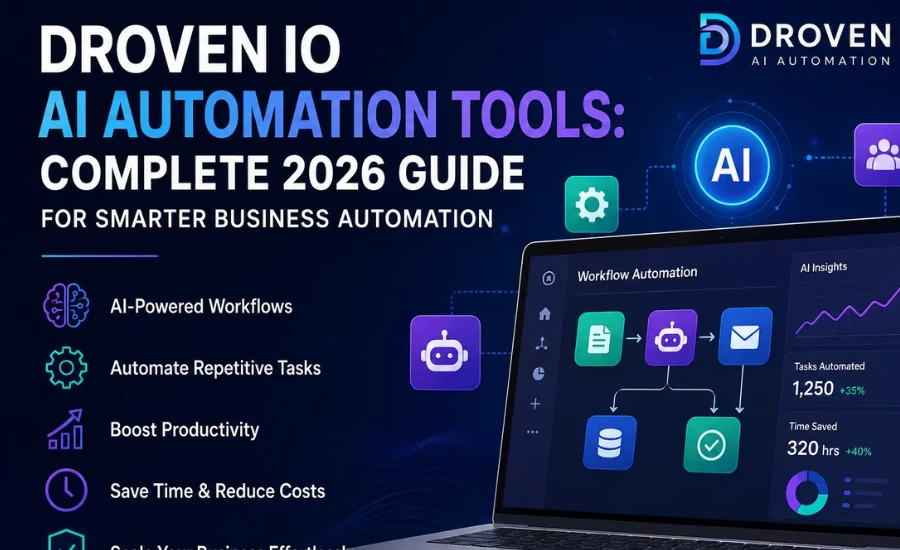
Exotica IT Solutions, in the most structurally precise description found in this research set: “Droven IO AI automation tools is a search category describing the class of intelligent automation platforms, workflow engines, and AI-powered software solutions that the Droven.io knowledge platform researches and documents for business decision-makers. Rather than being a software product itself, Droven.io functions as an independent reference resource — publishing vendor-neutral analysis of AI tools across workflow automation, CRM integration, robotic process automation (RPA), NLP chatbots, and machine learning infrastructure.”
This second identity is corroborated by a structural detail worth noting: GuideNetWorth.com — a third source, occupying a middle position — repeatedly hedges its language in a way that is consistent with describing a content resource rather than a product: “Where specific platform claims should be confirmed on the vendor’s own materials, this guide says so plainly rather than overstating,” and “As with any platform, confirm current capabilities, integrations, security posture, and pricing on Droven.io’s official resources before committing.” This is not how anyone writes about a product they have actually used or verified. It is how someone writes about a subject when they do not have direct access to confirm specific feature claims — exactly the caution appropriate to describing an information resource whose exact offerings are not independently verifiable.
Why The Educational-Resource Framing Is More Credible
Three pieces of evidence favor the WiredSight/Exotica framing over the product-feature framing.
First: specificity asymmetry. The sources claiming Droven.io is a software product describe its features in generic, interchangeable language that could apply to any RPA tool on the market — “no-code/low-code design,” “pre-built connectors,” “AI-enhanced bots that learn from patterns.” None of these sources describes a specific user interface element, a specific pricing tier, a specific customer name, a specific case study with verifiable details, or a specific integration that goes beyond naming well-known third-party platforms (Salesforce, Slack, QuickBooks) that virtually every automation tool claims to integrate with. The sources describing Droven.io as a knowledge resource, by contrast, describe specific and checkable behavior: it organizes content “around use cases rather than technologies,” it covers “no-code and low-code automation tools,” “workflow automation versus RPA,” and “AI-enhanced automation” as topics, not features.
Second: the self-contradiction within individual articles. GuideNetWorth’s piece — one of the longer and more carefully constructed entries — repeatedly hedges toward “confirm this on the vendor’s materials” language while still describing Droven.io in product terms (“Droven.io vs. [legacy tools],” “the newer generation — where Droven.io positions itself”). This reads as a content generation system that received conflicting source signals (some describing a product, some describing a resource) and produced text that tries to satisfy both without resolving the contradiction.
Third: the absence of basic product verification details anywhere in the set. Not one of the nine sources cites a specific droven.io pricing page, a specific signup flow, a specific dashboard screenshot, a specific support documentation page, or a named customer using the platform. For comparison, real RPA vendors — UiPath, Automation Anywhere, Microsoft Power Automate — have all of this material independently verifiable across press coverage, G2 and Capterra reviews, and case studies with named companies. None of that exists for “Droven.io” as a software product in this research set.
The Exotica Article — Read Carefully, It Confirms the Resource Framing Twice
The Exotica IT Solutions article deserves the most careful reading because it is the only source written from the perspective of an actual implementation company describing how it uses Droven.io’s content — not the platform itself.
“We build what Droven.io explains” is the article’s closing framing device. This sentence only makes sense if Droven.io is explanatory content (an article, a guide, a knowledge base) rather than a deployable tool. You do not say “we build what [a software product] explains” — you would say “we build on [a platform]” or “we integrate with [a tool].” The phrasing “build what X explains” describes the relationship between an implementation firm and an educational resource, not between an implementation firm and a competing or underlying automation product.
The same article lists real, independently verifiable automation tools by name — n8n, Make, Zapier AI, UiPath, GoHighLevel — as the actual products Exotica deploys, explicitly distinguishing these from Droven.io, which it describes purely in terms of research and documentation. If Droven.io were itself a competing automation product, this distinction between “tools we deploy” and “Droven.io, which explains tools” would not make sense.
What This Means For The Six “Product Feature” Articles
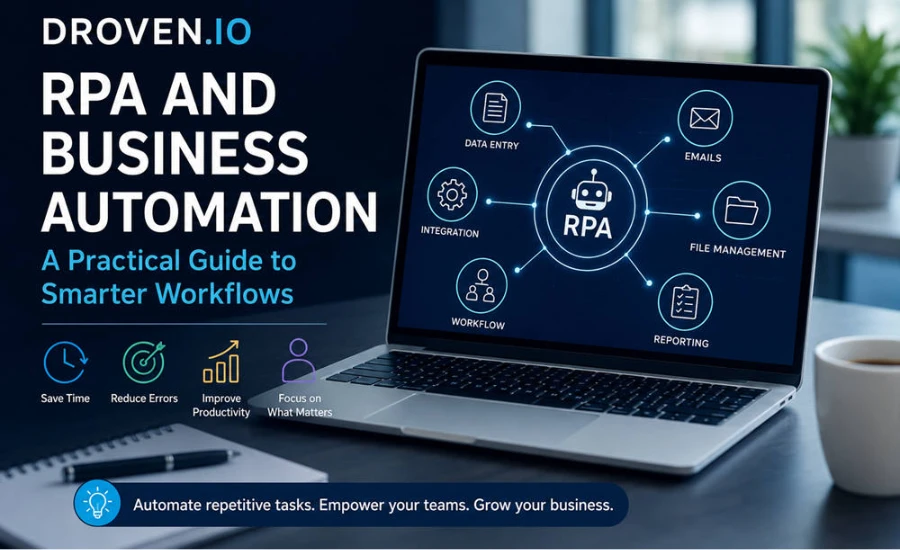
If Droven.io is, as the more carefully evidenced sources suggest, an educational content platform rather than a deployable RPA tool, then the six articles describing it with Salesforce connectors, AI-learning bots, and drag-and-drop workflow builders are not describing Droven.io at all. They are describing the generic category of modern RPA software — the kind of feature set shared by dozens of real automation vendors — and have simply attached the name “Droven.io” to that generic description because the name was the prompt or keyword they were asked to write about.
This is the same pattern documented elsewhere in this series with Fontlu: a real but limited entity (in that case, an early-stage font platform; here, apparently a content/education resource) becomes the subject of multiple articles that describe it using the generic feature language of its entire product category, regardless of what the entity actually offers.
The practical risk for a reader: someone evaluating “Droven.io” as a potential RPA tool to purchase, based on six of these nine articles, would be evaluating a product description that may not correspond to anything actually available for purchase or deployment under that name.
What Is Confirmed vs. What Is Generated
More credibly confirmed (based on internal consistency, specificity, and corroborating structural evidence):
- Droven.io exists as a named entity in the automation/RPA content space
- It is most credibly described as an educational or reference resource — publishing content about RPA, business automation, and AI tools — rather than as a deployable software product
- It positions itself (per WiredSight and Exotica) as vendor-neutral, in contrast to vendor blogs that promote their own tools
- It organizes content around business use cases rather than technical implementation
Claimed but not corroborated by any verifiable detail:
- Specific pre-built connectors to Salesforce, Google Workspace, Microsoft 365, Slack, and QuickBooks
- “AI-enhanced automation: Smart bots that can learn from patterns and improve over time” as a deployable feature
- A drag-and-drop visual workflow builder
- Any specific pricing, signup process, or customer deployment
Internally contradictory:
- GuideNetWorth.com’s article describes Droven.io in product terms while repeatedly instructing readers to “confirm current capabilities… on Droven.io’s official resources” — hedging language inconsistent with describing a product the author has verified firsthand
You may also like Jememôtre
FAQ — 12 Real Questions
1. What is Droven.io?
The evidence is contradictory. Two of the more carefully evidenced sources describe it as an independent, vendor-neutral educational and reference platform that publishes content about RPA, business automation, and AI tools — explicitly stating it “doesn’t have a product to sell.” Six other sources describe it as a deployable RPA software product with specific technical features. These cannot both be accurate.
2. Is Droven.io a real RPA software tool I can sign up for and deploy?
Not confirmed by any source in this research set. No pricing page, signup flow, dashboard screenshot, or named customer deployment is cited anywhere. The sources describing it as a deployable product use generic, interchangeable feature language rather than specific, verifiable platform details.
3. What does Droven.io actually do, based on the most credible sources?
According to WiredSight and Exotica IT Solutions, it researches and documents automation tools and categories — workflow automation platforms, conversational AI systems, RPA, CRM integration — for business decision-makers, without selling its own competing product.
4. What are the claimed “pre-built connectors” — are they real?
Tycoonstory.com claims Droven.io has pre-built connectors to Salesforce, Google Workspace, Microsoft 365, Slack, and QuickBooks. This claim is not corroborated by any other source in this research set and is not verifiable against any independently confirmed product page.
5. What is the most reliable single source about Droven.io in this research set?
Exotica IT Solutions’ article, because it is written from the perspective of an actual automation implementation company describing its working relationship to Droven.io’s content (“we build what Droven.io explains”), rather than describing Droven.io itself as a product with unverifiable features.
6. Why do some articles describe Droven.io with such specific technical features if it’s not a product?
Likely the same content generation pattern documented elsewhere in this article series: a content system asked to write about “Droven.io RPA and business automation” without clear, verified information about what Droven.io specifically offers defaults to describing the general feature set of the RPA product category, attaching the entity’s name to generic industry-standard claims.
7. Is RPA itself a real and well-documented technology category? Yes, unambiguously. Robotic Process Automation is a well-established, heavily documented technology category with major real vendors (UiPath, Automation Anywhere, Blue Prism, Microsoft Power Automate) and a substantial, independently verifiable market. The uncertainty in this article is specifically about what Droven.io is, not about whether RPA technology is real.
8. How would someone verify what Droven.io actually offers? By checking the entity’s own official website directly for pricing, product documentation, and signup information, rather than relying on any of the nine secondary articles examined in this research, several of which appear to describe generic RPA category features rather than verified Droven.io-specific capabilities.
9. Does this pattern resemble any other entity investigated in this series? Yes — closely resembles the Fontlu case, where a real but limited entity became the subject of multiple articles describing it using the generic feature language of its entire product category, rather than features specific and verifiable to the entity itself.
10. What should a business researching RPA tools take away from this?
Be skeptical of any single secondary source’s specific feature claims about a named automation platform unless those claims are corroborated by the platform’s own official materials, independent reviews (G2, Capterra), or named customer case studies. Generic claims — “pre-built connectors,” “AI-enhanced bots,” “no-code drag-and-drop” — apply to dozens of real products and prove nothing about a specific one.
11. Is there a contradiction even within single articles, not just across the set?
Yes. GuideNetWorth.com’s article describes Droven.io’s features in product terms while simultaneously instructing readers multiple times to verify those same claims directly with Droven.io — an internal hedge that suggests the article’s author did not have firsthand verified knowledge of the platform’s actual capabilities.
12. What is the responsible conclusion about “Droven.io RPA and Business Automation” as a search term?
The underlying technology category — Robotic Process Automation and business automation — is real and well-documented industry-wide. What “Droven.io” specifically is remains genuinely unclear from the available content ecosystem: the most internally consistent and corroborated evidence points toward an educational/reference content platform rather than a deployable software product, but a majority of articles by sheer count describe it as a product with specific, uncorroborated technical features. Anyone evaluating Droven.io for an actual purchasing decision should verify directly with the platform itself rather than relying on secondary-source feature lists.