
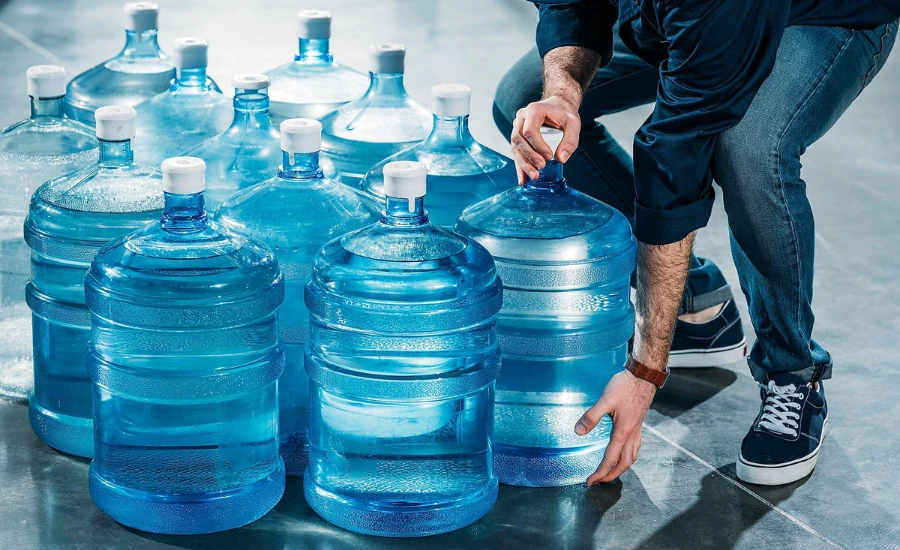
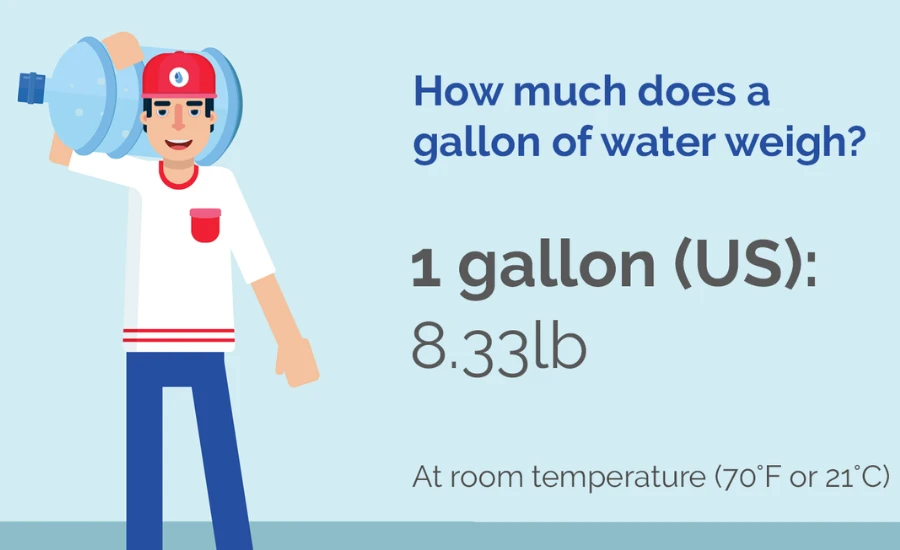
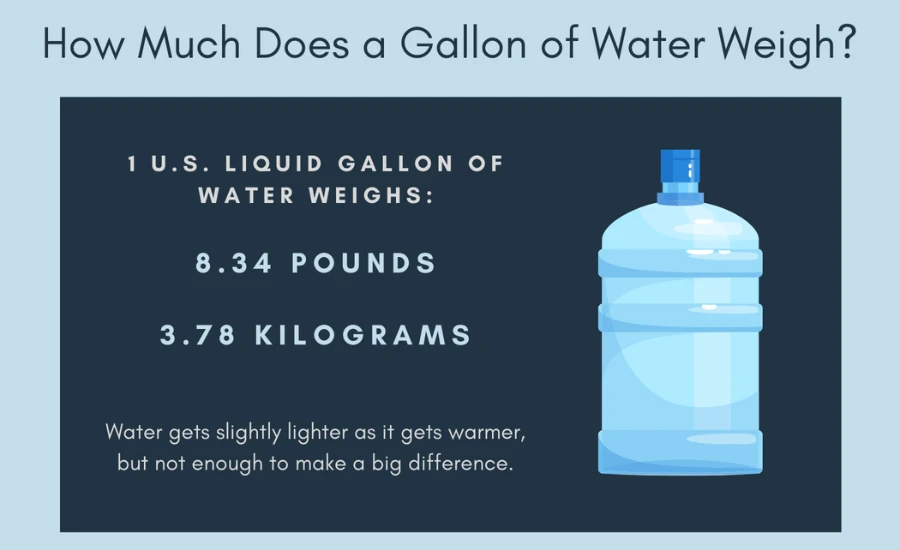
The short answer most people want: one US gallon of water weighs 8.34 pounds, or 3.78 kilograms, at room temperature (around 68°F / 20°C). That is the number used in most practical contexts — cooking, farming, plumbing, emergency preparedness, and everyday estimation. But the longer answer is more interesting, because that number changes depending on temperature, and understanding why tells you something genuinely useful about how water behaves.
Quick Reference Table
| Measurement | Weight |
|---|---|
| 1 US gallon of water (room temp, 68°F/20°C) | 8.34 lb / 3.785 kg |
| 1 US gallon of water (at 39.2°F/4°C — maximum density) | 8.345 lb / 3.785 kg |
| 1 US gallon of water (at 212°F/100°C — boiling) | 7.996 lb / 3.627 kg |
| 1 UK/Imperial gallon of water (room temp) | 10.02 lb / 4.546 kg |
| 1 US fluid ounce of water | 0.065 lb / 1.04 oz by weight |
| 1 liter of water (room temp) | 2.205 lb / 1.0 kg |
| Water’s maximum density | At exactly 39.2°F (4°C) |
US Gallon vs Imperial Gallon: A Critical Distinction
This is the most common source of confusion, and it matters a lot. The United States and the United Kingdom both use the word “gallon,” but they mean different volumes.
A US gallon is 231 cubic inches, or 3.785 liters. A UK imperial gallon is 277.4 cubic inches, or 4.546 liters. The imperial gallon is about 20 percent larger than the US gallon.
This means a gallon of water in the UK weighs roughly 10.02 pounds — compared to 8.34 pounds in the US. If you are following a recipe, filling a tank, or calculating shipping weight, knowing which gallon system applies is not a small detail. It is the difference between adding the right amount of water and adding 20 percent too much or too little.
Throughout this article, “gallon” refers to the US gallon unless stated otherwise.
Why Temperature Changes the Weight
Water is unusual among common substances because its density — how much mass is packed into a given volume — changes significantly with temperature. More density means more weight for the same volume.
Water reaches its maximum density at exactly 39.2°F (4°C). This is the temperature at which water molecules are packed together most tightly. At this temperature, one US gallon weighs its maximum of approximately 8.345 pounds.
Heat the water and the molecules begin moving faster, pushing apart slightly, decreasing density. By the time water reaches its boiling point of 212°F (100°C), the same gallon of water weighs about 7.996 pounds — roughly a third of a pound less than at its densest. That difference matters in industrial and scientific contexts where precision is required.
Cool water below 39.2°F and something counterintuitive happens: it also gets lighter, not heavier. Water expands as it freezes, which is why ice floats on liquid water. Ice is less dense than liquid water — a physical property that is genuinely rare among substances and that makes life in cold climates possible (fish survive under frozen lake surfaces because ice floats rather than sinking and freezing the water solid from the bottom up).
Practical Weight at Common Temperatures
| Temperature | Density (lb/gallon) |
|---|---|
| 32°F / 0°C (freezing point) | 8.344 lb |
| 39.2°F / 4°C (maximum density) | 8.345 lb |
| 50°F / 10°C | 8.337 lb |
| 68°F / 20°C (room temperature) | 8.334 lb |
| 86°F / 30°C | 8.318 lb |
| 104°F / 40°C | 8.299 lb |
| 212°F / 100°C (boiling point) | 7.996 lb |
For most everyday purposes, the variation between 32°F and 86°F is less than half a pound per gallon — small enough that 8.34 lb/gallon is a reliable working figure for the vast majority of practical uses.
Saltwater and Other Water Types
Pure water and real-world water are not always the same thing. Dissolved substances change density.
Seawater is denser than freshwater because of dissolved salts. The average salinity of ocean water is about 3.5 percent by weight. A gallon of average seawater weighs approximately 8.56 pounds — about 0.22 pounds more than a gallon of pure freshwater at the same temperature. In the Dead Sea, where salinity is roughly 34 percent, water is dramatically denser and the weight difference is substantial.
Hard tap water — water with dissolved calcium, magnesium, and other minerals — is slightly denser than pure distilled water, but the difference is negligible for any practical purpose. The 8.34 lb figure works fine for tap water.
Real-World Uses for This Number
Emergency preparedness. The standard recommendation for emergency water storage is one gallon per person per day. If you are storing water for a family of four for two weeks, that is 56 gallons — approximately 467 pounds of water alone, not counting containers. Knowing the weight matters for choosing the right shelving, containers, and storage location.
Aquariums and fish tanks. A 55-gallon aquarium holds about 459 pounds of water before adding substrate, rocks, and equipment. This is why tank weight ratings for furniture matter — an under-supported 55-gallon tank is a genuine structural risk.
Agriculture and irrigation. Farmers and gardeners calculate irrigation needs in gallons per week or per season. Converting gallons to weight helps when working with liquid fertilizer concentrations or calculating pump capacity needs.
Shipping and freight. Carriers calculate weight for liquid shipments. A tanker truck carrying 5,000 gallons of water is carrying approximately 41,700 pounds of water — about 20.9 tons — before accounting for the vehicle itself.
Swimming pools. An average residential swimming pool holds roughly 20,000 gallons of water — approximately 166,800 pounds, or about 83 tons. This is why pool construction requires reinforced foundations.
Cooking and baking. Weight-based recipes sometimes call for water by volume. Knowing that a cup of water (1/16 gallon) weighs approximately 8.35 ounces makes measurement conversions straightforward.
The Simple Formula
If you need to calculate the weight of any amount of water in US gallons at room temperature:
Weight in pounds = gallons × 8.34
Weight in kilograms = gallons × 3.785
For imperial gallons:
Weight in pounds = gallons × 10.02
Weight in kilograms = gallons × 4.546
What Affects the Weight of a Gallon of Water
To summarize clearly: the weight of a gallon of water is affected by three things.
Temperature — the dominant factor. Warmer water is lighter per gallon. Colder water (down to 39.2°F) is heavier per gallon. The difference between the lightest and heaviest states of liquid water spans about 0.35 pounds per gallon.
Dissolved substances — saltwater is heavier than freshwater. The saltier the water, the more it weighs per gallon.
Which gallon standard you are using — US or imperial. The imperial gallon is about 20 percent larger, so a gallon of water by imperial measure weighs about 20 percent more than a US gallon of water.
Everything else — altitude, water source (well vs municipal), filtering — has negligible effect on weight for any practical purpose.
FAQ
1. How much does a gallon of water weigh?
8.34 pounds (3.785 kilograms) at room temperature (68°F/20°C). This is the standard figure used for most practical purposes.
2. Does temperature change how much a gallon of water weighs?
Yes. Water is heaviest at 39.2°F (4°C) — 8.345 lb per gallon — and lightest at its boiling point of 212°F (100°C) — 7.996 lb per gallon. At normal room temperatures the difference from the maximum is less than 0.01 pounds, which is negligible for everyday use.
3. How much does a gallon of water weigh in kilograms?
Approximately 3.785 kilograms. One liter of water weighs almost exactly one kilogram, and there are 3.785 liters in a US gallon.
4. How much does a UK imperial gallon of water weigh?
About 10.02 pounds (4.546 kilograms). The imperial gallon is larger than the US gallon, holding 4.546 liters compared to 3.785 liters.
5. Is saltwater heavier than freshwater?
Yes. Average seawater weighs approximately 8.56 pounds per US gallon compared to 8.34 pounds for freshwater — about 2.6 percent heavier due to dissolved salts.
6. How much does a 5-gallon water jug weigh?
About 41.7 pounds (18.9 kilograms) for the water alone. Add the weight of the jug itself (typically 1.5 to 2 pounds for a standard polycarbonate jug) for the full carry weight of approximately 43 to 44 pounds.
7. How much does a 55-gallon drum of water weigh?
About 458.7 pounds (208 kilograms) for the water. A standard steel 55-gallon drum adds approximately 38 to 50 pounds, bringing the total to roughly 500 pounds when full.
8. Why does ice float if water is heaviest at 4°C?
Because water expands as it freezes below 39.2°F (4°C), making ice less dense than liquid water at the same temperature. This is unusual — most substances contract and become denser when they freeze. Ice floating rather than sinking is what keeps lakes and rivers from freezing solid from the bottom up.
9. How much does a gallon of water weigh compared to a gallon of milk?
A gallon of whole milk weighs approximately 8.6 pounds — slightly more than water because milk contains fats, proteins, and sugars in addition to water.
10. How much does a gallon of water weigh compared to a gallon of gasoline?
Gasoline is less dense than water. A gallon of gasoline weighs approximately 6.07 to 6.16 pounds, compared to 8.34 pounds for water. This is why water sinks to the bottom when mixed with gasoline.
11. How many gallons of water weigh 100 pounds?
Approximately 11.99 gallons (100 ÷ 8.34 = 11.99). Roughly 12 US gallons of water weigh 100 pounds.
12. Is there a simple way to remember the weight of a gallon of water?
The common mnemonic is “a pint’s a pound the world around” — one US pint of water weighs approximately one pound (actually 1.04 lb). Since there are 8 pints in a gallon, 8 pints × 1 pound = approximately 8 pounds per gallon. The actual figure of 8.34 is close enough that this works as a quick mental estimate.