Three letter domain names — known as 3LDs or LLL domains — are among the most sought-after and valuable assets in the domain name market. Their value comes from scarcity, memorability, and the fact that businesses have been acquiring them for decades as premium brand identifiers. Here is everything you need to know about what they are worth and what drives that value.
Quick Reference Table
| Detail | Info |
|---|---|
| Total Possible 3-Letter .com Combinations | 17,576 (AAA through ZZZ) |
| Registered Status (all .com LLL domains) | All taken — none available at registrar |
| Average Sale Price (LLL .com, recent market) | $10,000–$100,000+ depending on letters |
| Premium 3-Letter .coms (top combinations) | $500,000–$5,000,000+ |
| Most Valuable Letter Combinations | Common English words, acronyms, initials of major companies |
| Secondary Market | Sedo, Afternic, Flippa, GoDaddy Auctions, broker sales |
| .net and .org LLL Values | Significantly lower than .com — typically $500–$5,000 |
| New TLD LLL Values (.io, .co, .ai) | Growing — $1,000–$50,000+ for premium combinations |
Why Three Letter Domains Are So Valuable
The fundamental reason is supply and demand at an extreme ratio.
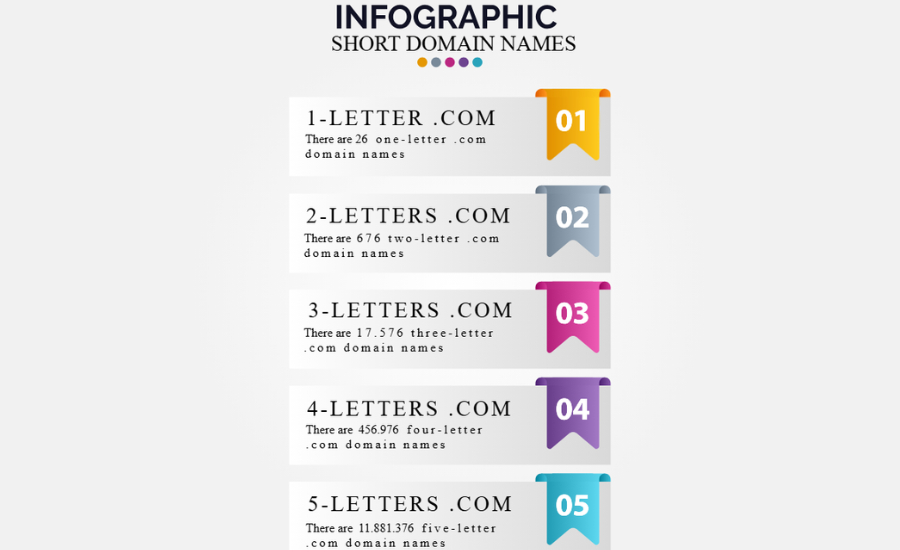
There are exactly 17,576 possible three-letter combinations using the 26 letters of the English alphabet (26 × 26 × 26). Every single one of those combinations registered as a .com domain was taken years ago. There will never be new LLL .com domains — they simply do not exist as new registrations. Anyone who wants one must buy it from whoever currently owns it.
Against that fixed supply stands enormous demand. Three-letter combinations are short enough to be typed easily on mobile devices, memorable enough to build a brand around, and often correspond to meaningful acronyms, abbreviations, or words. A business acquiring “car.com” or a company whose initials spell out a registered three-letter domain has a significant branding advantage.
Brand-ability is the core value driver. Three letters are the minimum for a meaningful abbreviation in business. Countless Fortune 500 companies are known by three-letter acronyms — IBM, UPS, CVS, 3M, BMW, CBS, NBC, ABC, CNN, ESPN. Owning the .com that matches your company’s initials or abbreviation is worth substantial money to the right buyer.
What Makes Some Three Letter Domains More Valuable Than Others
Not all three-letter .com domains are equal. Value varies enormously based on several factors.
Letter quality. Combinations of commonly used letters in English (E, A, R, I, O, T, N, S) tend to be more valuable than combinations featuring less common letters (Q, X, Z, J, K, V). QXZ.com is worth far less than EAR.com or TEN.com.
Pronoun-ceability. Domains that can be spoken aloud as a word or syllable are more valuable than consonant clusters that cannot be easily pronounced. “FLY.com” is significantly more valuable than “VQK.com.”
Real word status. If the three letters form an actual English word — ACE, AIM, ARC, BIG, BOX, CAR, FIT, FLY, JET, MAP, OAK, RUN, SKY, SUN, ZEN — the value jumps dramatically. These are essentially word domains, not just letter combinations.
Common acronym status. If the combination is a widely recognized acronym or abbreviation — FBI, CIA, CEO, CFO, CTO, VPN, GPS, API, URL — the value is elevated because many organizations might want it.
Industry relevance. A three-letter combination tied to a major industry or common concept commands a premium. CBD.com, for example, became extremely valuable during the hemp and cannabis industry expansion.
Geographic or organizational abbreviations. State abbreviations (CA, NY, TX), country codes, and common organizational abbreviations add value for buyers in those markets.
Current Market Prices: A Realistic Range
Three-letter .com domain sales have a wide price range. Recent verified sales data from domain marketplaces and reported transactions:
Liquid market floor (less premium combinations): $10,000–$30,000. This is roughly where any three-letter .com will sell eventually, even combinations with less popular letters. The market for LLL .com domains is liquid — there are always buyers at some price.
Mid-range (decent letter quality, no special meaning): $30,000–$100,000.
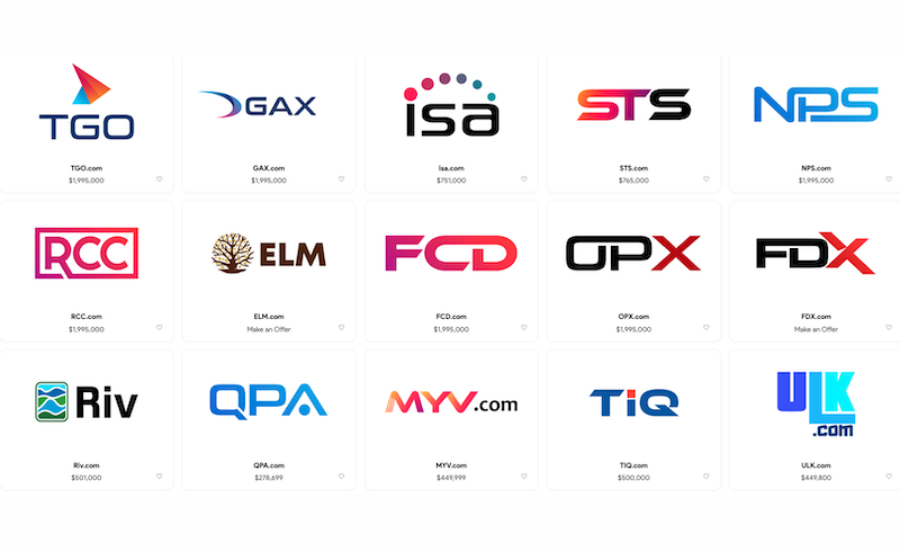
Premium (pronounceable, common letters, some acronym value): $100,000–$500,000.
Ultra-premium (real English words, major acronyms, industry-defining): $500,000–$5,000,000+.
Notable historical sales include SEX.com ($13 million, 2010), CAR.com ($872,000), and numerous others in the multi-million dollar range. Short, meaningful domains consistently rank among the highest domain sales ever recorded.
The current market (2025–2026) has seen both increased investor activity and some softening from the peak prices of 2021–2022. Liquid LLL .com domains remain a stable alternative asset class for domain investors.
Three Letter Domains in Other Extensions
The .com extension commands the largest premium by a significant margin. Other extensions have value but at lower levels.
.net LLL: Typically $500–$5,000. Some specific combinations trade higher if they have particular relevance to a network or technology company.
.org LLL: Typically $300–$3,000. Primarily valuable to nonprofits and organizations whose initials match the combination.
.io LLL: Growing value — $1,000–$20,000+ for premium combinations. The .io extension has become popular with technology startups, and three-letter .io domains are actively sought.
.co LLL: $500–$10,000 for most combinations. The .co extension was positioned as a .com alternative and has a modest secondary market.
.ai LLL: Growing rapidly with artificial intelligence industry expansion — $2,000–$50,000+ for desirable combinations. Many AI companies have adopted .ai extensions.
.xyz, .net, and others: Generally lower liquidity and value for LLL combinations, though exceptions exist.
How to Value a Specific Three Letter Domain
If you own or are considering buying a specific three-letter .com domain, these are the key valuation factors to assess:
Check recent comparable sales. NameBio.com is the industry’s most comprehensive database of past domain sales. Search for similar three-letter combinations to see what comparable domains have actually sold for, not just asking prices.
Consider the letters’ quality score. Domain investors use informal “letter quality” rankings. Generally: vowels and common consonants (L, N, R, S, T) command premiums. Middle-frequency letters (B, C, D, F, G, H, M, P) are average. Low-frequency letters (J, K, Q, V, X, Y, Z) reduce value.
Check if it forms a word or acronym. Use an acronym finder and a dictionary check. If the three letters spell a word in any major language or represent a well-known acronym, value is meaningfully higher.
Assess end-user demand. Think about who might want this domain as a business. Are there companies, industries, or organizations whose initials match? Is there a growing industry the acronym relates to? End-user buyers (actual businesses) typically pay more than domain investors.
Use domain appraisal tools with caution. Automated appraisal tools like EstiBot or GoDaddy’s appraisal tool can provide a rough baseline but are often inaccurate for LLL domains because the market is driven by individual buyer demand rather than traffic or SEO factors. Treat automated appraisals as a floor estimate, not a ceiling.
Where to Buy and Sell Three Letter Domains
Buying:
- Sedo.com — one of the largest domain marketplaces with many LLL listings
- Afternic.com — owned by GoDaddy, large marketplace
- GoDaddy Auctions — active marketplace with expired domain auctions
- Flippa.com — marketplace for digital assets including domains
- Dan.com — popular marketplace with escrow services
- Direct outreach — WHOIS records (when available) or domain contact forms can reach current owners directly
Selling:
List on multiple marketplaces simultaneously. Set a reasonable asking price based on comparable sales rather than hoping for an outlier sale. Consider using a domain broker for high-value sales — brokers typically charge 10–20% commission but can identify serious end-user buyers willing to pay premium prices.
Escrow:
Always use an escrow service for domain transactions. Escrow.com is the industry standard. Escrow holds the buyer’s payment until the domain is transferred, protecting both parties.
Three Letter Domains as Investments
LLL .com domains are viewed by many domain investors as digital real estate — a finite asset class with consistent long-term demand. Several characteristics make them attractive as alternative assets:
Absolute scarcity. Unlike stocks, real estate, or cryptocurrency, the supply is permanently fixed at 17,576 combinations. No new three-letter .com domains can ever exist.
Liquidity. Any LLL .com domain can be sold. Some combinations take longer than others, but there is always a market.
Low carrying costs. Domain registration costs roughly $10–$15 per year regardless of value. Carrying a $50,000 domain costs the same annually as carrying a $50 domain.
No depreciation. Unlike physical assets, domains do not wear out or depreciate over time.
The risks include market fluctuations in domain values, changing internet conventions (whether .com remains dominant), and the time required to find the right buyer. Domain investing requires patience — a domain purchased for $20,000 might sell for $80,000, but the timeline to that sale could be months or years.
You may also like Inseam Measurement
FAQ
1. Why are three letter domain names valuable?
Because every possible three-letter .com combination was registered years ago, creating a permanently fixed supply of 17,576 domains against ongoing demand from businesses seeking short, memorable brand identifiers.
2. How many three letter .com domains are there?
Exactly 17,576 — one for each combination of the 26 letters of the English alphabet (26 × 26 × 26). All are registered and none are available through standard registrars.
3. What is a three letter .com domain worth?
Values range from approximately $10,000 for less premium letter combinations to $5 million or more for real English words or major acronyms. Most LLL .com domains fall in the $10,000–$100,000 range.
4. What makes some three letter domains more valuable than others?
Letter quality (common vs uncommon letters), whether the combination forms a real word or recognized acronym, pronounceability, and industry relevance all significantly affect value.
5. Where can I check past sales prices for three letter domains?
NameBio.com is the most comprehensive database of historical domain sales and is the standard reference tool for domain valuation research.
6. Are three letter .net or .org domains worth as much as .com?
No. .com commands a substantial premium. Three-letter .net and .org domains typically sell for $500–$5,000, compared to $10,000+ for equivalent .com combinations.
7. What are .io and .ai three letter domains worth?
The .io extension typically ranges from $1,000–$20,000 for three-letter combinations. The .ai extension is growing rapidly with the AI industry and can reach $50,000+ for premium combinations.
8. How do I sell a three letter domain I own?
List it on multiple marketplaces (Sedo, Afternic, GoDaddy Auctions, Dan.com). For high-value domains, consider hiring a domain broker. Always use Escrow.com or a similar escrow service for the transaction.
9. Are three letter domains a good investment?
They have characteristics of a scarce alternative asset — fixed supply, low carrying costs, consistent demand. Values fluctuate with market conditions. Like any investment, there is risk and no guaranteed return.
10. Can I register a new three letter .com domain?
No. All 17,576 three-letter .com combinations are registered. New registrations are not possible — you can only acquire one through the secondary market by purchasing from the current owner.
11. What is the most expensive three letter domain ever sold?
SEX.com sold for approximately $13 million in 2010, making it one of the most expensive domain sales in history. Many other LLL .com domains have sold in the millions.
12. How do I find out who owns a specific three letter domain?
A WHOIS lookup at whois.domaintools.com or through your registrar’s WHOIS tool will show ownership and contact information when not protected by privacy services. Many premium domains use WHOIS privacy, in which case you can contact the owner through the domain marketplace where it is listed or by visiting the domain itself.